
Scale Insects
Coccoidea (various species)
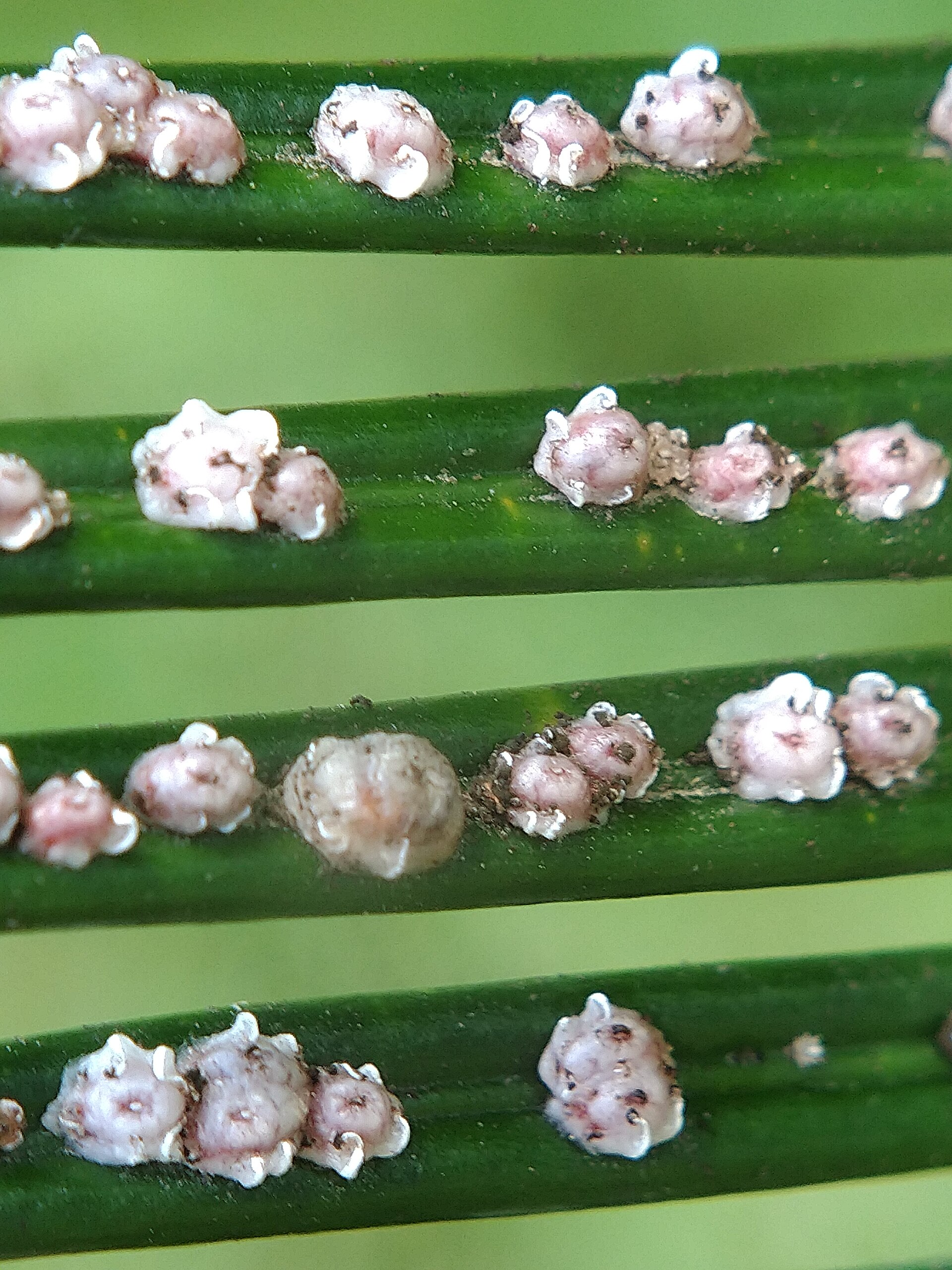
Range: Throughout the United States on a wide range of trees and shrubsSee it on the alert map
Symptoms & signs
- Small, immobile, bump-like or shell-like encrustations along twigs, branches, and leaf veins
- yellowing, off-color, or sparse foliage and branch dieback
- copious sticky honeydew and black sooty mold (from soft scales)
- slow general decline
- bark that looks crusty or 'barnacled' under heavy infestation
Treatment & management
- Time treatment to the crawler stage — horticultural oil or insecticidal soap, or a registered insecticide, when crawlers are active (degree-day or sticky-tape monitoring helps)
- Dormant-season horticultural oil smothers overwintering scales
- Systemic imidacloprid/dinotefuran for soft scales on high-value trees
- Prune out and destroy heavily encrusted wood
- conserve natural predators
Host species
Pin OakQuercus palustrisRed MapleAcer rubrumTulip Poplar (Yellow Poplar)Liriodendron tulipiferaFlowering DogwoodCornus floridaCrapemyrtleLagerstroemia indicaSouthern MagnoliaMagnolia grandifloraBlack Tupelo (Blackgum)Nyssa sylvaticaBlack CherryPrunus serotinaAmerican HornbeamCarpinus carolinianaOhio BuckeyeAesculus glabraJapanese MapleAcer palmatumSaucer MagnoliaMagnolia × soulangeanaWhite SprucePicea glaucaPaperbark MapleAcer griseumLacebark ElmUlmus parvifoliaSweetbay MagnoliaMagnolia virginianaWhite FirAbies concolorIncense CedarCalocedrus decurrensJapanese ZelkovaZelkova serrataTrident MapleAcer buergerianumCedar ElmUlmus crassifoliaYellow BuckeyeAesculus flavaHorsechestnutAesculus hippocastanumCucumbertree MagnoliaMagnolia acuminataEuropean BeechFagus sylvaticaYoshino CherryPrunus × yedoensisJapanese Pagoda Tree (Scholar Tree)Styphnolobium japonicumLittleleaf LindenTilia cordata
Common questions
Are those bumps on my branches insects or part of the bark?
Many scale insects look like fixed bumps, blisters, or barnacles on bark and twigs rather than 'bugs.' If you can scrape them off and find soft bodies underneath, they are scale, not bark texture.
When is the best time to treat scale?
Target the mobile 'crawler' stage in late spring or summer, when scales are most exposed to oils and insecticides. A dormant horticultural oil application is also effective against overwintering scale.
Related pests
Tree Nerd Academy
Ready to sit the ISA Certified Arborist exam?
Video curriculum, flashcards, and exam-sim built by working arborists.