
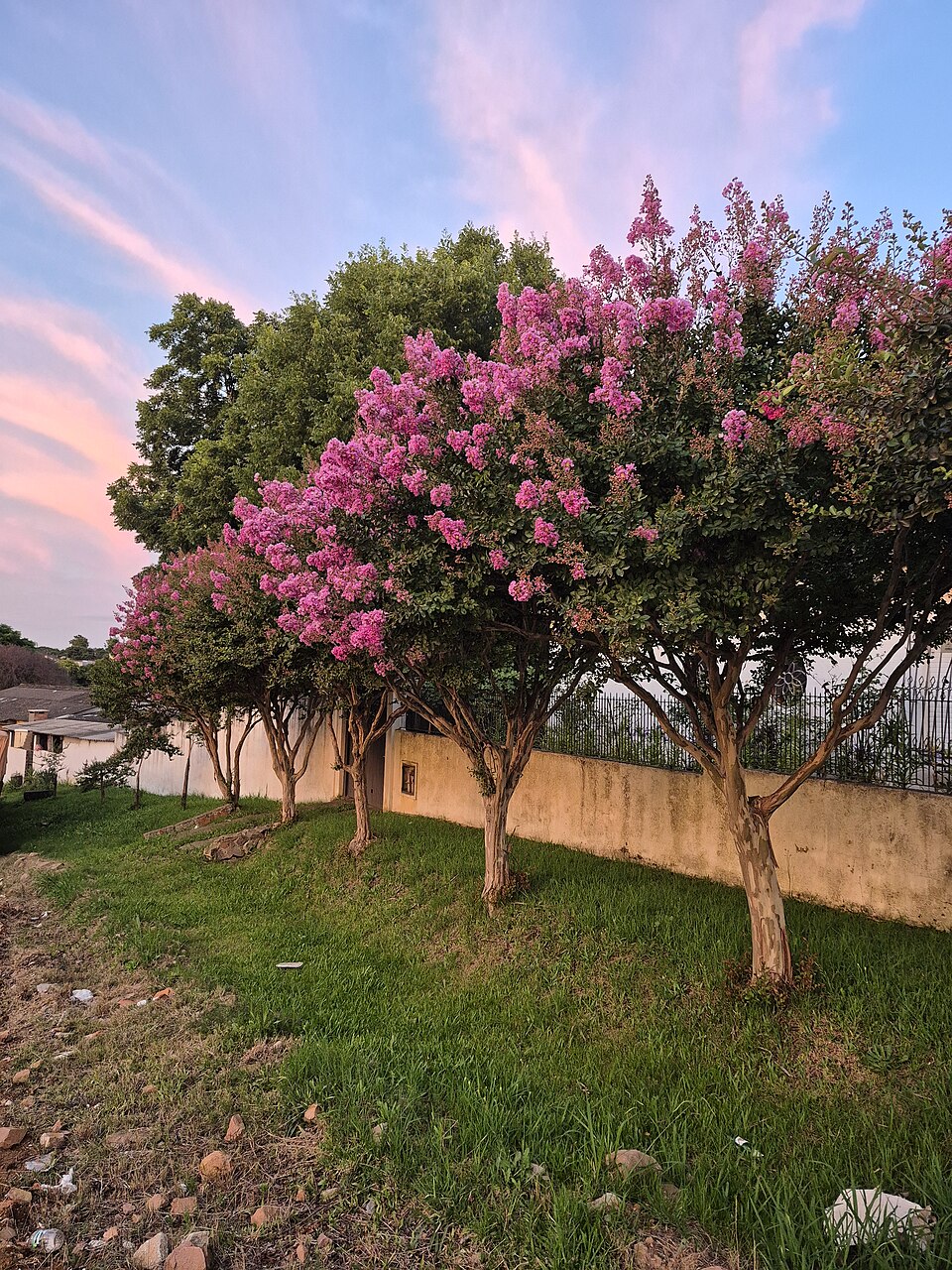
Crapemyrtle
Lagerstroemia indica
The 'lilac of the South,' a heat-loving small tree grown for months of crepe-papery summer flowers, smooth mottled bark, and good fall color. It blooms on new wood, so a light dormant thinning is fine, but the common heavy 'crape murder' topping ruins its form and invites weak regrowth. Powdery mildew and aphid honeydew are the main pest issues.
Field reference
Family
Lythraceae
Growth rate
Fast
Mature size
15–25 ft tall, 10–20 ft spread
Hardiness zone
7–9
Soil preference
Well-drained soils; tolerates heat, drought, and a range of pH
Sun
Full sun (needs heat for best bloom)
Pruning window
Late winter (dormant), before spring growth — avoid 'crape murder' topping
Wood properties
Hard, dense, smooth wood (~0.60 SG) with attractive mottled exfoliating bark. Small multi-stem tree; thin, smooth bark damages easily during careless pruning.
Native range
Native to East Asia; ubiquitous ornamental across the southern United States
Green weight
53 lb/ft³
Pests & diseases to watch
Powdery Mildewfungus · Low severity · peak Late spring through fall, worst in humid, shaded, crowded conditionsAphidspest · Low severity · peak Populations build in spring and early summer, with flushes through the seasonScale Insectspest · Moderate severity · peak Vulnerable mobile 'crawlers' emerge late spring–summer (species dependent)
Common questions
Should I top my crapemyrtle hard every winter?
No — 'crape murder' topping disfigures the tree and forces weak, whippy regrowth. Thin out crossing and small interior branches lightly instead; it blooms fine on natural new growth.
What is the white coating on my crapemyrtle leaves?
That is powdery mildew, common in humid or shaded sites. Plant mildew-resistant cultivars, site in full sun with good airflow, and treat severe cases with appropriate fungicides.
Tree Nerd Academy
Ready to sit the ISA Certified Arborist exam?
Video curriculum, flashcards, and exam-sim built by working arborists.