
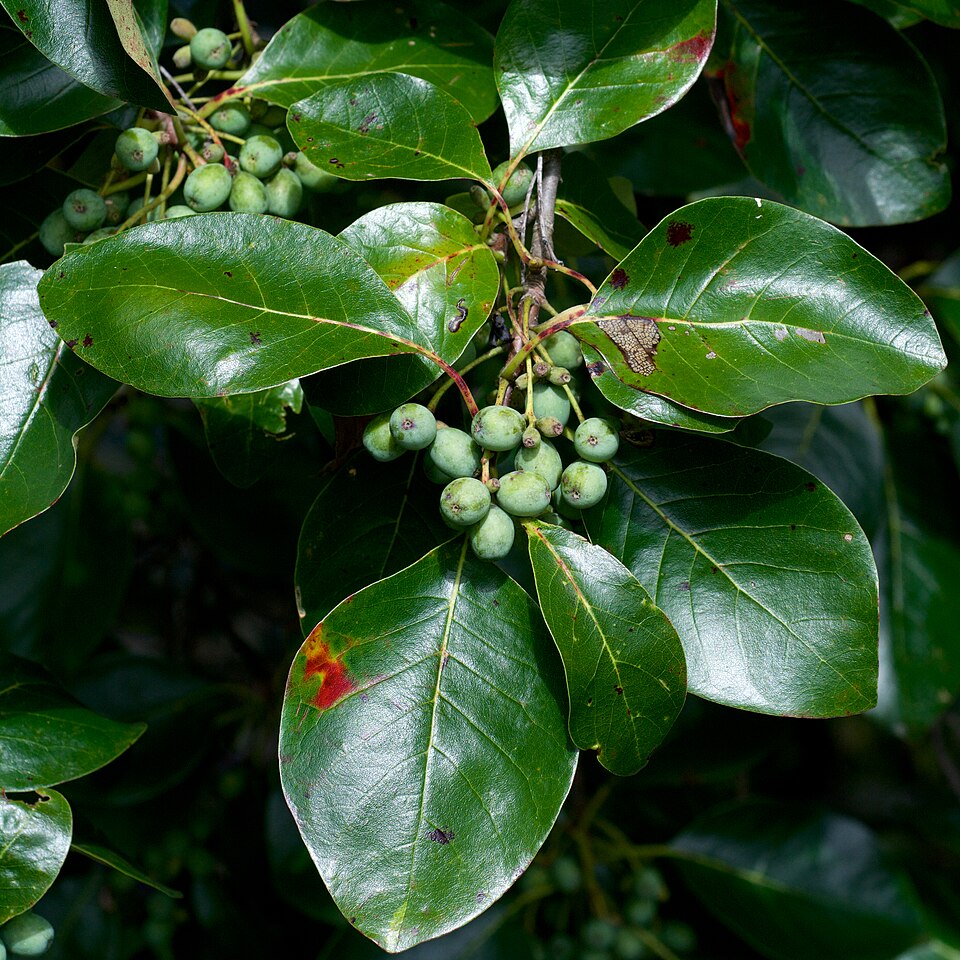
Black Tupelo (Blackgum)
Nyssa sylvatica
A native with outstanding early scarlet fall color, horizontal branching, and high wildlife value. Slow and clean, with a strong central leader and few serious pests — an excellent specimen and pollinator tree.
Field reference
Family
Nyssaceae
Growth rate
Slow
Mature size
30–50 ft tall, 20–30 ft spread
Hardiness zone
3–9
Soil preference
Moist, acidic soils; tolerates wet ground and occasional flooding
Sun
Full sun to part shade
Pruning window
Dormant season (late winter to early spring)
Wood properties
Famously interlocked, cross-grained wood (~0.50 SG) that is nearly impossible to split. Strong, shock-resistant limbs; the twisted grain holds together well under load.
Native range
Eastern United States, Maine to Florida and west to Texas
Green weight
56 lb/ft³
Pests & diseases to watch
Common questions
Why does my black tupelo turn red so early?
Brilliant red coloring beginning in late summer is normal for the species and one of its best ornamental traits. Early color on only a few branches, however, can signal stress worth investigating.
Is black tupelo hard to transplant?
It can be — it forms a deep taproot, so it establishes best from container or young balled-and-burlapped stock planted in spring on a moist, acidic site.
Tree Nerd Academy
Ready to sit the ISA Certified Arborist exam?
Video curriculum, flashcards, and exam-sim built by working arborists.