
Asian Longhorned Beetle
Anoplophora glabripennis
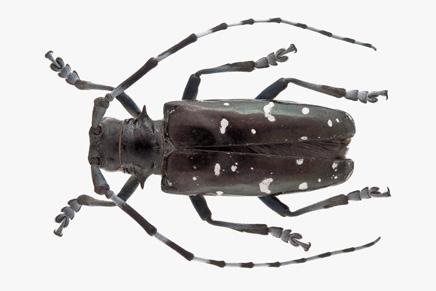
Range: Localized eradication zones in the Northeastern and Midwestern United StatesSee it on the alert map
Symptoms & signs
- Perfectly round 3/8-inch (dime-pencil-sized) exit holes in trunk and branches
- shallow oval egg-laying pits chewed in the bark
- coarse sawdust-like frass at the base and in branch crotches
- large 1–1.5 inch black beetles with white spots and long black-and-white banded antennae
- dead and dying limbs
Treatment & management
- A regulated, eradication-target pest — report suspected finds to USDA APHIS immediately
- Management is removal and chipping/destruction of infested host trees and strict quarantine on moving wood
- Preventive imidacloprid injection of high-value host trees in regulated areas
- No movement of host firewood or nursery stock out of quarantine zones
Host species
Sugar MapleAcer saccharumRed MapleAcer rubrumSilver MapleAcer saccharinumNorway MapleAcer platanoidesAmerican ElmUlmus americanaAmerican SycamorePlatanus occidentalisEastern CottonwoodPopulus deltoidesWeeping WillowSalix babylonicaPaper BirchBetula papyriferaRiver BirchBetula nigraLondon PlanetreePlatanus × acerifoliaCommon HackberryCeltis occidentalisBoxelderAcer negundoFreeman MapleAcer × freemaniiLacebark ElmUlmus parvifoliaSlippery ElmUlmus rubraBlack WillowSalix nigra
Common questions
How do I tell ALB exit holes from emerald ash borer?
Asian longhorned beetle leaves perfectly round holes about the size of a pencil (3/8 inch), while emerald ash borer makes small D-shaped holes. ALB attacks maples and many hardwoods, not ash.
What do I do if I think I found one?
Capture the beetle if you can, photograph it, note the location, and report it to USDA APHIS or your state agriculture department. It is a federally regulated eradication-target pest.
Related pests
Tree Nerd Academy
Ready to sit the ISA Certified Arborist exam?
Video curriculum, flashcards, and exam-sim built by working arborists.