
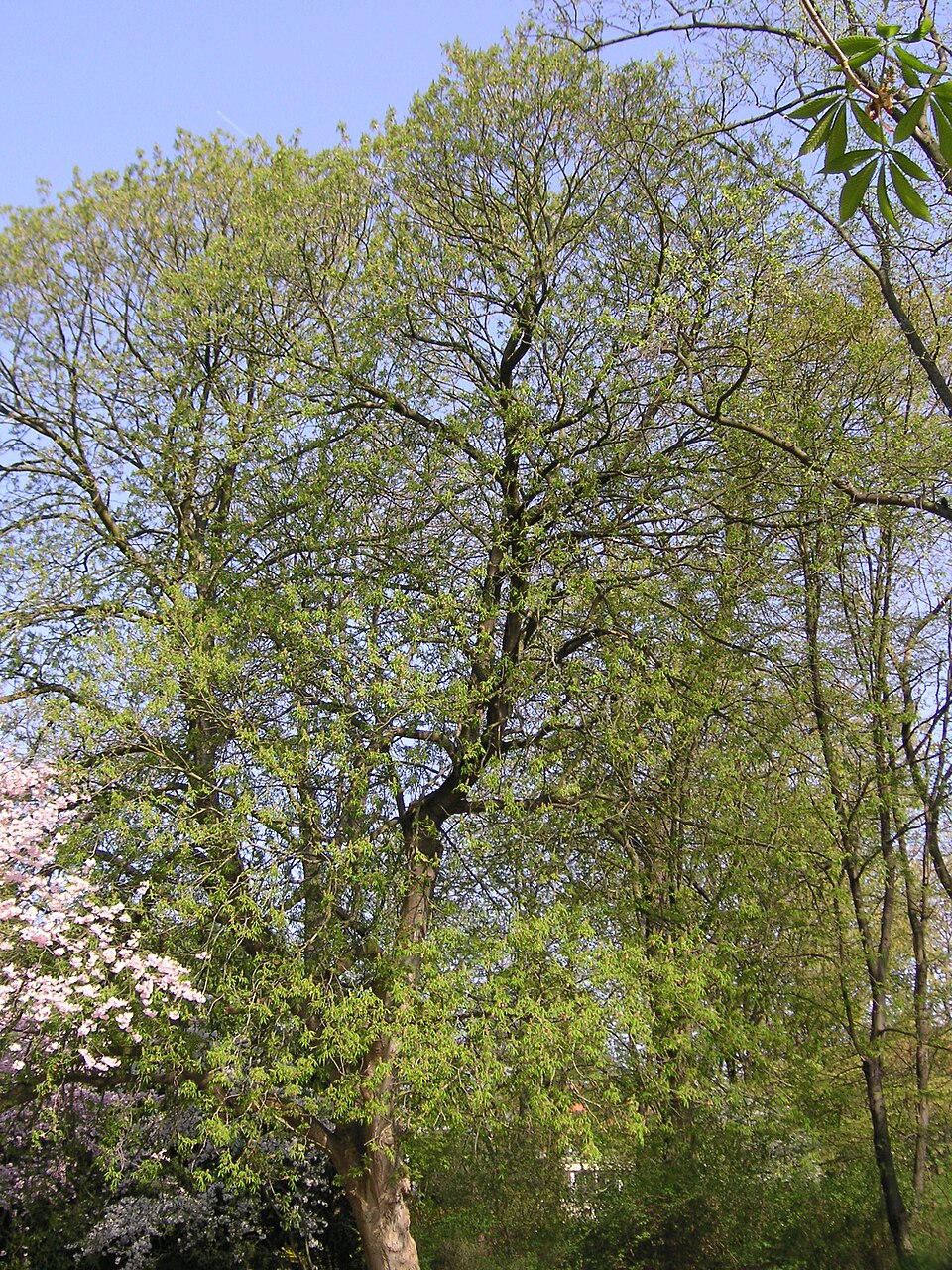
Yellow Buckeye
Aesculus flava
The largest and best-behaved of the buckeyes, a stately Appalachian shade tree with bold palmate leaves, showy yellow spring flower panicles, and far less leaf blotch and scorch than Ohio buckeye. Long-lived on rich, moist sites; the shiny seeds and other parts are toxic if eaten.
Field reference
Family
Sapindaceae
Growth rate
Moderate
Mature size
50–75 ft tall, 30–40 ft spread
Hardiness zone
4–8
Soil preference
Deep, moist, rich, well-drained soils; intolerant of drought
Sun
Full sun to part shade
Pruning window
Dormant season (late winter)
Wood properties
Light, soft, even-grained buckeye wood, historically used for artificial limbs, boxes, and pulp. Weak limbs; all parts (seeds, bark) are toxic if ingested — flag for clients with livestock or children.
Native range
Appalachian region and Ohio Valley of the eastern United States
Green weight
50 lb/ft³
Pests & diseases to watch
Common questions
Is yellow buckeye cleaner than Ohio buckeye?
Generally yes — yellow buckeye holds its foliage better and suffers much less from the leaf blotch and early defoliation that plague Ohio buckeye, making it a more attractive large shade tree on rich, moist sites.
Are yellow buckeye seeds poisonous?
Yes — like other buckeyes, the glossy seeds and other plant parts contain toxic glycosides and should not be eaten by people or livestock. They are safe to handle as keepsakes.
Related species in Sapindaceae
Tree Nerd Academy
Ready to sit the ISA Certified Arborist exam?
Video curriculum, flashcards, and exam-sim built by working arborists.