
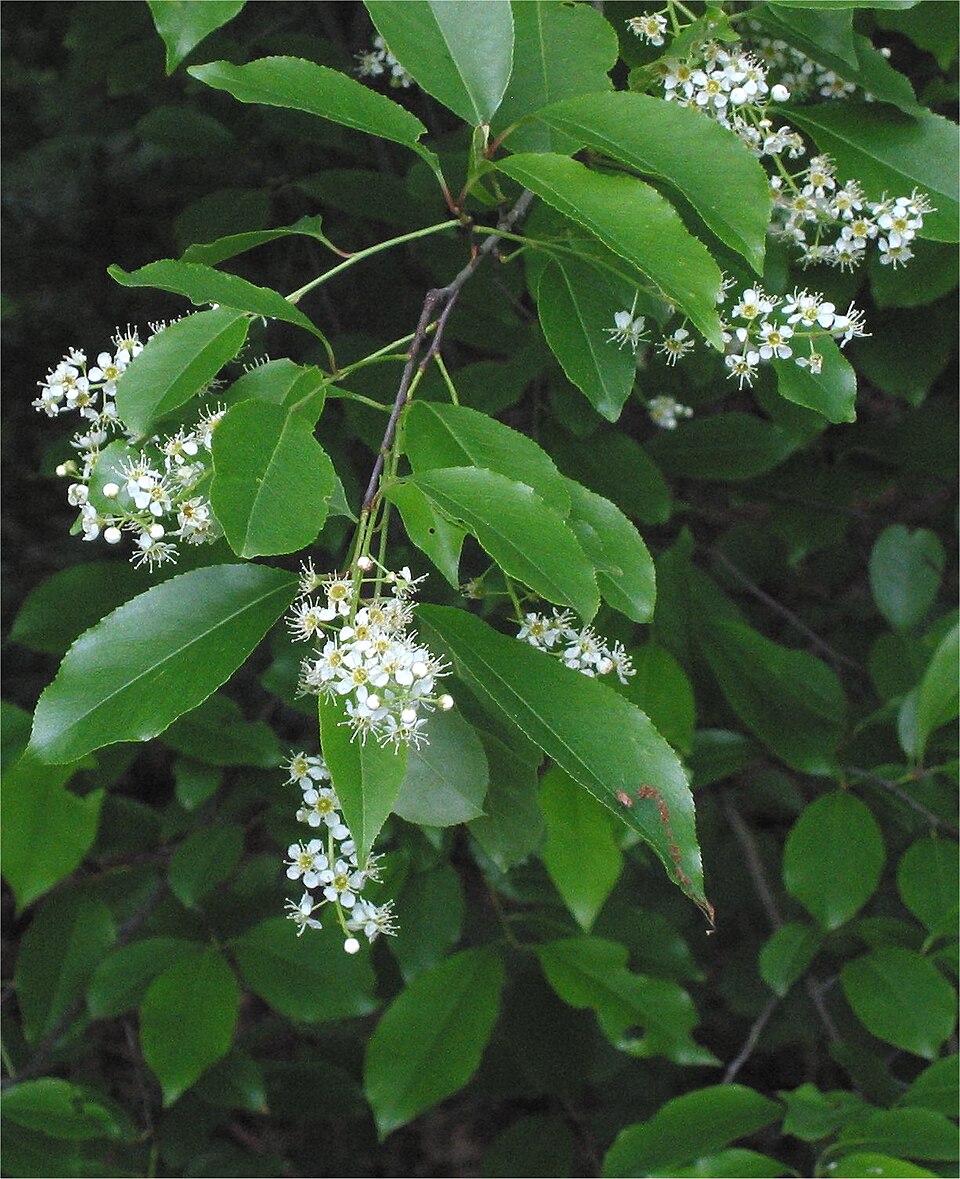
Black Cherry
Prunus serotina
A valuable native timber and wildlife tree with aromatic bark and drooping white flower racemes. Prone to black knot galls and tent caterpillars; wilted leaves are poisonous to grazing animals, a real concern on rural removals.
Field reference
Family
Rosaceae
Growth rate
Moderate
Mature size
50–80 ft tall, 30–60 ft spread
Hardiness zone
3–9
Soil preference
Moist, well-drained soils; adaptable but intolerant of deep shade
Sun
Full sun
Pruning window
Mid-winter (dormant) to limit black knot and silver leaf infection
Wood properties
Prized cabinet wood, moderately hard (~0.50 SG) and strong but with brittle small branches. Wilted foliage and bark contain cyanogenic compounds toxic to livestock — manage brush accordingly.
Native range
Eastern North America, Nova Scotia to Florida and west to Texas
Green weight
45 lb/ft³
Pests & diseases to watch
Spotted Lanternflypest · High severity · peak Nymphs spring–summer; conspicuous winged adults July–November; eggs overwinterSpongy Moth (formerly Gypsy Moth)pest · High severity · peak Caterpillars feed and defoliate May–June; egg masses laid mid-summer overwinterAphidspest · Low severity · peak Populations build in spring and early summer, with flushes through the seasonScale Insectspest · Moderate severity · peak Vulnerable mobile 'crawlers' emerge late spring–summer (species dependent)Cankerworm (Inchworm)pest · Moderate severity · peak Larvae feed and defoliate in spring (April–May) as leaves expand
Common questions
What are the black, swollen lumps on the branches?
Those are black knot, a fungal disease of Prunus. Prune out knots 4–6 inches below the gall in winter and dispose of them, since they release spores that infect new shoots in spring.
Is black cherry dangerous to horses or cattle?
Yes — wilted leaves and bark release cyanide and are toxic to livestock. Keep fallen branches and removal brush out of pastures, especially after storms or pruning.
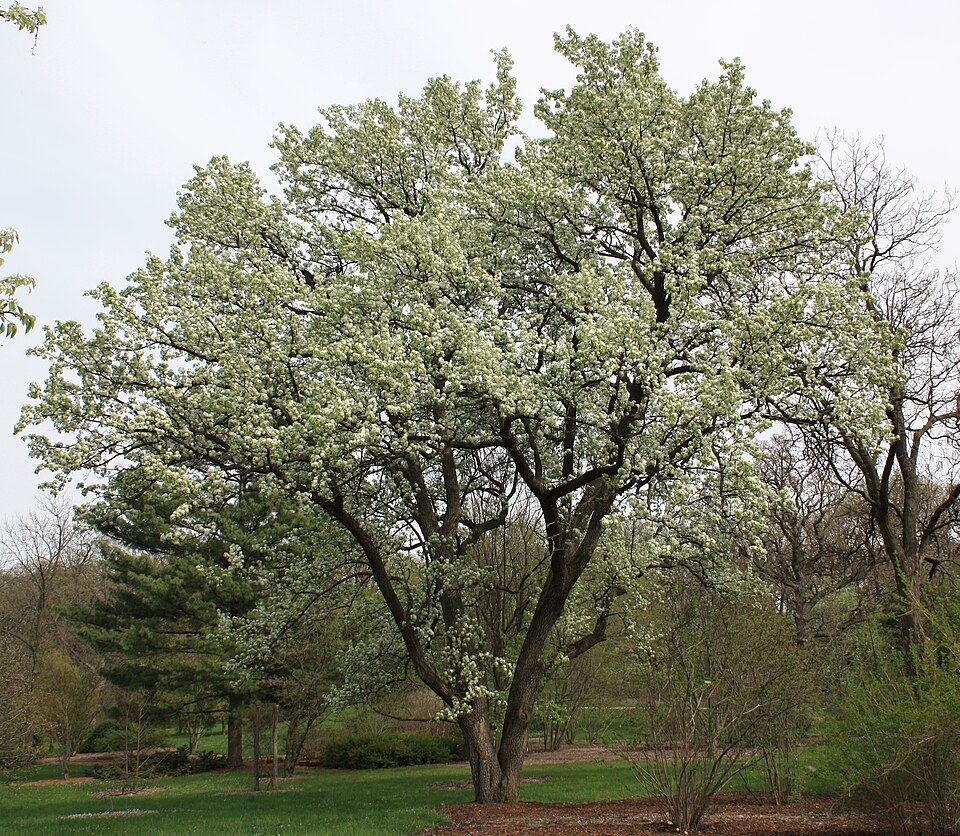
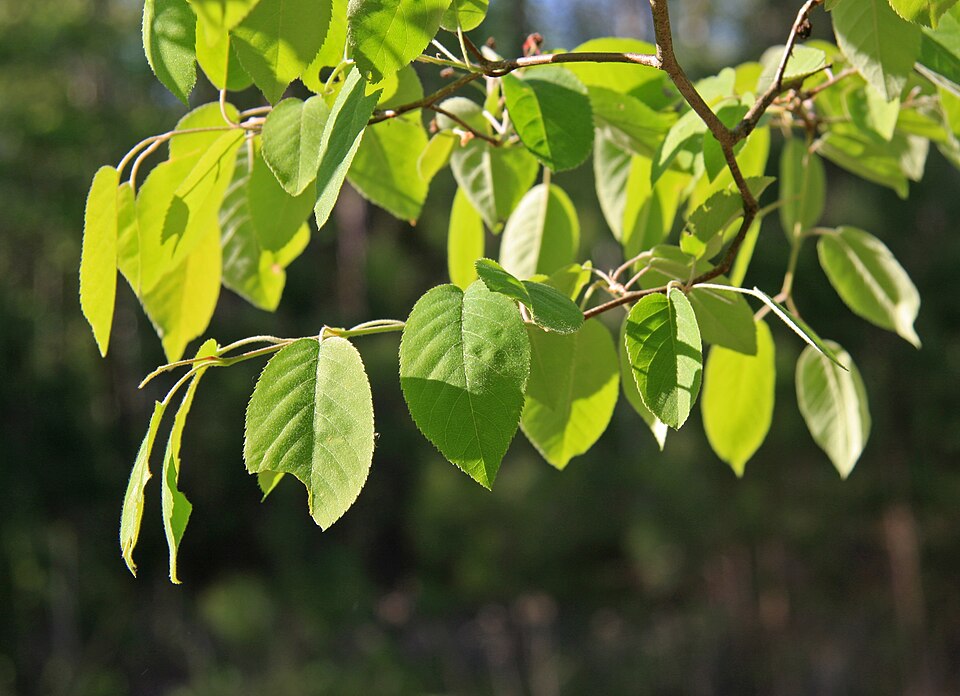
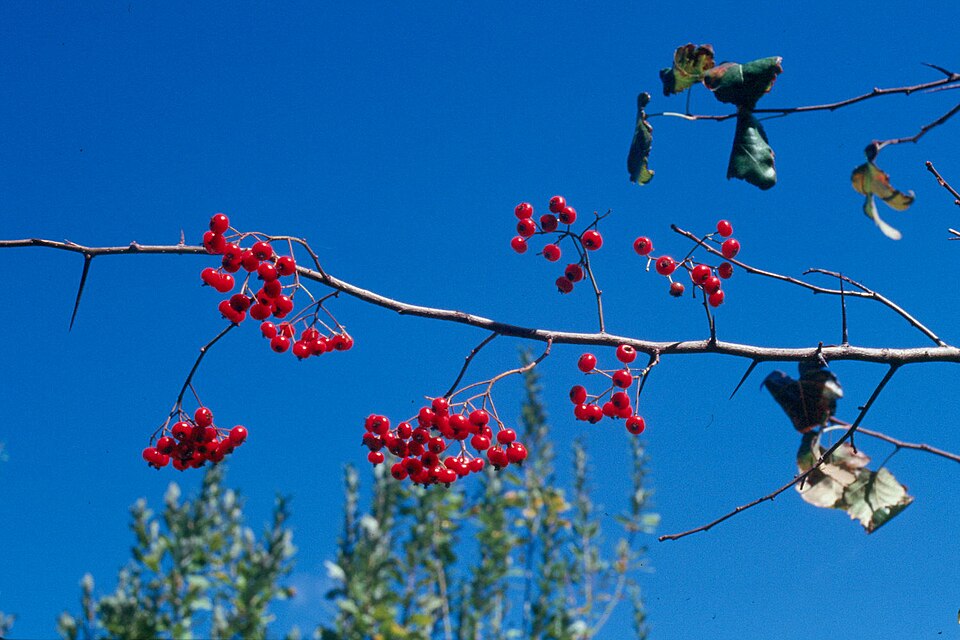
Related species in Rosaceae
Tree Nerd Academy
Ready to sit the ISA Certified Arborist exam?
Video curriculum, flashcards, and exam-sim built by working arborists.