
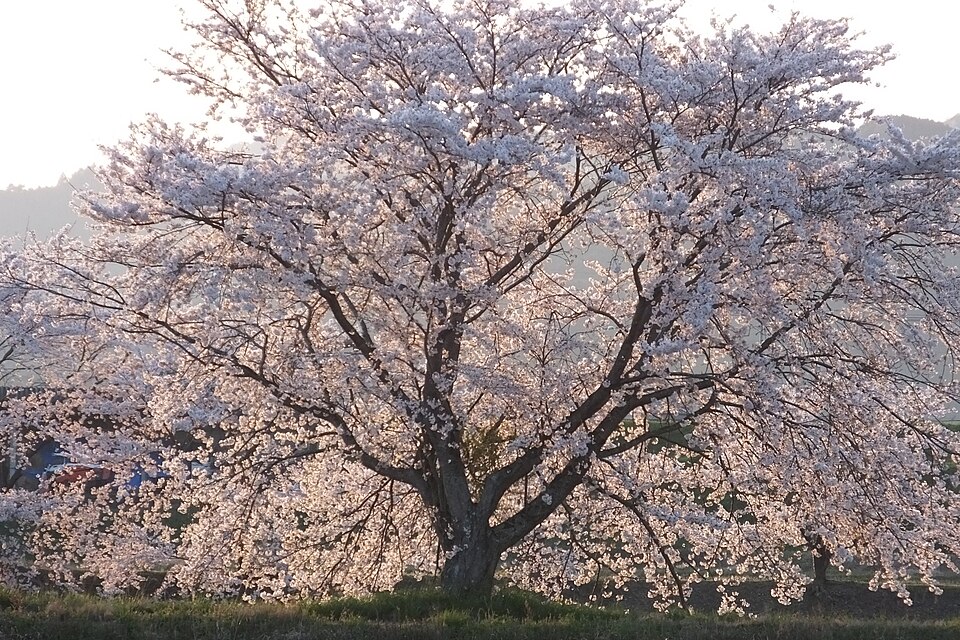
Yoshino Cherry
Prunus × yedoensis
The famous flowering cherry of Washington, D.C.'s Tidal Basin, a fast, broad-crowned hybrid smothered in fragrant pale-pink-to-white blossoms before the leaves. Spectacular but short-lived (often 20–40 years), prone to borers, cankers, and poor wound closure, and now a noted spotted-lanternfly host.
Field reference
Family
Rosaceae
Growth rate
Fast
Mature size
30–40 ft tall, 30–40 ft spread
Hardiness zone
5–8
Soil preference
Moist, fertile, well-drained soils; intolerant of wet feet and drought
Sun
Full sun
Pruning window
Right after flowering (spring); cherries seal wounds poorly, so prune minimally
Wood properties
Fine, moderately hard cherry wood on a short-lived frame; light rigging. Wounds seal poorly and invite decay — keep cuts small and infrequent.
Native range
Hybrid of Japanese origin (Prunus speciosa × P. pendula); planted across temperate North America
Green weight
45 lb/ft³
Pests & diseases to watch
Spotted Lanternflypest · High severity · peak Nymphs spring–summer; conspicuous winged adults July–November; eggs overwinterAphidspest · Low severity · peak Populations build in spring and early summer, with flushes through the seasonScale Insectspest · Moderate severity · peak Vulnerable mobile 'crawlers' emerge late spring–summer (species dependent)
Common questions
How long do Yoshino cherry trees live?
They are short-lived ornamentals, often declining after 20–40 years as borers, cankers, and decay take hold. Their unmatched spring display is the trade-off for that brief lifespan.
Why should flowering cherries be pruned sparingly?
Prunus species seal wounds poorly and are prone to canker and borer entry through cuts. Prune lightly just after bloom, keep cuts small, and avoid heavy or late-season pruning.
Related species in Rosaceae
Tree Nerd Academy
Ready to sit the ISA Certified Arborist exam?
Video curriculum, flashcards, and exam-sim built by working arborists.