
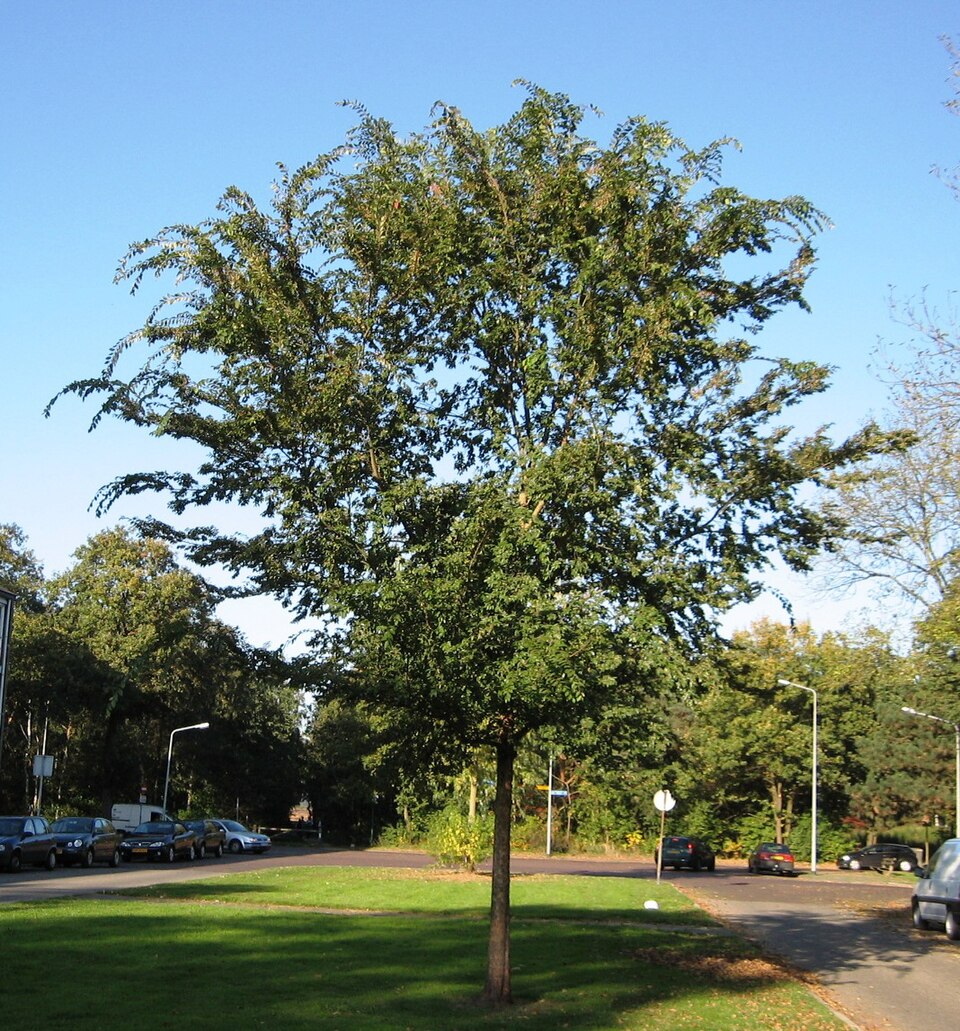
Lacebark Elm
Ulmus parvifolia
Also called Chinese elm, a tough, fine-textured shade tree with beautiful mottled, exfoliating bark and strong resistance to Dutch elm disease and elm leaf beetle — making it a leading elm substitute. Do not confuse it with the weedy, brittle Siberian elm (Ulmus pumila); lacebark elm is the superior, better-behaved tree.
Field reference
Family
Ulmaceae
Growth rate
Moderate
Mature size
40–50 ft tall, 35–50 ft spread
Hardiness zone
5–9
Soil preference
Highly adaptable — tolerates drought, compaction, varied pH, and urban conditions
Sun
Full sun
Pruning window
Dormant season; prune young to prevent included-bark forks
Wood properties
Hard, tough, interlocked elm wood that resists splitting. Strong limbs, but multi-stem nursery forms can build included bark — establish structure early.
Native range
Native to East Asia (China, Korea, Japan); widely planted in the United States
Green weight
50 lb/ft³
Pests & diseases to watch
Common questions
Is lacebark elm resistant to Dutch elm disease?
Yes — Ulmus parvifolia has strong (though not absolute) resistance to Dutch elm disease and good resistance to elm leaf beetle, which is why it is widely used where American elm cannot be.
Is lacebark elm the same as Siberian elm?
No, and the distinction matters. Lacebark (Chinese) elm is a handsome, strong-wooded tree with mottled bark; Siberian elm (U. pumila) is a brittle, weedy, short-lived tree often sold under the wrong name. Check the botanical name.
Related species in Ulmaceae
Tree Nerd Academy
Ready to sit the ISA Certified Arborist exam?
Video curriculum, flashcards, and exam-sim built by working arborists.