
Bronze Birch Borer
Agrilus anxius
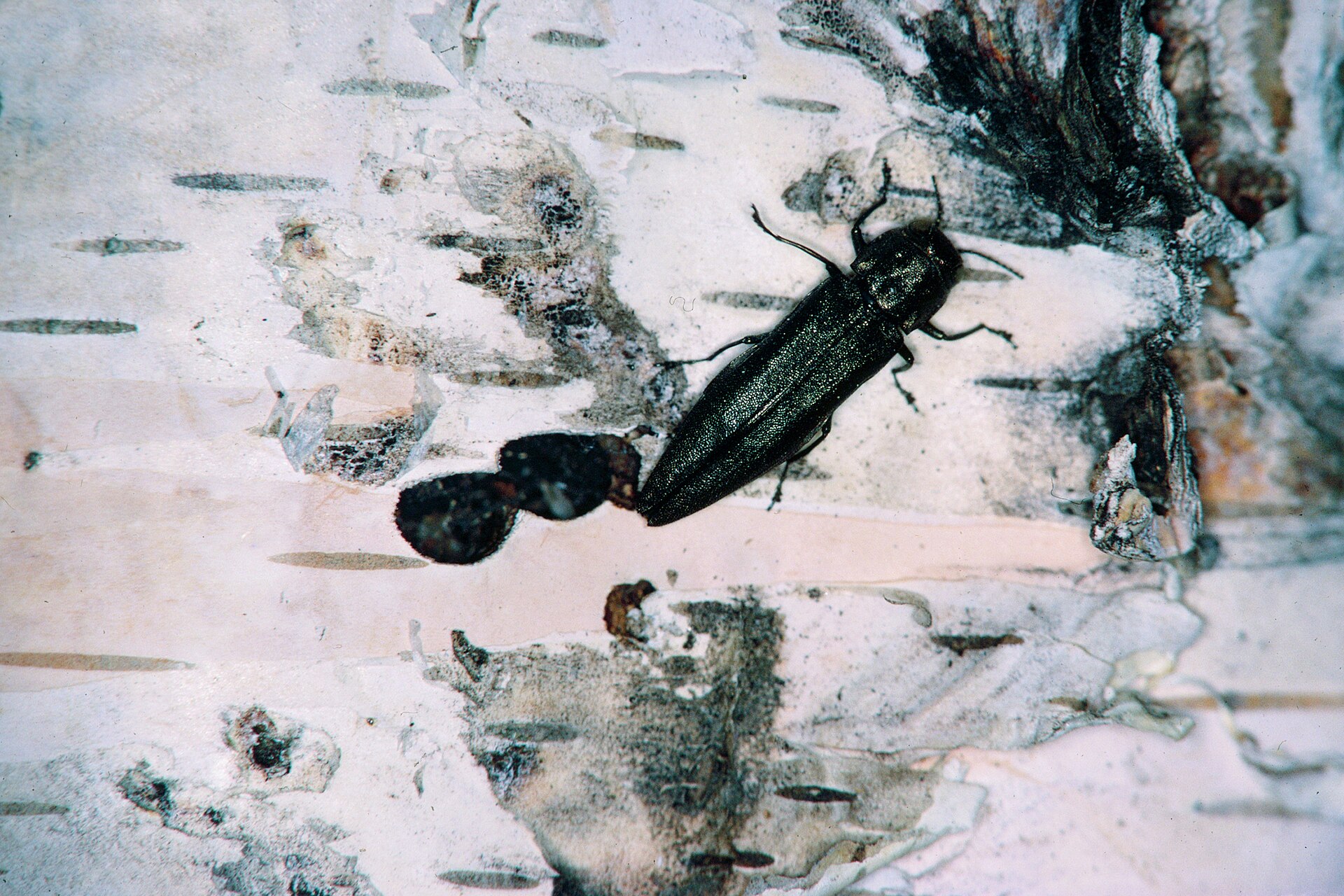
Range: Northern United States and Canada, throughout the range of birchesSee it on the alert map
Symptoms & signs
- Progressive dieback starting at the top of the crown and working downward
- sparse, yellowing foliage
- raised, ridged 'D-shaped' exit holes in the bark
- rust-colored staining and bumpy, lumpy ridges over larval tunnels on the trunk and branches
- attacks stressed, drought-weakened, or sun-exposed birches
Treatment & management
- Prevention is key: keep birches cool-rooted, mulched, and well watered, and plant resistant species (river birch) on tough sites
- Systemic imidacloprid or trunk-injected emamectin benzoate protects high-value trees
- Prune out and destroy infested branches in winter
- Avoid late-spring pruning that attracts adults
Host species
Common questions
Why is the top of my birch dying back?
Top-down crown dieback in a birch is the signature of bronze birch borer, which attacks trees stressed by heat and drought. Look for D-shaped exit holes and raised ridges on the bark to confirm.
How do I protect my birch from the borer?
Keep the root zone cool, mulched, and watered to reduce stress, since the borer targets weakened trees. On valued trees, systemic insecticides are effective; on tough sites, plant borer-resistant river birch.
Related pests
Tree Nerd Academy
Ready to sit the ISA Certified Arborist exam?
Video curriculum, flashcards, and exam-sim built by working arborists.