
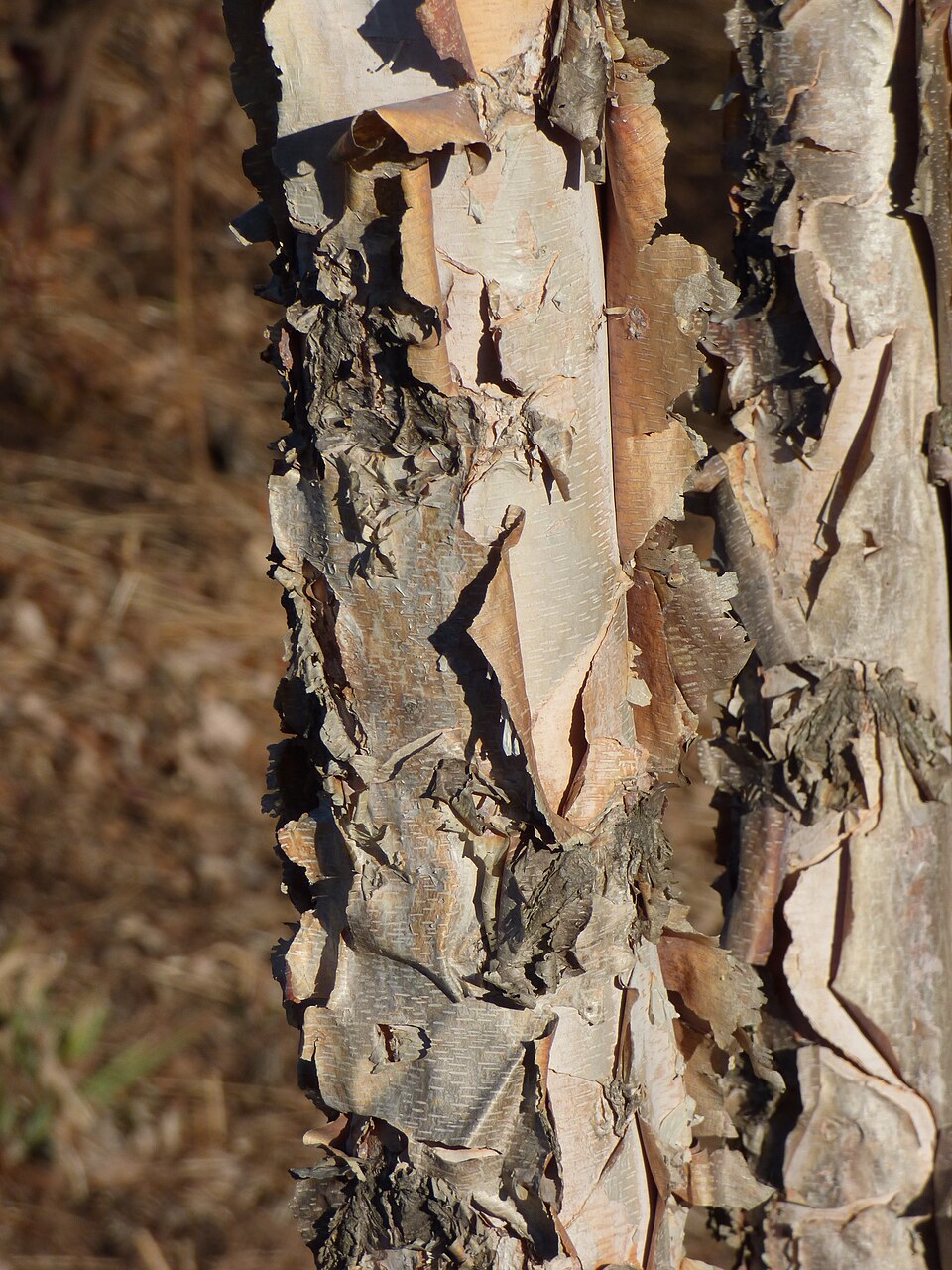
River Birch
Betula nigra
The most heat- and borer-tolerant birch, widely planted (especially the cultivar 'Heritage') for its showy, exfoliating salmon-tan-to-cream bark. Frequently grown as a multi-stemmed clump. Tolerates wet sites and clay, and resists bronze birch borer far better than white-barked birches, making it the go-to landscape birch in the South and Midwest.
Field reference
Family
Betulaceae
Growth rate
Fast
Mature size
40–70 ft tall, 40–60 ft spread
Hardiness zone
4–9
Soil preference
Moist to wet, acidic soils; the most heat-tolerant birch
Sun
Full sun to part shade
Pruning window
Summer or fall — avoid late winter/spring sap bleed
Wood properties
Moderately hard, light-brown wood (~0.56 SG) of modest value, used for furniture parts. Often multi-stemmed with included bark — inspect basal unions before rigging.
Native range
Eastern United States, along rivers and floodplains from New England to the Gulf
Green weight
50 lb/ft³
Pests & diseases to watch
Spotted Lanternflypest · High severity · peak Nymphs spring–summer; conspicuous winged adults July–November; eggs overwinterSpongy Moth (formerly Gypsy Moth)pest · High severity · peak Caterpillars feed and defoliate May–June; egg masses laid mid-summer overwinterAsian Longhorned Beetlepest · Severe severity · peak Adults active and emerging July through OctoberBronze Birch Borerpest · High severity · peak Adults emerge and lay eggs late May through July; larvae tunnel under barkAphidspest · Low severity · peak Populations build in spring and early summer, with flushes through the season
Common questions
Is river birch resistant to bronze birch borer?
It is the most resistant of the common birches, which is why it is recommended over paper or European white birch in warm regions. Keeping it healthy makes attack even less likely.
Should I grow it single- or multi-stemmed?
Both work. Multi-stem clumps show off the peeling bark and suit informal settings, but watch for included bark at the base; single-stem trees give a stronger, more street-tree-friendly structure.
Related species in Betulaceae
Tree Nerd Academy
Ready to sit the ISA Certified Arborist exam?
Video curriculum, flashcards, and exam-sim built by working arborists.