
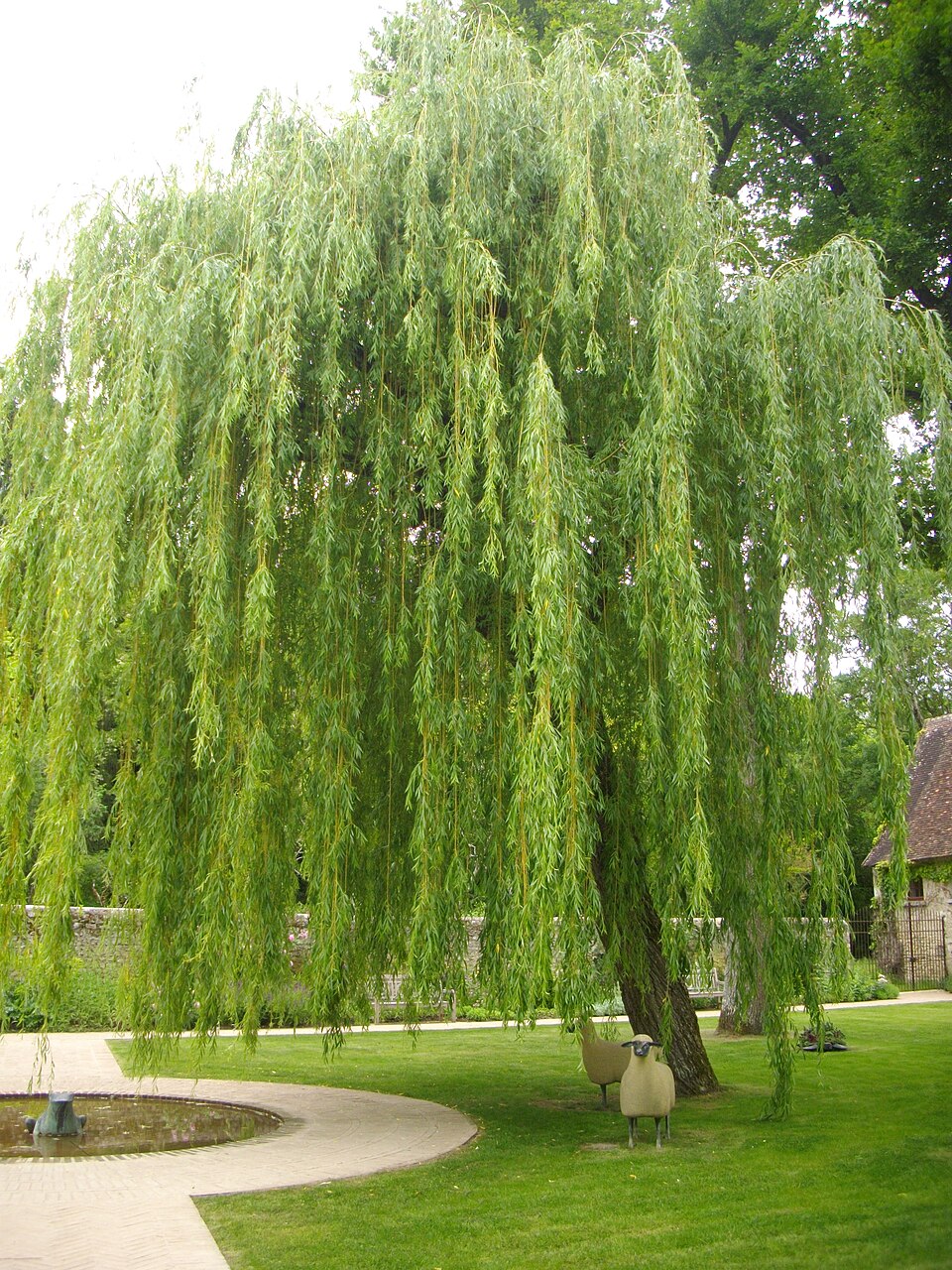
Weeping Willow
Salix babylonica
A fast-growing graceful tree with long, sweeping, pendulous branchlets, iconic at the water's edge. Its aggressive, water-seeking roots invade drains, septic fields, and foundations, and the brittle wood drops limbs readily. Short-lived and high-maintenance, but unmatched for quick weeping form near water.
Field reference
Family
Salicaceae
Growth rate
Fast
Mature size
30–50 ft tall, 30–50 ft spread
Hardiness zone
4–9
Soil preference
Moist to wet soils; thrives at pond and stream edges
Sun
Full sun
Pruning window
Late winter (dormant); tolerates hard reduction
Wood properties
Soft, light, weak, low-density wood (~0.39 SG). Brittle, breakage-prone limbs and a short lifespan; rig conservatively and expect interior decay.
Native range
Native to northern China; long cultivated and naturalized worldwide
Green weight
43 lb/ft³
Pests & diseases to watch
Spotted Lanternflypest · High severity · peak Nymphs spring–summer; conspicuous winged adults July–November; eggs overwinterAsian Longhorned Beetlepest · Severe severity · peak Adults active and emerging July through OctoberCytospora Cankerfungus · Moderate severity · peak Cankers expand in spring and fall; symptoms most visible in summer dieback
Common questions
How far from my house should I plant a weeping willow?
Keep it well away from the house, septic system, and water lines, at least 50 feet, because its vigorous roots aggressively seek and clog drains, sewers, and foundations.
Why does my willow constantly drop branches?
Willow wood is soft and brittle and the tree grows fast, so twig and limb shedding is normal. Regular pruning and removal of deadwood keep it tidier and reduce failures.
Related species in Salicaceae
Tree Nerd Academy
Ready to sit the ISA Certified Arborist exam?
Video curriculum, flashcards, and exam-sim built by working arborists.