
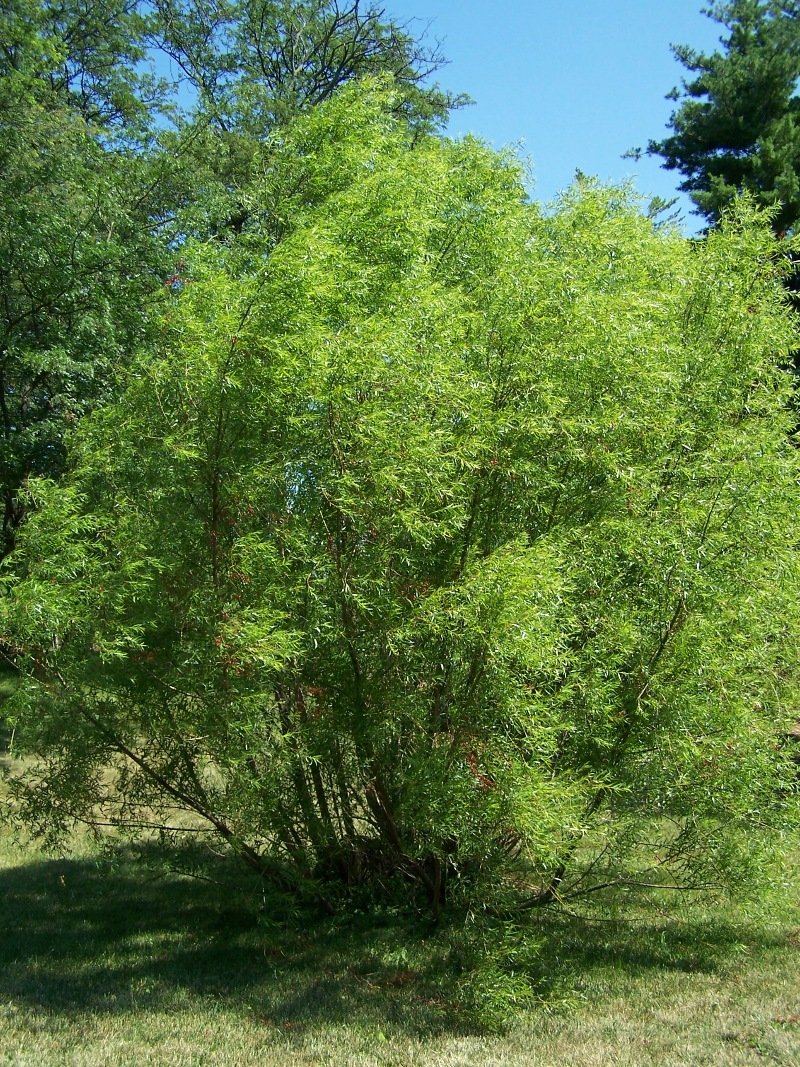
Black Willow
Salix nigra
The largest native willow, a fast, water-loving tree of streambanks and floodplains, key for erosion control and streambank bioengineering (live stakes root readily). Weak-wooded, brittle, and short-lived with aggressive water-seeking roots, so it is sited away from drains, foundations, and septic fields.
Field reference
Family
Salicaceae
Growth rate
Fast
Mature size
30–60 ft tall, 30–50 ft spread
Hardiness zone
4–9
Soil preference
Wet streambanks, floodplains, and pond edges; thrives in saturated soil
Sun
Full sun
Pruning window
Dormant season; expect vigorous sprouting and frequent deadwood
Wood properties
Light, soft, weak willow wood used for pulp, boxes, and charcoal. Brittle, often multi-stem and leaning; deep fibrous roots stabilize banks but invade drains.
Native range
Eastern and central North America along waterways, New Brunswick to Florida and Texas
Green weight
40 lb/ft³
Pests & diseases to watch
Common questions
Is black willow good for stabilizing a streambank?
Yes — it is a workhorse of streambank bioengineering. Cut 'live stakes' root quickly in moist soil, and the dense fibrous roots bind eroding banks, which is why it is planted along waterways for erosion control.
Should I plant black willow near my house or septic system?
No — its fast, aggressive, water-seeking roots invade drains, sewer lines, and septic fields, and its brittle wood drops limbs. Keep it well away from structures and utilities, near water where it belongs.
Related species in Salicaceae
Tree Nerd Academy
Ready to sit the ISA Certified Arborist exam?
Video curriculum, flashcards, and exam-sim built by working arborists.