
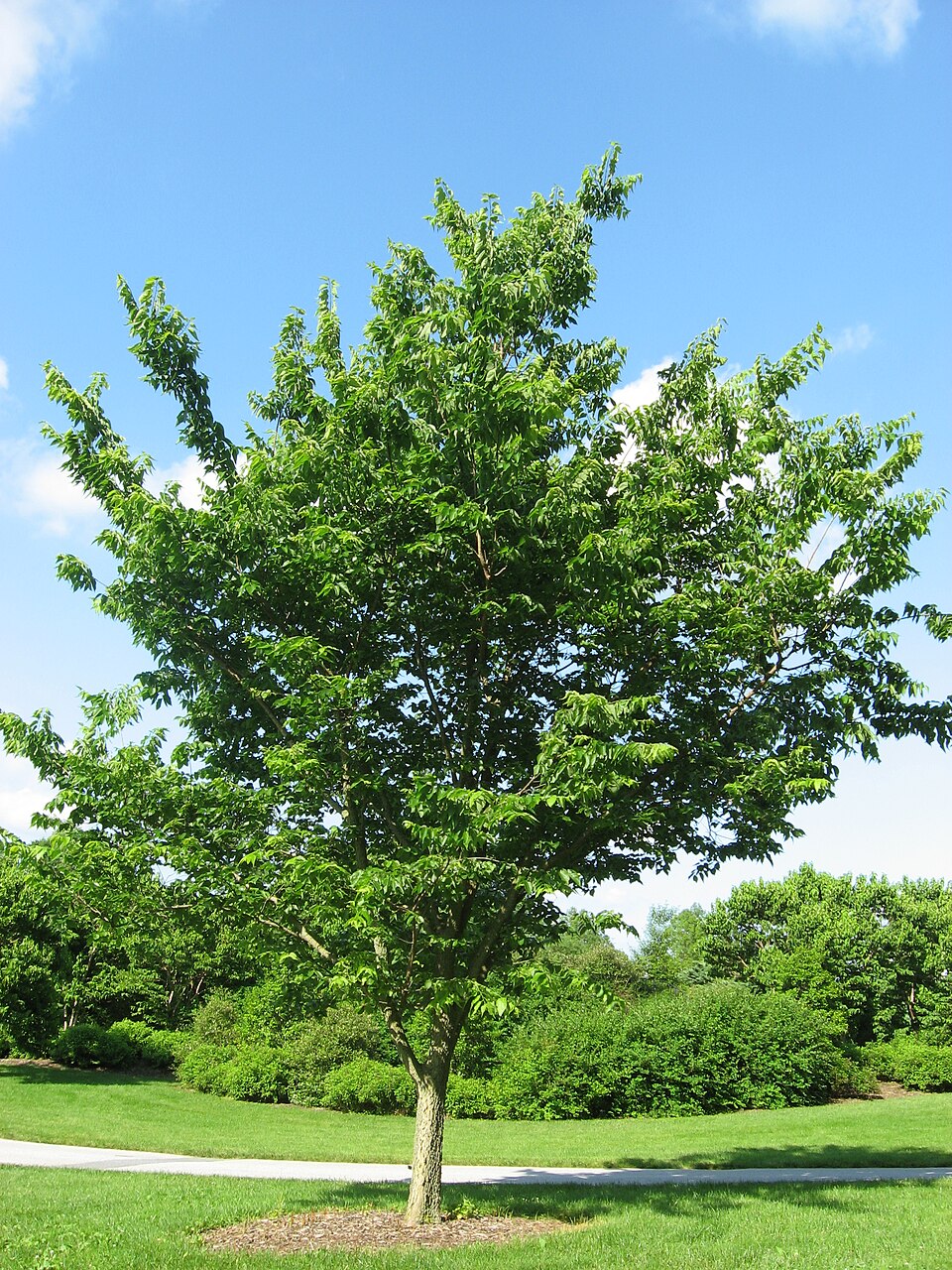
Common Hackberry
Celtis occidentalis
A bulletproof native for tough urban and prairie sites, with corky warted bark and bird-favored berries. Largely cosmetic problems — nipple-gall on leaves and witches' broom in the crown — rarely threaten its health.
Field reference
Family
Cannabaceae
Growth rate
Moderate
Mature size
40–60 ft tall, 40–60 ft spread
Hardiness zone
3–9
Soil preference
Adaptable — tolerates drought, wind, salt, alkaline soil, and urban compaction
Sun
Full sun
Pruning window
Dormant season (late winter)
Wood properties
Moderately soft, flexible diffuse-porous wood (~0.49 SG). Tough and wind-firm but brittle at narrow forks; witches'-broom-deformed tops complicate rigging.
Native range
Central and eastern North America, Quebec to North Carolina and west to the Dakotas
Green weight
50 lb/ft³
Pests & diseases to watch
Asian Longhorned Beetlepest · Severe severity · peak Adults active and emerging July through OctoberAphidspest · Low severity · peak Populations build in spring and early summer, with flushes through the seasonCankerworm (Inchworm)pest · Moderate severity · peak Larvae feed and defoliate in spring (April–May) as leaves expand
Common questions
Are the bumps on my hackberry leaves harmful?
No. Hackberry nipple gall, caused by tiny psyllids, is cosmetic and does not hurt the tree. No treatment is warranted beyond raking leaves if the psyllids become a nuisance indoors.
Is hackberry a good street tree?
Yes — it shrugs off drought, wind, salt, and compacted alkaline soils, making it a reliable elm substitute. Choose a well-structured nursery tree, since open-grown hackberries can form weak codominant stems.
Tree Nerd Academy
Ready to sit the ISA Certified Arborist exam?
Video curriculum, flashcards, and exam-sim built by working arborists.