
Cytospora Canker
Cytospora / Leucostoma spp.
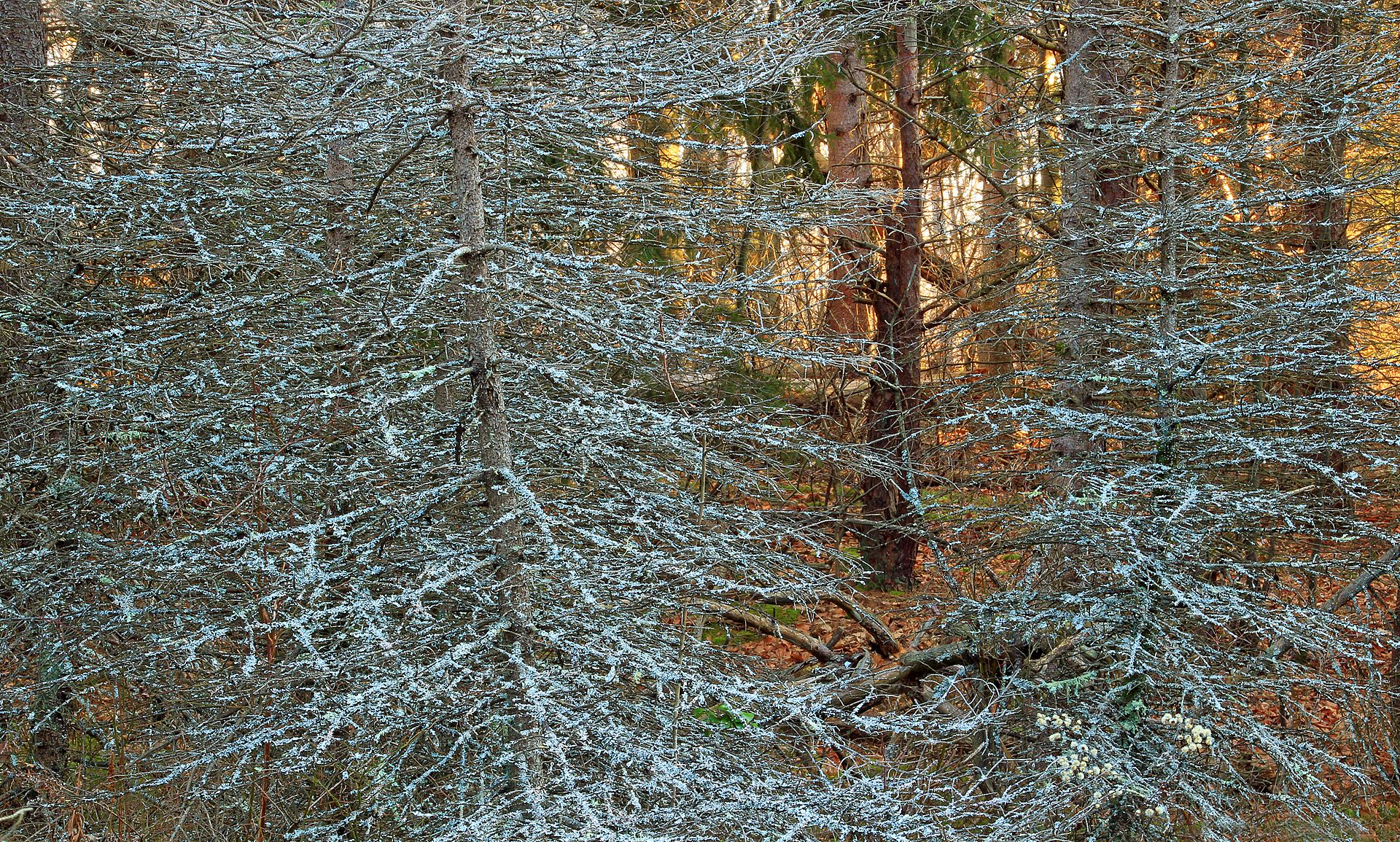
Range: Throughout the United States; attacks stressed, drought- or winter-injured treesSee it on the alert map
Symptoms & signs
- On spruce, lower branches die first and the dieback progresses upward, leaving brown, brittle limbs
- sunken, discolored cankers on branches and trunk
- bluish-white sap or amber resin oozing and crusting over cankers
- pinhead black fruiting bodies in dead bark
- on poplars and willows, girdling stem cankers that wilt branches
Treatment & management
- No effective fungicide — manage by keeping trees vigorous with proper watering (especially during drought) and mulch, since the fungus is opportunistic on stressed tissue
- Prune out cankered limbs in dry weather, cutting well into healthy wood and disinfecting tools
- Avoid wounding and winter injury
- Replace badly affected trees with adapted species
Host species
Common questions
Why are the lower branches of my blue spruce dying from the bottom up?
That bottom-up branch death, often with bluish-white resin crusts on the bark, is typical cytospora canker. It attacks stressed spruces; keep the tree watered and prune out dead limbs in dry weather.
Can I spray to cure cytospora canker?
No fungicide reliably controls it. Because the fungus exploits stressed trees, management is cultural: reduce stress with water and mulch, remove cankered wood cleanly, and avoid wounding the bark.
Related diseases
Tree Nerd Academy
Ready to sit the ISA Certified Arborist exam?
Video curriculum, flashcards, and exam-sim built by working arborists.