
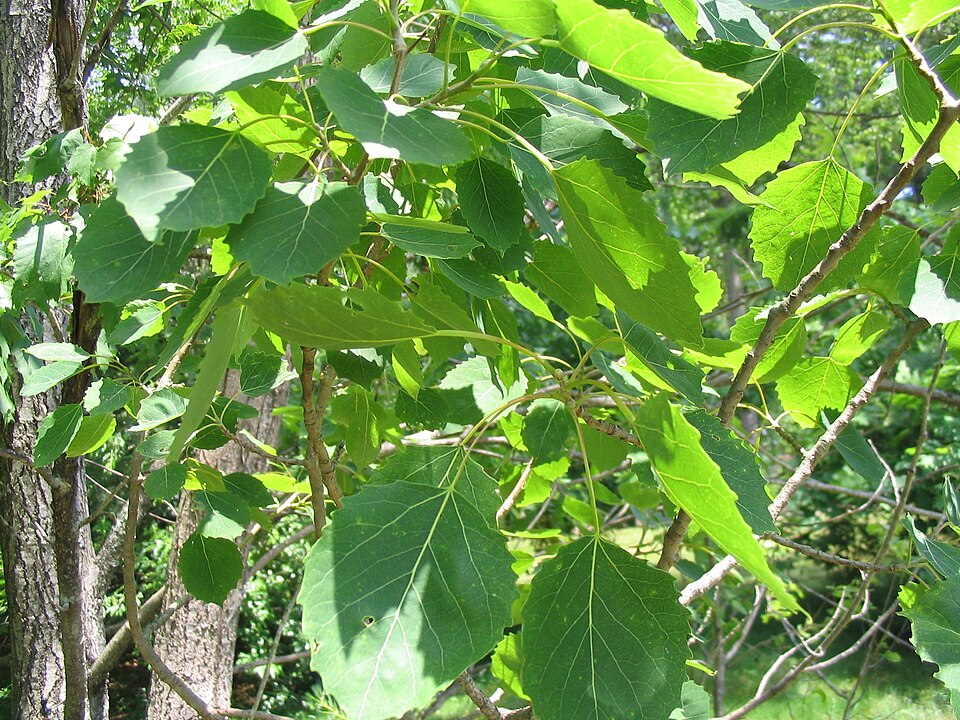
Bigtooth Aspen
Populus grandidentata
A fast, short-lived pioneer aspen with coarsely large-toothed leaves that flutter on flattened stalks, colonizing burned and cleared land by root suckers into clonal stands. Important for wildlife and pulp; weak-wooded and decay-prone, so mature trees near targets warrant risk assessment.
Field reference
Family
Salicaceae
Growth rate
Fast
Mature size
50–70 ft tall, 20–40 ft spread
Hardiness zone
3–6
Soil preference
Dry to moist sandy or loamy soils; a pioneer of disturbed and burned ground
Sun
Full sun
Pruning window
Dormant season; short-lived, so manage for safety near targets
Wood properties
Light, soft, weak poplar wood used for pulp, matches, and pallets. Weak, brittle limbs and decay-prone trunks; clones spread by root suckers into even-aged stands.
Native range
Northeastern and north-central North America, Nova Scotia to Manitoba and south to the Appalachians
Green weight
47 lb/ft³
Pests & diseases to watch
Common questions
Why do aspen leaves tremble in the slightest breeze?
Aspen leaf stalks (petioles) are flattened at right angles to the blade, so the leaves flutter and 'quake' in even light wind — a trait shared with quaking aspen and the source of that species' name.
Why are there so many aspen sprouts in my yard?
Aspens spread aggressively by root suckers, sending up new stems from a shared root system to form clonal groves. Mowing or digging the suckers is the usual control if you want a single tree.
Related species in Salicaceae
Tree Nerd Academy
Ready to sit the ISA Certified Arborist exam?
Video curriculum, flashcards, and exam-sim built by working arborists.