
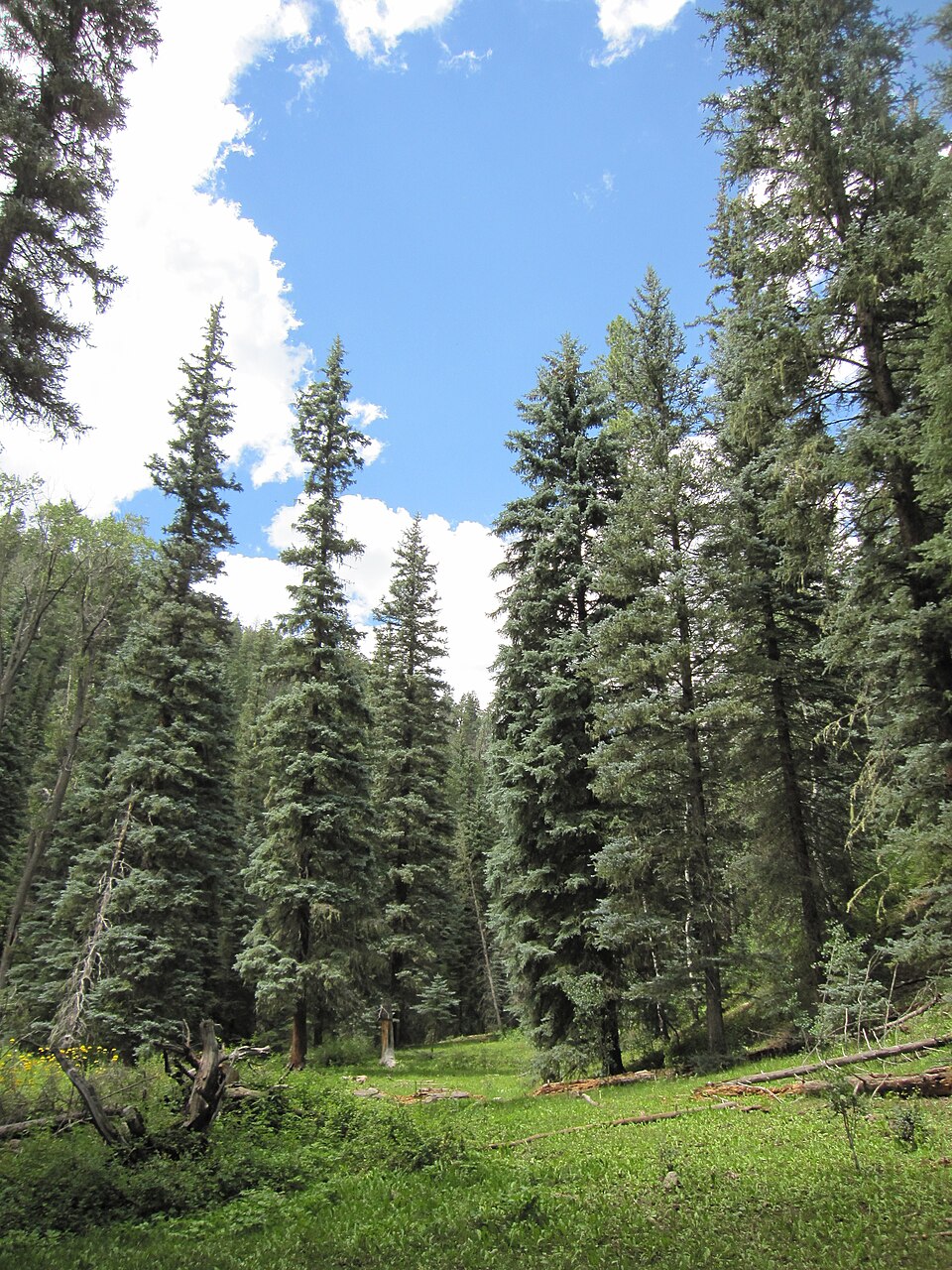
Colorado Blue Spruce
Picea pungens
A popular ornamental conifer prized for its stiff, sharp, silvery-blue needles and formal pyramidal shape. In the humid East it is plagued by needlecast diseases and cytospora canker, which kill lower branches from the bottom up. Best in cool, sunny, well-drained sites with good air movement.
Field reference
Family
Pinaceae
Growth rate
Slow
Mature size
30–60 ft tall, 10–20 ft spread
Hardiness zone
2–7
Soil preference
Moist, well-drained, slightly acidic soils; poor in hot humid climates
Sun
Full sun
Pruning window
Late winter to early spring (dormant)
Wood properties
Light, soft, low-density softwood (~0.38 SG) of little timber value. Stiff, sharp needles and whorled limbs; lower limbs often die back from disease.
Native range
Rocky Mountains of the western United States, Colorado, Utah, and Wyoming
Green weight
35 lb/ft³
Pests & diseases to watch
Common questions
Why are the lower branches of my blue spruce dying?
Bottom-up branch death is classic cytospora canker, often paired with needlecast. Prune out dead limbs in dry weather, improve airflow, and avoid overhead watering.
Why is my blue spruce thinning in a humid climate?
Blue spruce is adapted to the cool, dry Rockies and struggles with the heat, humidity, and fungal pressure of the Southeast and lower Midwest, where it is often short-lived.
Related species in Pinaceae
Tree Nerd Academy
Ready to sit the ISA Certified Arborist exam?
Video curriculum, flashcards, and exam-sim built by working arborists.