
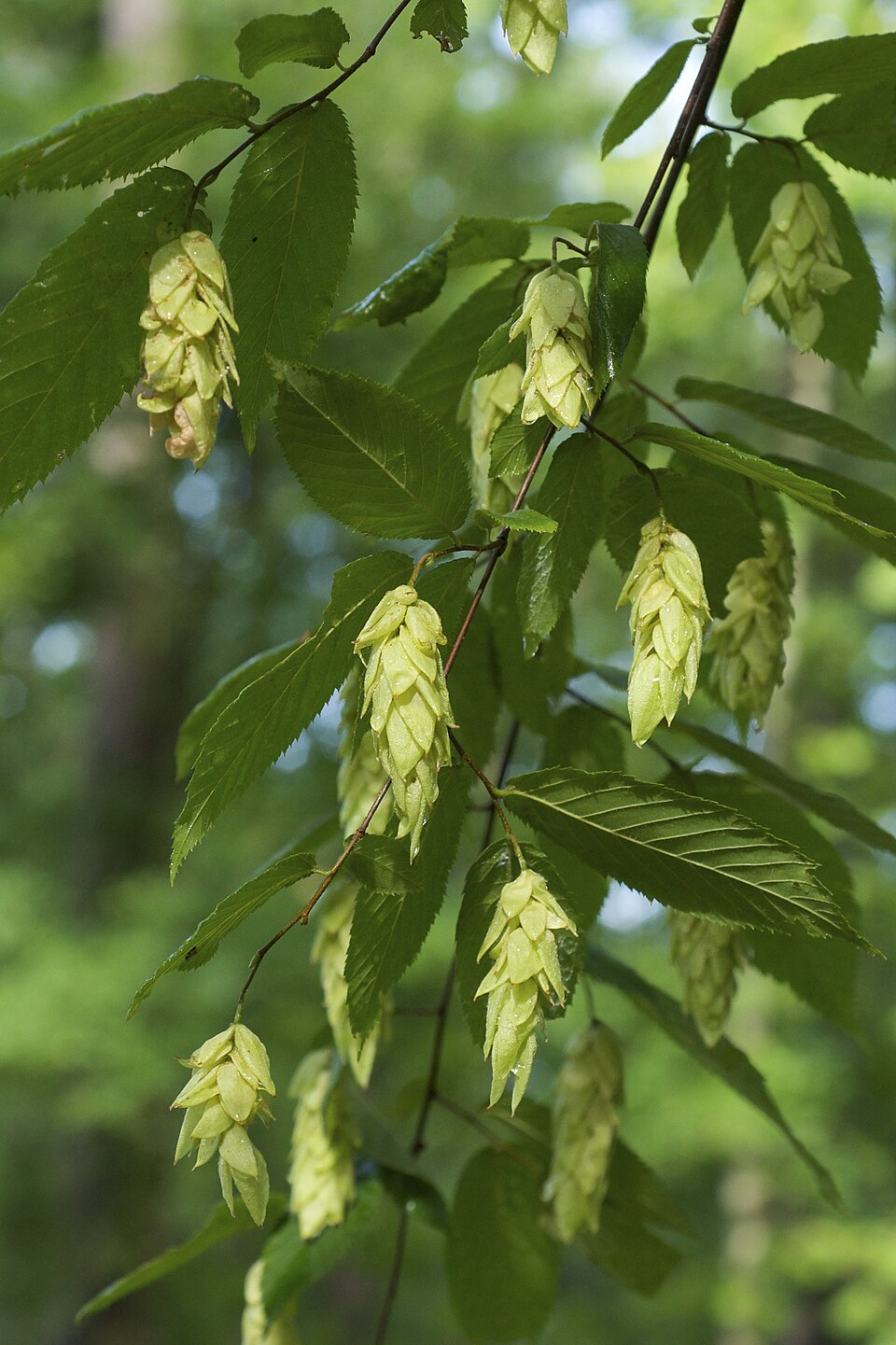
Eastern Hophornbeam
Ostrya virginiana
A slow, tough native understory tree, also called ironwood, with shreddy bark and hop-like papery seed clusters that hang into fall. Exceptionally hard wood, drought tolerance, and pest resistance make it an underused small shade and naturalizing tree; it transplants best young.
Field reference
Family
Betulaceae
Growth rate
Slow
Mature size
25–40 ft tall, 20–30 ft spread
Hardiness zone
3–9
Soil preference
Dry to moist, well-drained soils; very shade-tolerant and adaptable
Sun
Part shade to full sun
Pruning window
Dormant season; little pruning required
Wood properties
Extremely hard, dense, tough 'ironwood' (~0.63 SG) — among the hardest North American woods, historically used for tool handles and sleigh runners. Strong but small; dulls saw chains fast.
Native range
Eastern North America, Nova Scotia to Florida and west to Texas and Manitoba
Green weight
58 lb/ft³
Common questions
Why is hophornbeam called ironwood?
Its wood is among the hardest and densest of any North American tree, historically prized for tool handles, mallets, and anything needing extreme wear resistance. The name is shared with American hornbeam (musclewood), a related but different tree.
What are the hop-like clusters on the tree?
Those papery, inflated seed sacs resemble the hops used in brewing — hence 'hophornbeam.' They are ornamental, harmless, and a useful identification feature in late summer and fall.
Related species in Betulaceae
Tree Nerd Academy
Ready to sit the ISA Certified Arborist exam?
Video curriculum, flashcards, and exam-sim built by working arborists.