
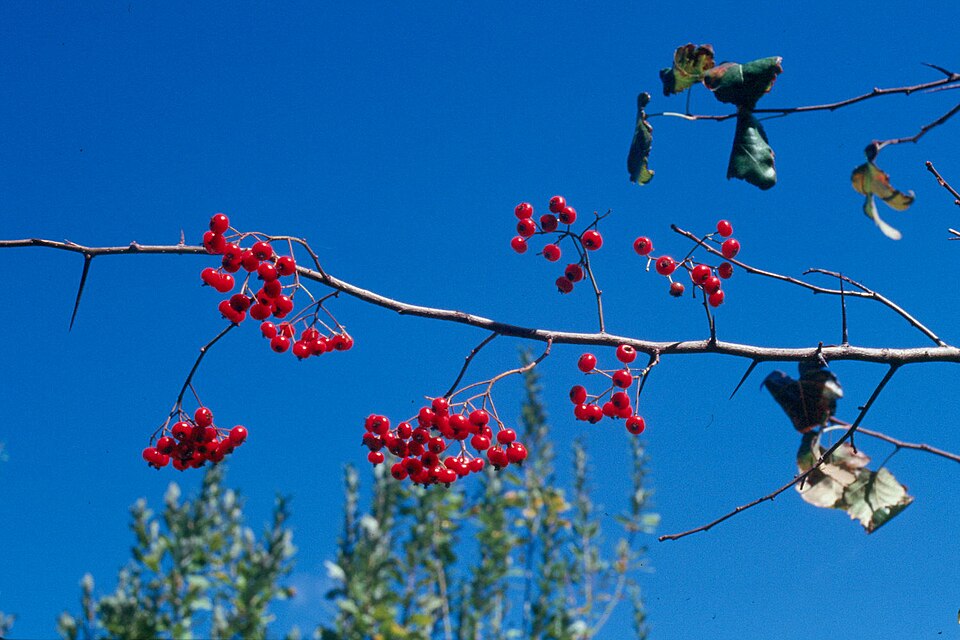
Washington Hawthorn
Crataegus phaenopyrum
A tough, thorny small tree with white late-spring flowers, glossy foliage, brilliant red-orange fall color, and persistent red berries that feed birds into winter. One of the more disease-resistant hawthorns (less rust and scab than most), it is valued as a barrier or specimen — but the long, sharp thorns demand care when pruning.
Field reference
Family
Rosaceae
Growth rate
Moderate
Mature size
25–30 ft tall, 20–25 ft spread
Hardiness zone
4–8
Soil preference
Adaptable, well-drained soils; tolerates drought, heat, and urban conditions
Sun
Full sun
Pruning window
Dormant season; mind the long, sharp thorns
Wood properties
Very hard, dense hawthorn wood on a small frame; light rigging. Armed with long sharp thorns — a real handling hazard for crews and a reason it is used as a barrier hedge.
Native range
Southeastern United States; widely planted across the East and Midwest
Green weight
58 lb/ft³
Pests & diseases to watch
Common questions
Is Washington hawthorn disease-resistant?
It is among the more resistant hawthorns to cedar-hawthorn rust and scab, though like all rose-family plants it can get fire blight. That relative toughness, plus four-season interest, makes it a popular small tree.
How dangerous are the thorns?
Very — Washington hawthorn bears long, sharp thorns that easily puncture skin and tires, so wear thick gloves and eye protection when pruning. The thorns also make it an effective living barrier hedge.
Related species in Rosaceae
Tree Nerd Academy
Ready to sit the ISA Certified Arborist exam?
Video curriculum, flashcards, and exam-sim built by working arborists.