
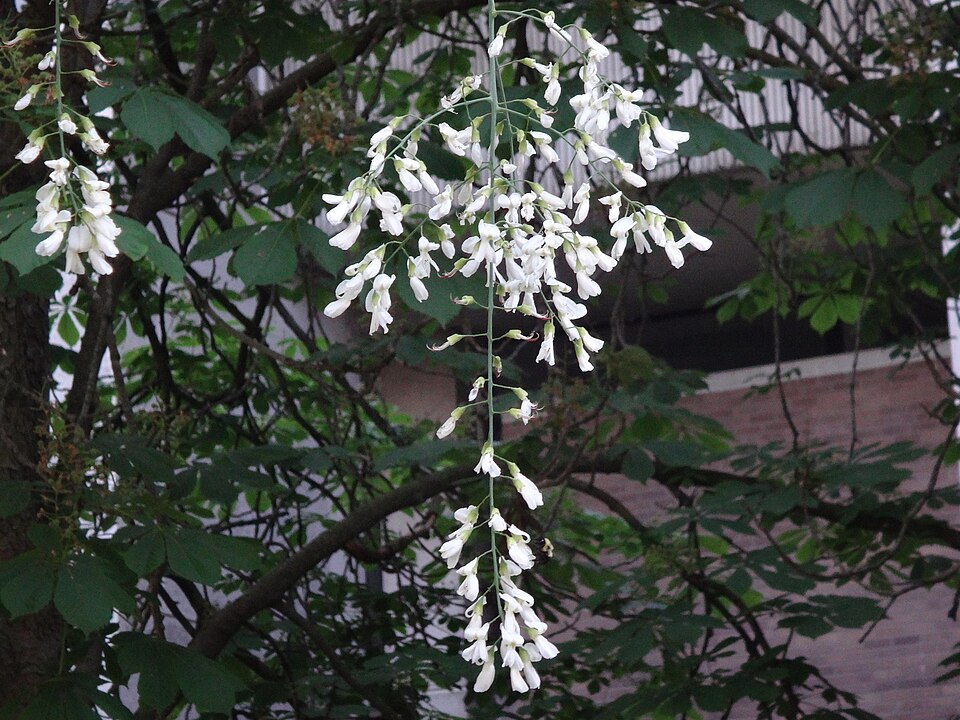
American Yellowwood
Cladrastis kentukea
A choice but underused native with smooth gray beech-like bark, bright fall color, and dramatic, fragrant white wisteria-like flower chains in late spring (heaviest every two to three years). Its tendency to low, codominant branching makes early structural pruning important — and that pruning must be done in summer because it bleeds sap heavily when dormant.
Field reference
Family
Fabaceae
Growth rate
Slow
Mature size
30–50 ft tall, 40–55 ft spread
Hardiness zone
4–8
Soil preference
Well-drained, fertile soils of varied pH; tolerates limestone and clay
Sun
Full sun
Pruning window
Summer — yellowwood bleeds heavily if pruned in late winter/spring
Wood properties
Hard, dense wood yielding a yellow dye (hence the name). Strong material, but the tree's low, wide-branching habit builds tight, included-bark forks prone to splitting.
Native range
Southeastern United States, scattered and uncommon, mostly limestone soils of the interior
Green weight
52 lb/ft³
Pests & diseases to watch
Common questions
Why should yellowwood be pruned in summer instead of winter?
Yellowwood bleeds sap profusely from late-winter and spring cuts. Pruning in summer, after the spring sap flow, avoids the heavy bleeding and lets wounds close more cleanly.
Why doesn't my yellowwood flower every year?
Yellowwood is a notably alternate bloomer — it flowers spectacularly some years and sparsely in between, often on a two-to-three-year cycle. This is normal and not a sign of a problem.
Related species in Fabaceae
Tree Nerd Academy
Ready to sit the ISA Certified Arborist exam?
Video curriculum, flashcards, and exam-sim built by working arborists.