
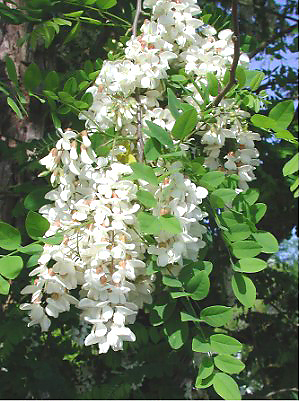
Black Locust
Robinia pseudoacacia
A fast-growing, nitrogen-fixing pioneer with fragrant white pea-like flowers and the hardest, most rot-resistant common native wood, long used for fence posts. It suckers aggressively and is considered invasive outside its native Appalachian range. Paired thorns on young growth and bark and seeds are toxic to livestock and people.
Field reference
Family
Fabaceae
Growth rate
Fast
Mature size
40–70 ft tall, 20–35 ft spread
Hardiness zone
3–8
Soil preference
Adaptable, including poor, dry, eroded soils; fixes nitrogen
Sun
Full sun
Pruning window
Late winter (dormant)
Wood properties
Extremely hard, dense, strong, rot-resistant ring-porous wood (~0.69 SG) — outstanding fence-post and firewood timber. Strong but the brittle, thorny young wood and suckering complicate work.
Native range
Native to the Appalachians and Ozarks; naturalized and invasive across North America
Green weight
58 lb/ft³
Common questions
Why does black locust keep sprouting everywhere after I cut it?
Cutting stimulates vigorous root suckering, so removal often spreads it. Treating freshly cut stumps with herbicide is usually needed to stop the colony from regenerating.
Is black locust wood good for outdoor use?
Excellent — it is among the hardest, strongest, most decay-resistant North American woods, prized for fence posts, decking, and durable outdoor structures without treatment.
Related species in Fabaceae
Tree Nerd Academy
Ready to sit the ISA Certified Arborist exam?
Video curriculum, flashcards, and exam-sim built by working arborists.