
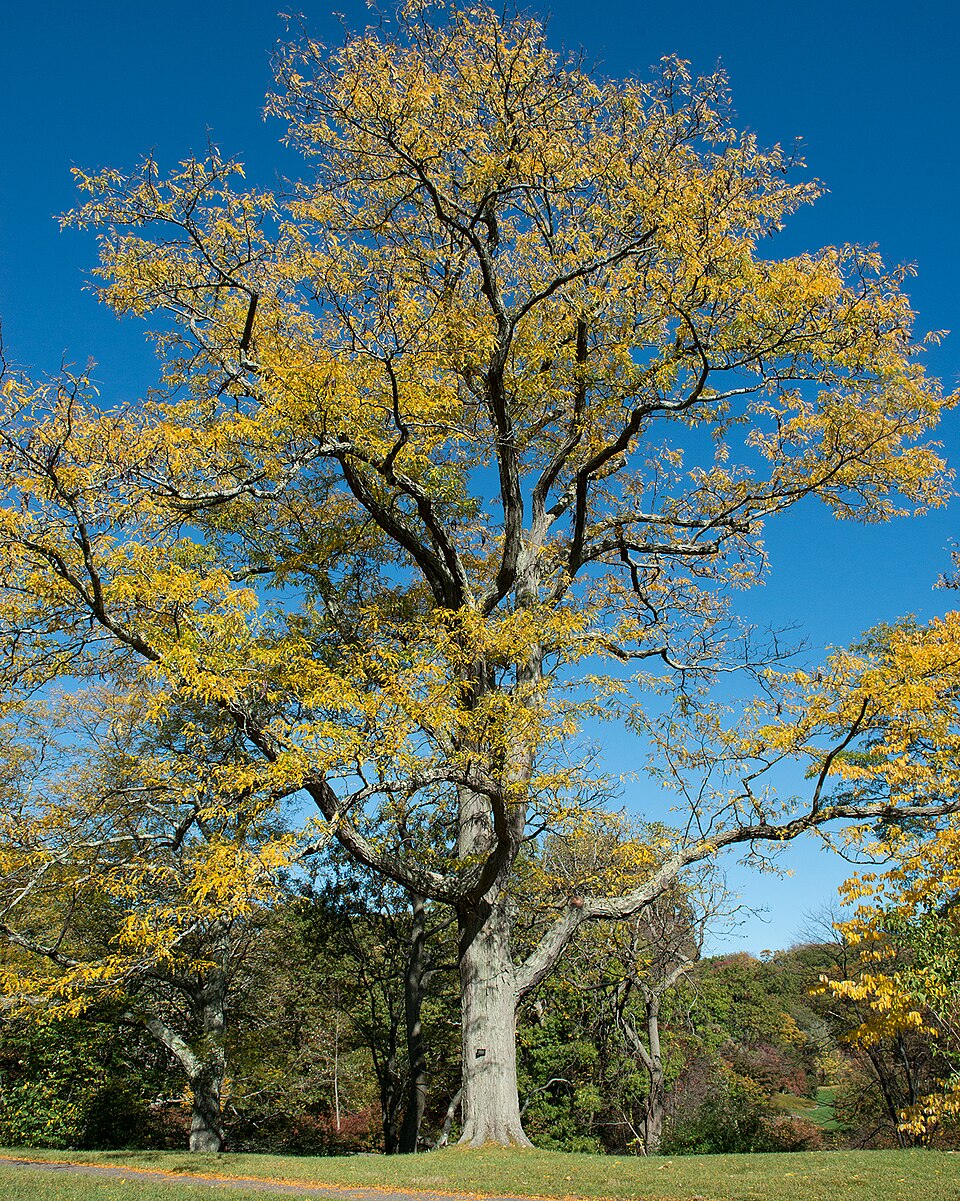
Honeylocust
Gleditsia triacanthos
A tough, adaptable urban tree casting light, dappled shade through fine compound leaves that need little cleanup. Thornless, often seedless cultivars (such as 'Skyline' and 'Shademaster') are planted heavily as street trees, replacing the wild form's vicious branched thorns and messy pods. Tolerant of salt, drought, and compaction but overused, so diversify plantings.
Field reference
Family
Fabaceae
Growth rate
Fast
Mature size
50–70 ft tall, 40–60 ft spread
Hardiness zone
3–9
Soil preference
Highly adaptable — tolerates salt, drought, alkalinity, and compaction
Sun
Full sun
Pruning window
Late winter (dormant)
Wood properties
Hard, strong, dense, durable ring-porous wood (~0.66 SG) that is rot-resistant. Strong limbs; wild types carry large branched thorns — watch crews on removals.
Native range
Central United States; widely planted and naturalized well beyond its native range
Green weight
61 lb/ft³
Pests & diseases to watch
Common questions
Why does my honeylocust have huge thorns and bean pods, but my neighbor's doesn't?
Wild honeylocust has large branched trunk thorns and long seed pods. Landscape trees are usually thornless, seedless cultivars selected to drop the hazards and the litter.
Is honeylocust a good street tree?
Yes — it tolerates salt, drought, compaction, and pollution, and its fine leaflets need little raking. Just avoid over-planting it, since monocultures invite pest and disease problems.
Related species in Fabaceae
Tree Nerd Academy
Ready to sit the ISA Certified Arborist exam?
Video curriculum, flashcards, and exam-sim built by working arborists.