
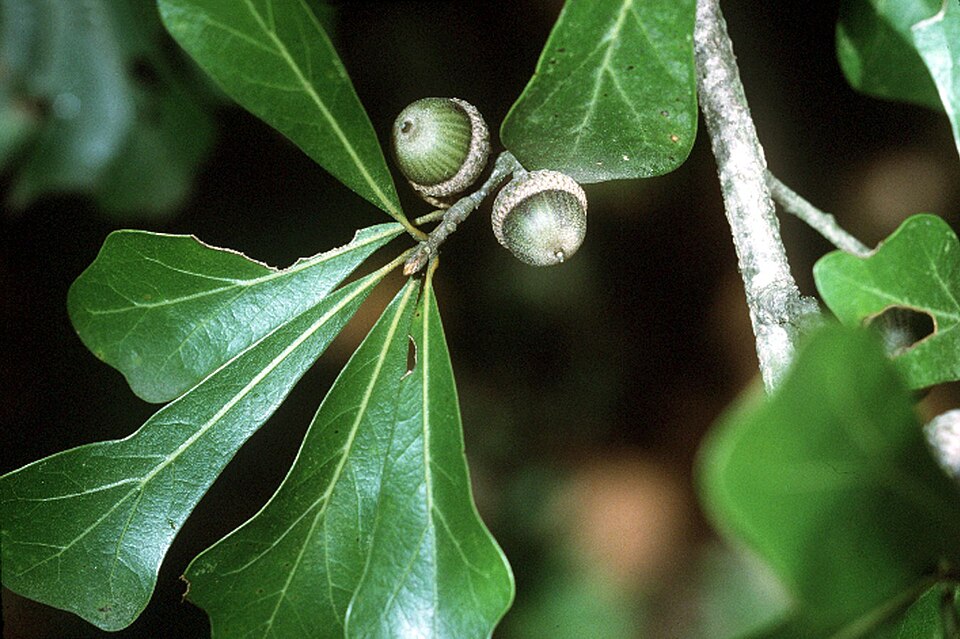
Water Oak
Quercus nigra
A fast, semi-evergreen Southern red oak common in yards and along streets, but short-lived and structurally weak as it matures. Heavy limb drop and hidden decay make mature water oaks a frequent risk-assessment and removal subject.
Field reference
Family
Fagaceae
Growth rate
Fast
Mature size
50–80 ft tall, 40–60 ft spread
Hardiness zone
6–10
Soil preference
Moist bottomland to average soils; tolerates wet feet and clay
Sun
Full sun
Pruning window
Dormant season; avoid spring wounds where oak wilt occurs
Wood properties
Moderately heavy red-group oak (~0.56 SG) that decays fast once stressed. Notorious for internal rot and limb shedding — sound every major union before climbing or rigging.
Native range
Southeastern United States coastal plain, New Jersey to Florida and Texas
Green weight
61 lb/ft³
Pests & diseases to watch
Oak Wiltfungus · Severe severity · peak Spring and early summer (high infection risk from fresh wounds April–July)Spongy Moth (formerly Gypsy Moth)pest · High severity · peak Caterpillars feed and defoliate May–June; egg masses laid mid-summer overwinterBacterial Leaf Scorchdisease · High severity · peak Symptoms most visible mid-summer to fall (July–October)
Common questions
Why are mature water oaks considered risky?
They grow fast and decline early, developing internal decay and shedding large limbs by 40–60 years. Regular risk assessment is wise on big yard trees, especially near targets.
Is water oak evergreen?
It is tardily deciduous — it holds many leaves through winter in the Deep South and drops them in late winter as new growth pushes, so expect a leaf-drop cleanup in spring rather than fall.
Related species in Fagaceae
Tree Nerd Academy
Ready to sit the ISA Certified Arborist exam?
Video curriculum, flashcards, and exam-sim built by working arborists.