
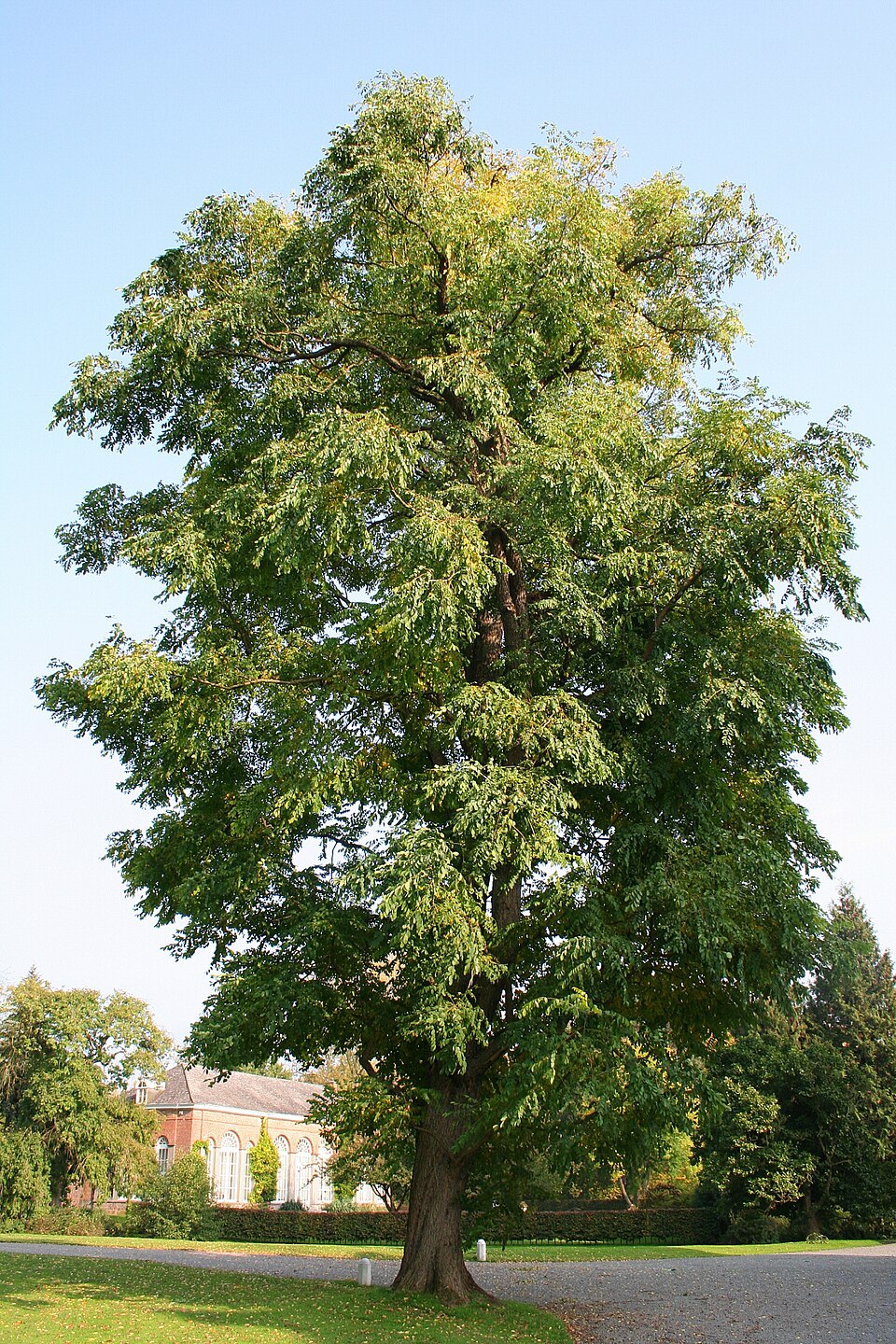
Kentucky Coffeetree
Gymnocladus dioicus
A tough, nearly pest-free native with bold bipinnate leaves, picturesque winter form, and rugged scaly bark. Leafs out very late and drops early; female trees bear thick seed pods, so male cultivars are preferred for tidy sites. Raw seeds and pods are toxic if eaten.
Field reference
Family
Fabaceae
Growth rate
Slow
Mature size
60–75 ft tall, 40–50 ft spread
Hardiness zone
3–8
Soil preference
Deep, moist, rich soils; tolerates drought, alkalinity, and urban conditions once established
Sun
Full sun
Pruning window
Dormant season; coarse branching makes structure easy to read
Wood properties
Strong, durable, rot-resistant wood (~0.53 SG) with few weak unions. Coarse, sparse branching and stout limbs handle rigging predictably.
Native range
Midwestern United States, New York to Nebraska and south to Oklahoma
Green weight
47 lb/ft³
Common questions
Why is my coffeetree bare so late into spring?
Kentucky coffeetree is one of the last trees to leaf out, often not until late May, and one of the first to defoliate. The long bare period is normal — its name 'Gymnocladus' even means 'naked branch.'
Should I plant a male or female tree?
Male (seedless) cultivars are usually preferred for streets and lawns because female trees drop large, hard, messy seed pods. The raw seeds and pulp are toxic, so seedless types are safer around children and pets.
Related species in Fabaceae
Tree Nerd Academy
Ready to sit the ISA Certified Arborist exam?
Video curriculum, flashcards, and exam-sim built by working arborists.