
Hemlock Woolly Adelgid
Adelges tsugae
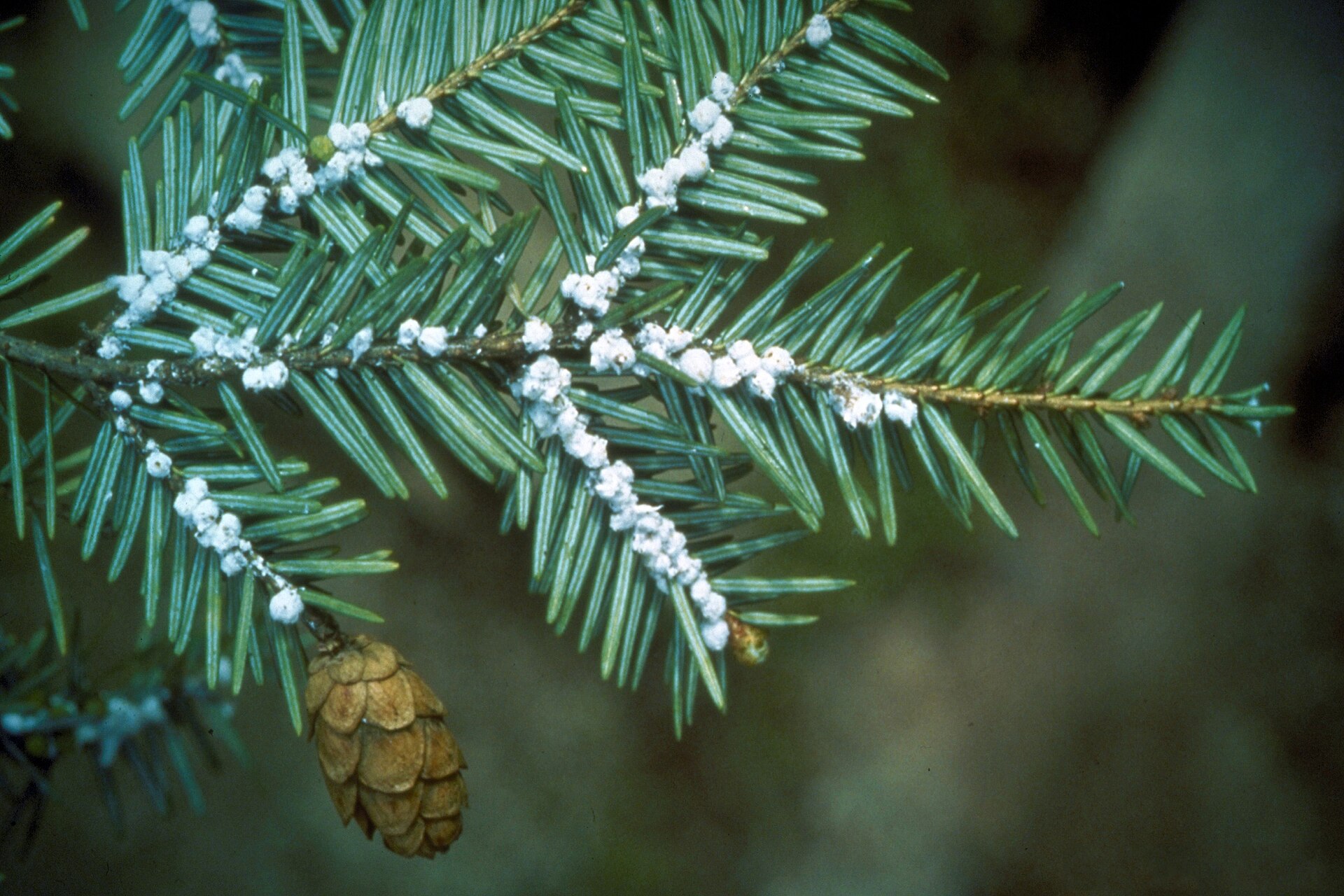
Range: Eastern United States from the southern Appalachians to New EnglandSee it on the alert map
Symptoms & signs
- Telltale white, woolly, cottony masses at the base of needles on the underside of twigs
- needles graying, drying, and dropping
- thinning crown and progressive branch dieback from the bottom and inside out
- loss of new growth
- tree death within 4–10 years if untreated
Treatment & management
- Soil-drench or trunk-injected systemic imidacloprid or dinotefuran gives multi-year protection of individual trees
- Horticultural oil or insecticidal soap for accessible smaller trees
- Biological control with predatory beetles (Laricobius, Sasajiscymnus) in forest settings
- Keep trees watered and avoid nitrogen, which favors the insect
Host species
Common questions
What are the white fuzzy balls on my hemlock?
They are the protective wool of hemlock woolly adelgid, a tiny sap-sucking insect at the needle bases. Their presence means the tree is infested and needs treatment to survive.
How long can a hemlock survive an infestation?
Untreated eastern hemlocks typically decline and die within four to ten years, faster in warmer southern sites. Systemic insecticide treatment can protect individual landscape trees for years.
Related pests
Tree Nerd Academy
Ready to sit the ISA Certified Arborist exam?
Video curriculum, flashcards, and exam-sim built by working arborists.