
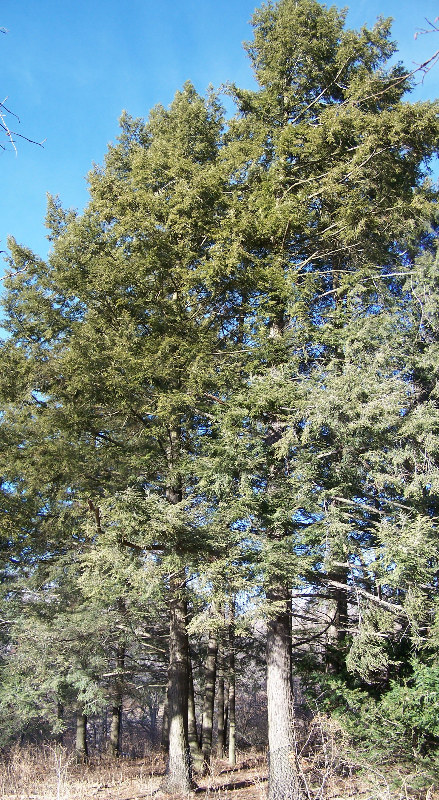
Eastern Hemlock
Tsuga canadensis
A graceful, deeply shade-tolerant conifer of cool ravines and north slopes, with soft flat needles and a delicate drooping leader. It anchors entire hemlock-forest ecosystems but is being killed across the East by hemlock woolly adelgid. Sensitive to heat, drought, and sudden exposure.
Field reference
Family
Pinaceae
Growth rate
Slow
Mature size
40–70 ft tall, 25–35 ft spread
Hardiness zone
3–7
Soil preference
Cool, moist, well-drained acidic soils; intolerant of drought and heat
Sun
Part shade to full shade
Pruning window
Late winter to early spring; tolerates shearing as a hedge
Wood properties
Coarse, moderately soft, brittle softwood (~0.40 SG) prone to splintering and shake. Fine, flexible branchlets; declining HWA-infested trees become brittle.
Native range
Eastern North America, Nova Scotia and the Great Lakes south through the Appalachians
Green weight
50 lb/ft³
Pests & diseases to watch
Common questions
What are the white cottony specks on the underside of my hemlock needles?
Those woolly masses at the needle bases are hemlock woolly adelgid, a sap-feeding insect that can kill the tree in a few years. Confirm and treat with soil or trunk-applied systemics.
Can hemlock take full sun?
Not well — it is a shade-loving understory conifer that scorches and thins in hot, dry, exposed sites. Site it in cool, moist, sheltered locations.
Related species in Pinaceae
Tree Nerd Academy
Ready to sit the ISA Certified Arborist exam?
Video curriculum, flashcards, and exam-sim built by working arborists.