
Dutch Elm Disease
Ophiostoma novo-ulmi
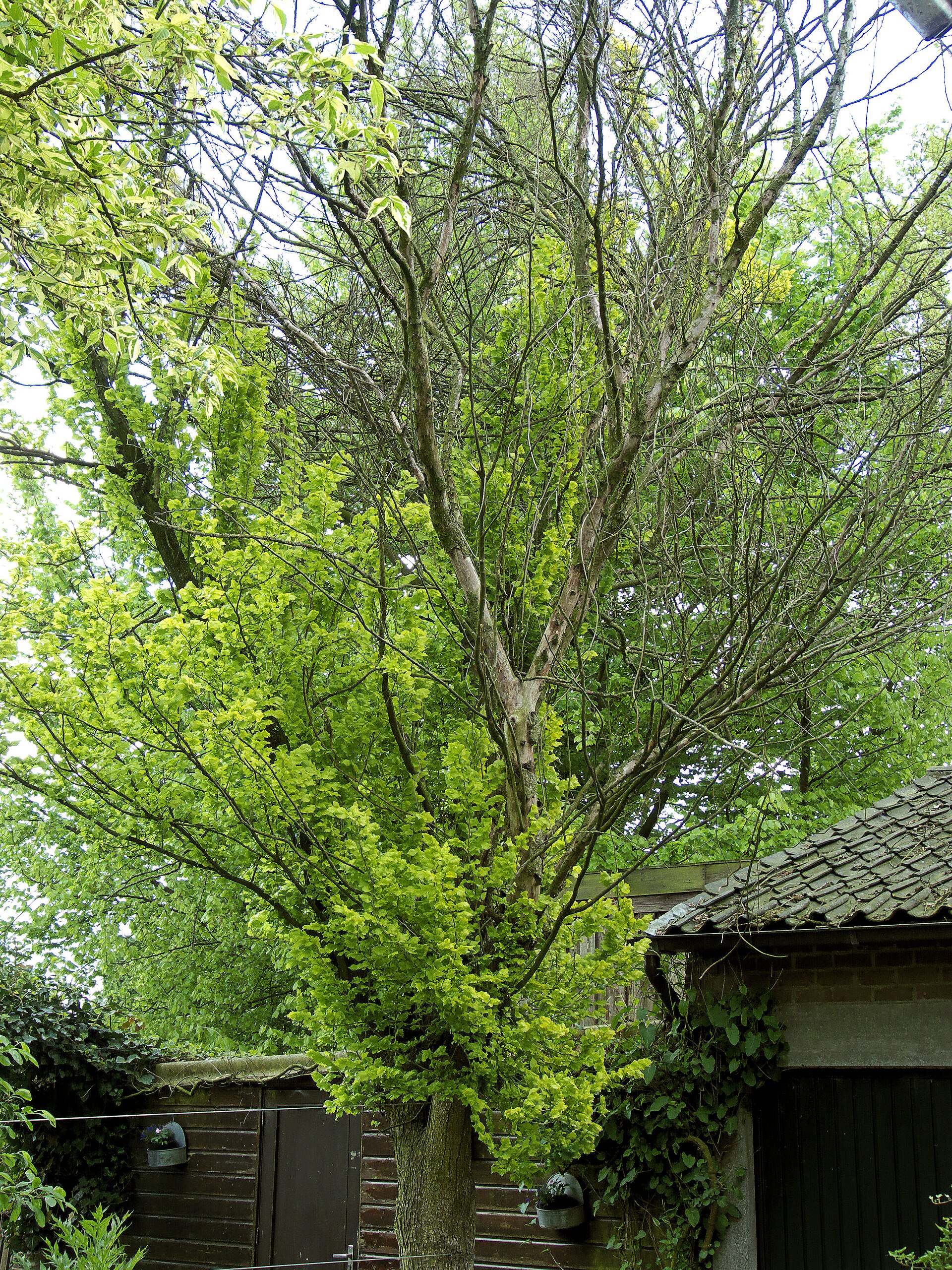
Range: Throughout the native range of American elm in the United States and CanadaSee it on the alert map
Symptoms & signs
- Sudden 'flagging' — wilting, yellowing, then browning of leaves on individual upper branches in early summer
- brown streaking in the sapwood (visible when bark is peeled from a wilting branch)
- rapid progression through the crown
- tree-to-tree spread via shared root grafts
Treatment & management
- Preventive macro-injection of propiconazole fungicide into high-value elms every 1–3 years
- Promptly prune out flagging branches well below streaking
- Sever root grafts between adjacent elms by trenching
- Sanitation: remove and destroy dead/dying elm wood that breeds the bark beetle vectors
- Plant resistant cultivars
Host species
Common questions
How does Dutch elm disease spread?
Two ways: elm bark beetles carry fungal spores from infected to healthy trees, and the fungus moves directly between neighboring elms through naturally grafted roots.
Why prune elms only in winter?
Fresh wounds in the growing season release scents that attract the bark beetles that vector the fungus. Dormant-season pruning avoids drawing them in.
Related diseases
Tree Nerd Academy
Ready to sit the ISA Certified Arborist exam?
Video curriculum, flashcards, and exam-sim built by working arborists.