
Soil Compaction and Urban Tree Decline
The most common thing killing urban trees isn't a pest — it's the ground itself. Why compaction suffocates roots, and what actually fixes it.
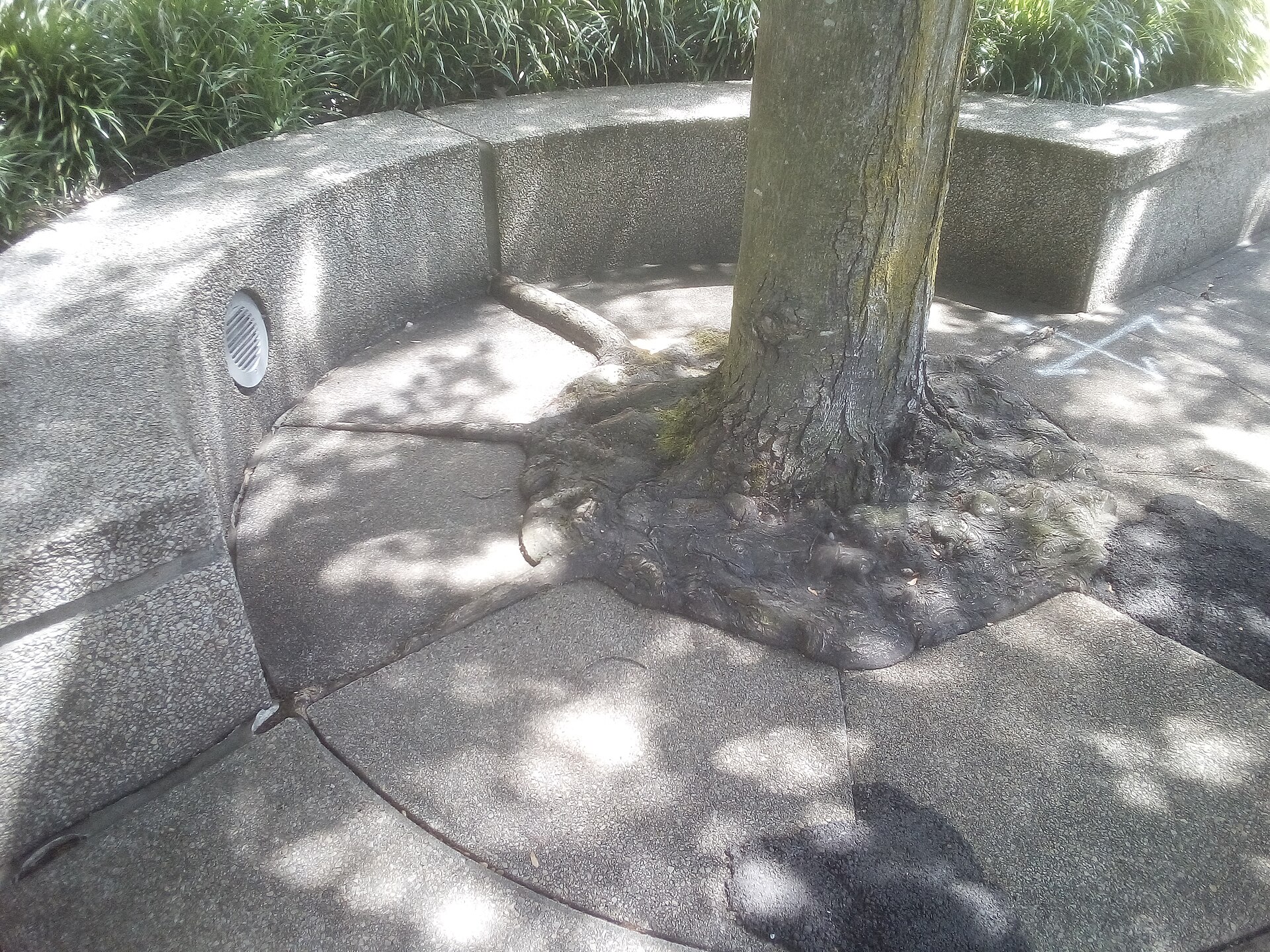
If you only learn to recognize one cause of urban tree decline, make it soil compaction. It's everywhere, it's slow, it's invisible from the street, and it kills more city trees than any insect or fungus on the alert maps. The frustrating part is that by the time the canopy shows it, the damage is years deep.
Roots need air, and compaction takes it away
Healthy soil is roughly half solids and half pore space, and that pore space is split between water and air. Roots respire — they consume oxygen and give off carbon dioxide — and they depend on the larger macropores for that gas exchange and for the room to grow.
Compaction crushes those macropores. Foot traffic, vehicles, construction equipment, and even repeated mowing press soil particles together, collapsing the air-filled pores first. The result:
- Oxygen drops and CO₂ builds up in the root zone — roots effectively suffocate.
- Water can't infiltrate, so it runs off (drought stress) or sits on top (the pores that remain stay waterlogged) — sometimes both, on the same site, in the same year.
- Roots can't physically penetrate dense soil, so the rooting volume shrinks.
A tree can lose a large fraction of its functional rooting environment without a single visible wound. The canopy just slowly thins.
Why it reads as something else
Compaction is the great impostor. Because it stresses the whole tree through the roots, it produces the same generic decline as a dozen other problems: small leaves, thinning crown, scorch, early fall color, dieback, and a tree that limps along for years. Crews chase the symptom — spray the opportunistic borer, fertilize the chlorosis — and miss the airless soil underneath.
The diagnostic tells:
- Site context. Lawns, parking strips, plazas, recently developed lots, anywhere with traffic over the root zone. Often multiple trees on the site decline together.
- The probe doesn't go in. A soil probe or even a screwdriver meeting hard resistance in the upper profile is a strong signal.
- History. Construction, grade changes, or stored materials over the roots in the last few years.
What does not fix it
- Fertilizer. Feeding a suffocating tree doesn't add oxygen or pore space. Pushing growth on a stressed root system can make things worse.
- "Aerating" by punching a few holes. Token coring of a small area does little against compaction across a whole root zone.
- Tilling near an established tree. You'll shred functional roots. Tillage is a planting-time fix, not a remedy for a mature tree.
What actually works
The goal is to restore pore space and rooting volume without destroying the existing roots.
- Air-tool soil decompaction. An air spade or supersonic air tool fractures compacted soil and breaks up the profile with minimal root damage — the workhorse remedy for mature trees. Done radially or in a grid through the root zone, it reopens pore space.
- Incorporate organic matter / amendment into the loosened soil to keep it open and feed soil biology — quality compost worked into air-tilled trenches or the fractured zone.
- Vertical mulching / radial trenching — air-excavated trenches backfilled with amended soil create channels of better-structured rooting medium.
- Mulch, and get the traffic off. A wide ring of coarse organic mulch (kept off the trunk) moderates the soil, feeds biology, and — critically — keeps feet and tires off the root zone so it doesn't re-compact. The cheapest, most underrated intervention is simply changing the use of the ground.
- Root-collar excavation while you're there. Compaction sites very often also have buried flares and girdling roots. Air-excavate the flare and fix both at once.
Prevent it before it starts
On any site with construction or development, the highest-value move is protecting the root zone before the damage happens: fence off the critical root zone, keep equipment and storage out, and don't let the soil get compacted in the first place. No remediation restores soil as well as never wrecking it.
The takeaway for the field: when a city tree is in slow, unexplained decline, probe the soil before you reach for a product. More often than not, the ground is the diagnosis.
Tools referenced in this article
FAQ
How does compaction actually kill a tree?
What's the best fix for compacted soil around a mature tree?
Video curriculum, flashcards, and exam-sim built by working arborists.