
Diagnosing Decline: A Systematic Approach
A thinning, struggling tree rarely has one cause. Work the problem like a detective — site, history, signs, and symptoms — before you reach for a product.
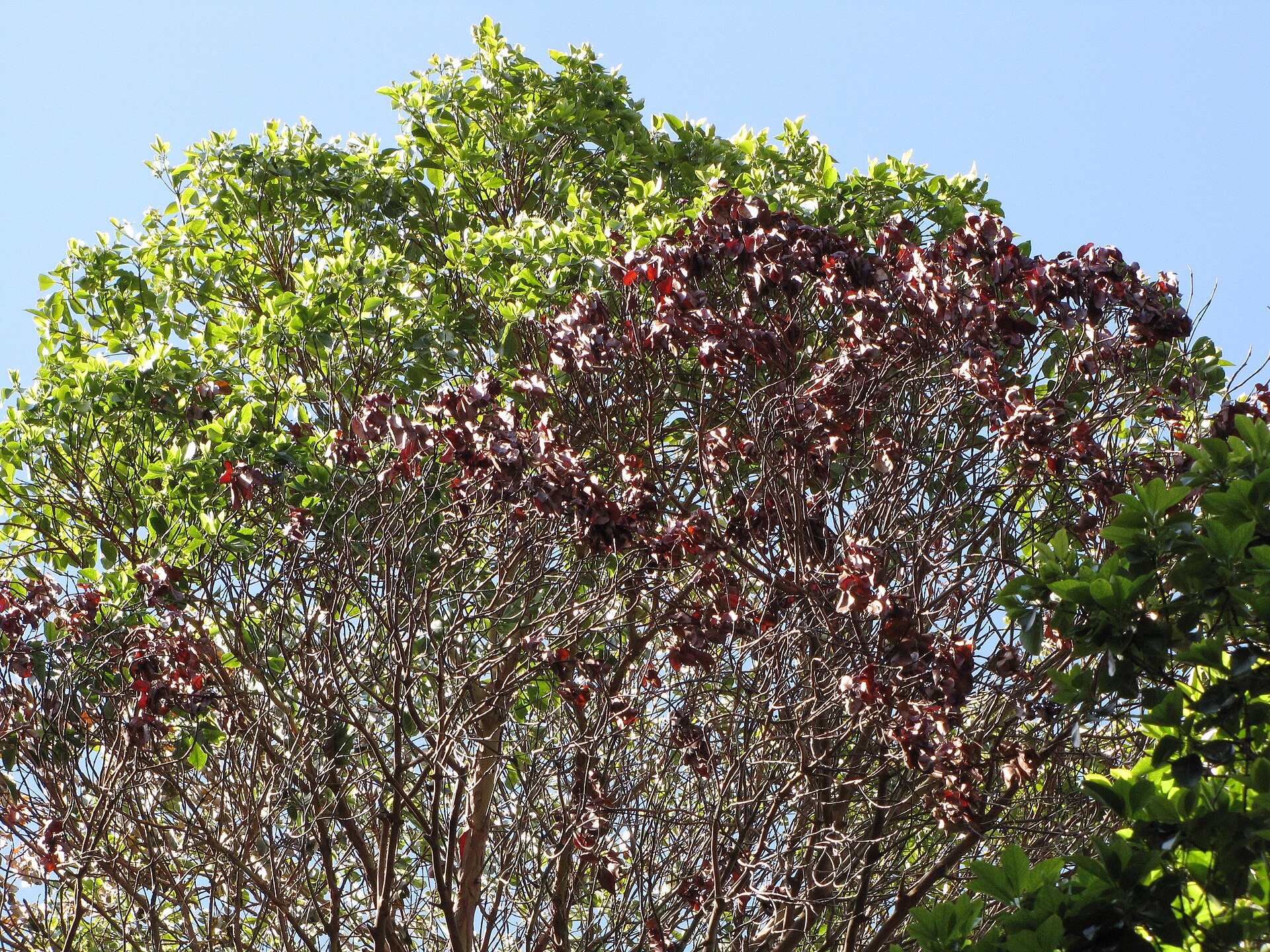
The fastest way to misdiagnose a declining tree is to start at the canopy and guess. Thinning, dieback, off-color foliage, and small leaves are the end of a story, not the start of one. A systematic diagnosis works backward from the symptoms to the actual cause — and most of the time the cause is below grade, in the soil and roots, not a bug you can spray.
Symptoms vs. signs — get the vocabulary right
- A symptom is the tree's response: dieback, chlorosis, undersized leaves, early fall color, sparse canopy.
- A sign is the actual causal agent or its product: a fungal conk, mycelium, an insect, frass, a gall.
You diagnose from both, but symptoms alone are notoriously non-specific. Drought, root damage, compaction, girdling roots, and a half-dozen diseases can all produce the same thinning crown. So you don't stop at the symptom — you build a case.
The systematic walk
1. Know the plant
Identify the species and know what normal looks like for it — typical color, leaf size, growth rate, and its known vulnerabilities. Half of "diagnosis" is recognizing that a tree is behaving abnormally for its species. A slightly sparse canopy is alarming on one tree and baseline on another.
2. Read the site and the history
This is where the answer usually lives. Ask:
- What changed, and when? Construction, grade changes, trenching, new irrigation, a paving job, a flooded season, a drought. Decline often lags the insult by one to several seasons, so the trigger may be two years back.
- Planting depth and the root flare. Buried flares and circling/girdling roots are a leading, under-diagnosed cause of slow urban decline. Excavate and look.
- Soil. Compaction, drainage, texture, pH, fill soil, restricted rooting volume. Probe it. A tree in a compacted, airless root zone is suffocating regardless of what the leaves suggest.
- Water. Both directions — chronic drought and chronic overwatering produce decline, sometimes the same-looking decline.
3. Examine the tree, top to bottom
Work systematically:
- Roots and flare — girdling roots, decay, mechanical damage, depth.
- Trunk — cankers, cracks, conks, wounds, included bark.
- Scaffolds and branches — dieback pattern (top-down? one side? scattered?). The pattern is diagnostic: top-down dieback points one direction, one-sided points to a root or vascular issue on that side, marginal leaf scorch points another.
- Foliage — color, size, distribution, timing, and any signs (spots, pustules, insects, frass).
4. Distinguish living from dead, and abiotic from biotic
Scratch a twig: green and moist under the bark is alive; brown and dry is dead. Map how much of the crown is actually gone.
Then ask the big fork: abiotic or biotic? Abiotic (non-living) causes — drought, compaction, planting depth, salt, chemical injury, mechanical damage — typically affect many plants of different species in the same area, show a gradient tied to the site, and lack a living causal agent. Biotic causes (a specific pest or pathogen) tend to be species-specific and come with signs. Most urban decline is abiotic or a complex of stressors, not a single dramatic pathogen.
5. The decline spiral
Many struggling trees are caught in a spiral: a predisposing stress (compaction, bad planting, drought) weakens the tree, an inciting event (a drought year, a construction insult) tips it, and contributing organisms (opportunistic borers, canker fungi, root rots) move in on the weakened tissue. The borer you find is real — but it's often the contributing factor, not the cause. Spray the borer and miss the compaction, and the tree keeps dying.
Confirm before you treat
Don't prescribe off a hunch. Use the tools:
- Excavate the root flare with an air spade or by hand.
- Probe and test the soil; consider a lab for texture, pH, nutrients.
- Sample properly for a diagnostic lab when a pathogen is suspected — the right tissue, fresh, with the transition zone between healthy and affected.
Then write the prescription to the cause. If it's compaction and a buried flare, your "treatment" is soil decompaction and root-collar excavation, not a fungicide. Match the fix to the diagnosis, and you'll spend less of the client's money curing the wrong problem.
Tools referenced in this article
FAQ
Why is most tree decline misdiagnosed?
How do I tell an abiotic cause from a disease?
Video curriculum, flashcards, and exam-sim built by working arborists.