
Plant Health Care: Building a Recurring Service Line
Removals are one-and-done. A PHC program turns one-time customers into a portfolio of recurring revenue — and keeps more trees standing. How to build one that holds.
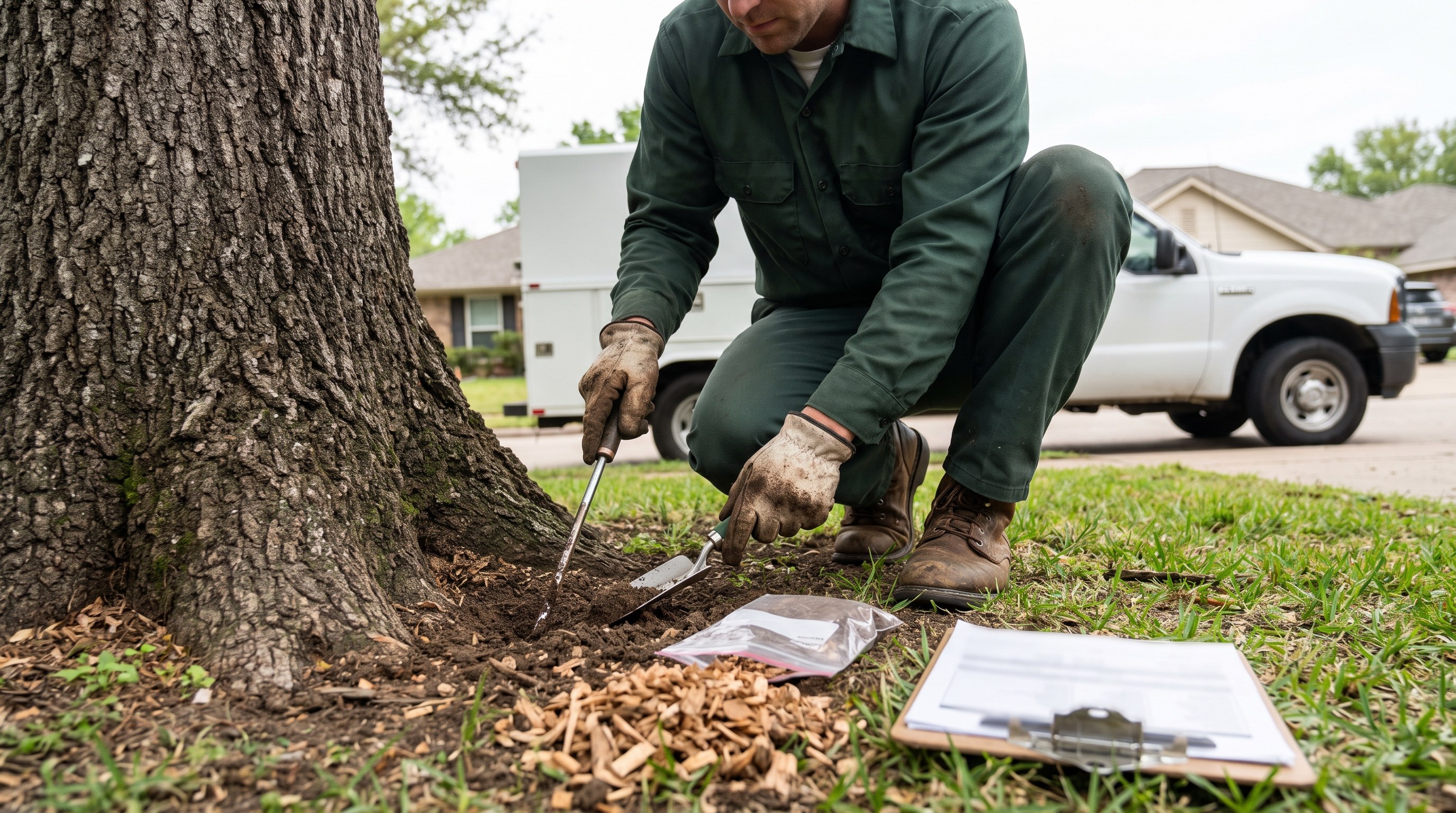
Most tree companies live and die on removals and storm work: high-ticket, satisfying, and completely unpredictable. A Plant Health Care (PHC) program is the counterweight — a recurring, relationship-based service line that smooths your revenue, fills the slow weeks, and aligns your business with keeping trees alive instead of only taking them down. It's also the work that most differentiates a real arborist from a cut-and-go outfit.
What PHC actually is
PHC is the practice of monitoring and proactively managing the health and condition of trees and shrubs over time — soil, roots, pests, diseases, structure, and environment — rather than reacting to crises. Done well it's preventive and holistic: the goal is a sustainable, lower-input landscape, not a spray schedule. Crucially, PHC is built on Integrated Pest Management (IPM) — you monitor, set thresholds, identify the actual cause, and intervene with the least-toxic effective option, not blanket calendar sprays.
That distinction matters for your brand. The market is moving away from "spray everything every month," and clients increasingly want the arborist who treats only when monitoring justifies it.
Why it's the best revenue you'll add
- Recurring, not one-shot. A removal earns once. A PHC client signs a seasonal or annual program and renews — predictable cash flow you can forecast and staff against.
- It fills your calendar. Soil work, monitoring visits, dormant treatments, and root-collar excavations are schedulable in the windows when climbing and removal demand sags.
- It compounds into other work. A PHC tech on the property regularly is the first to spot the limb that needs reducing, the tree that needs cabling, the removal that's coming. The program is a referral and upsell engine for your high-ticket services.
- Higher-margin, lower-risk. Much of it is ground-based and repeatable, with less of the catastrophic risk profile of removals.
- It's stickier. Recurring service builds a relationship. Relationship clients don't shop every job on price.
Building the program
1. Start with diagnosis, not products
A credible PHC program is prescription-based: you assess each property, diagnose what's actually limiting the trees (very often soil, roots, and site — not pests), and write a plan to the cause. Leading with a fixed package of sprays is how you become the thing the market is leaving behind.
2. Package it into tiers
Productize so clients can buy without a custom proposal every time. A common structure:
- Monitoring / basic — scheduled inspections, IPM scouting, and reporting, with treatments quoted as triggered.
- Standard — monitoring plus the foundational soil and root work: fertilization where soil tests justify it, mulching, and seasonal care.
- Premium — the full program for high-value trees: soil decompaction and root-collar work, targeted pest/disease management, and priority response.
3. Lead with soil and roots
Because most decline is below grade, the highest-value, most-differentiated services are soil management — air-tool decompaction, root-collar excavation, organic amendment, mulching, and corrective work — not the spray rig. This is where you deliver real, visible results and justify premium pricing.
4. Treat by IPM, and dose correctly
When intervention is warranted, follow IPM: identify, set a threshold, choose the least-toxic effective treatment, time it to the pest's biology, and document. Mixing and applying products correctly — right material, right rate, right timing — is non-negotiable, both for results and for liability and licensing.
5. Systematize the visits
Recurring revenue only works if delivery is consistent. Standardize the inspection checklist, the reporting the client receives after each visit (this is what makes the value visible and drives renewal), and the scheduling. A client who gets a clear "here's what we found and did" report renews; one who just sees a truck in the driveway doesn't.
Make the value visible
The hardest part of selling prevention is that success looks like nothing happening. Counter that with reporting: photos, soil findings, what you treated and why, what you're watching. Show the client the buried flare you excavated, the compaction you relieved, the early infestation you caught at threshold. Tie it back to the value of the tree — a mature tree is a real, appraisable asset, and protecting it is cheaper than replacing it. When clients see the asset they're protecting, recurring PHC stops being a line item and becomes obvious.
Start small: pick your best existing clients with high-value trees, assess their properties, write real prescriptions, and offer a tiered program. Deliver consistent visits with clear reports. The portfolio builds itself from there.
Tools referenced in this article
FAQ
Isn't PHC just a spray program?
How does a PHC program help a tree company financially?
Video curriculum, flashcards, and exam-sim built by working arborists.