
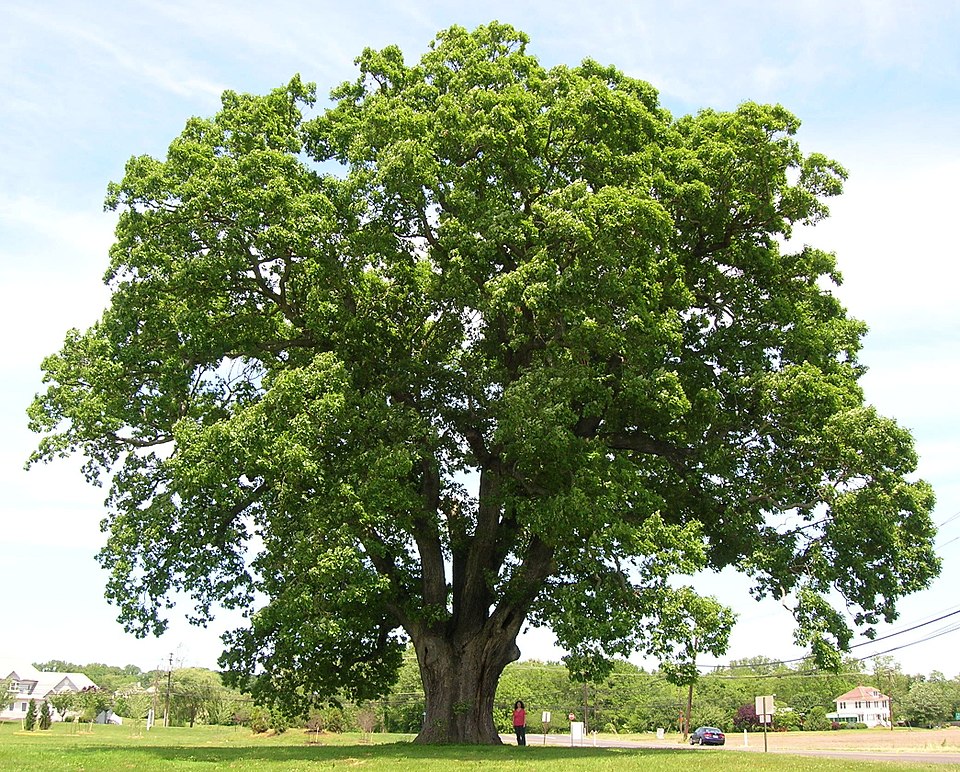
White Oak
Quercus alba
A long-lived, majestic oak with rounded lobes and durable, rot-resistant wood. Slow to establish and extremely sensitive to grade changes and soil compaction over the root zone. More resistant to oak wilt than red oaks but still susceptible.
Field reference
Family
Fagaceae
Growth rate
Slow
Mature size
50–80 ft tall, 50–80 ft spread
Hardiness zone
3–9
Soil preference
Deep, moist, well-drained acidic loam; intolerant of root disturbance
Sun
Full sun
Pruning window
Mid-winter (dormant); avoid spring wounds in oak-wilt zones
Wood properties
Very strong, dense, closed-cell hardwood (~0.68 SG) prized for cooperage. Excellent limb strength; heavy wood demands controlled lowering on big removals.
Native range
Eastern and central United States, Maine to northern Florida and west to Texas
Green weight
62 lb/ft³
Pests & diseases to watch
Oak Wiltfungus · Severe severity · peak Spring and early summer (high infection risk from fresh wounds April–July)Spongy Moth (formerly Gypsy Moth)pest · High severity · peak Caterpillars feed and defoliate May–June; egg masses laid mid-summer overwinterAnthracnosefungus · Moderate severity · peak Spring, during cool, wet, rainy weather at and just after leaf-outArmillaria Root Rotfungus · High severity · peak Decline visible in summer drought stress; honey mushrooms appear in fall
Common questions
Why is my white oak declining after construction near it?
White oak is acutely sensitive to grade changes, trenching, and compaction within the critical root zone. Protect the root area during construction; decline can show up one to three seasons later.
Is white oak resistant to oak wilt?
It is more tolerant than red-group oaks and can sometimes wall off infections, but it is not immune. Keep to dormant-season pruning in affected regions.
Related species in Fagaceae
Tree Nerd Academy
Ready to sit the ISA Certified Arborist exam?
Video curriculum, flashcards, and exam-sim built by working arborists.