
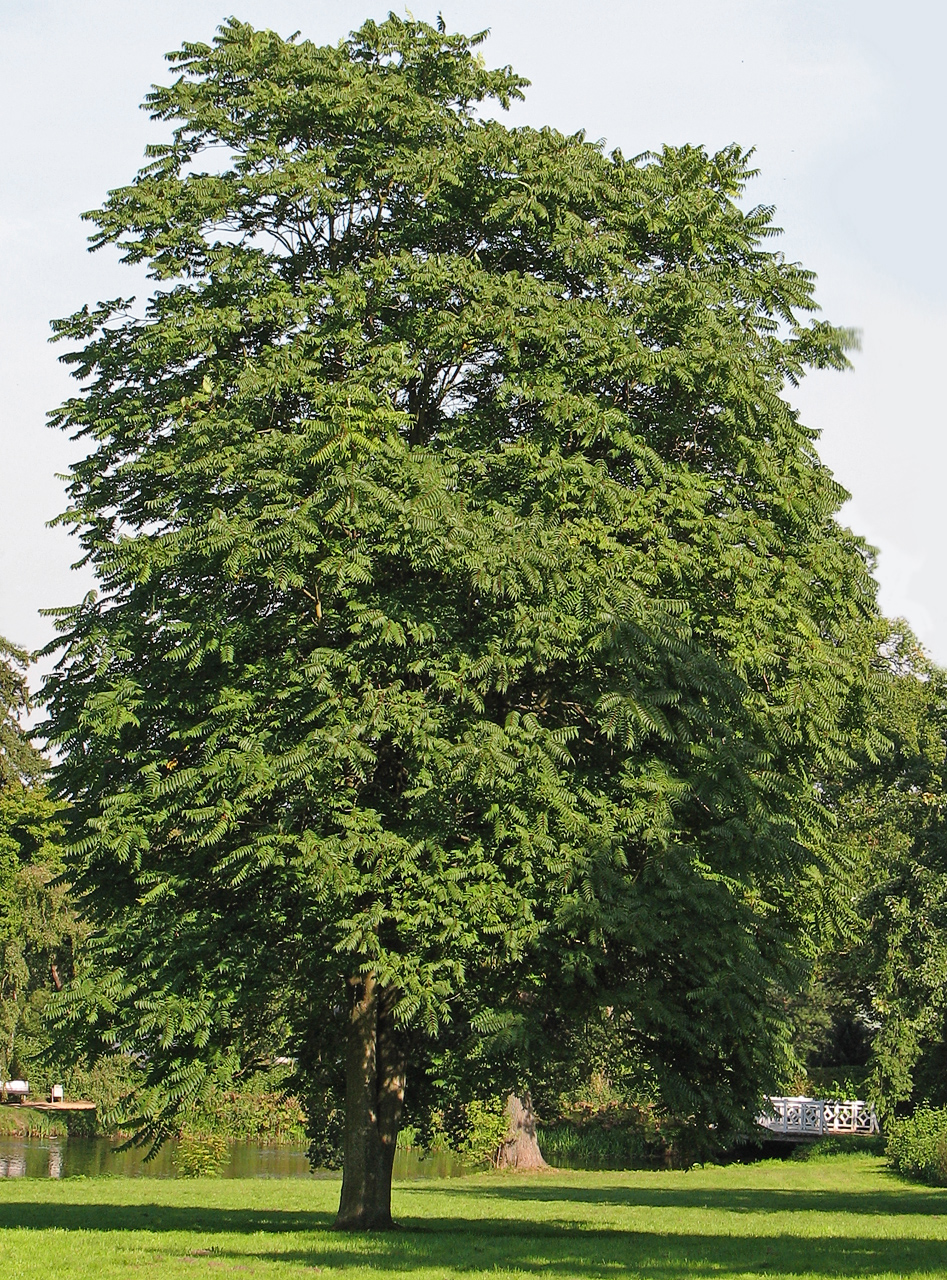
Tree of Heaven
Ailanthus altissima
An aggressive invasive native to China, infamous for explosive growth, root suckering, allelopathic chemistry, and a foul odor. It is the preferred host of the spotted lanternfly, so its control is now tied to that quarantine effort; cutting without herbicide only multiplies the stems.
Field reference
Family
Simaroubaceae
Growth rate
Fast
Mature size
40–60 ft tall, 30–50 ft spread
Hardiness zone
4–8
Soil preference
Grows anywhere — pavement cracks, fill, drought, and pollution included
Sun
Full sun
Pruning window
Cutting alone triggers aggressive suckering — pair with herbicide for control
Wood properties
Weak, soft, ring-porous wood (~0.49 SG) that breaks easily and rots fast. Brittle limbs and rank foul smell when cut; removals regrow ferociously from roots unless treated.
Native range
Native to China; highly invasive across North America
Green weight
53 lb/ft³
Pests & diseases to watch
Common questions
Why does cutting down tree of heaven make it worse?
Severing the stem triggers a flush of root suckers that can erupt yards away, turning one tree into a thicket. Effective control pairs cutting or basal-bark treatment with a systemic herbicide, ideally in late summer.
Is tree of heaven connected to the spotted lanternfly?
Yes — it is the lanternfly's favored host. Some managers keep a few treated 'trap trees' for monitoring, but uncontrolled ailanthus fuels lanternfly populations and should generally be removed and treated.
Related species in Simaroubaceae
Tree Nerd Academy
Ready to sit the ISA Certified Arborist exam?
Video curriculum, flashcards, and exam-sim built by working arborists.