
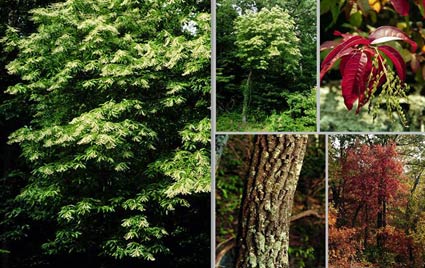
Sourwood
Oxydendrum arboreum
A refined native understory tree with drooping sprays of white summer flowers, brilliant red fall color, and famed sourwood honey. Slow, acid-loving, and pollution-sensitive, so it struggles in compacted street settings but shines as a specimen.
Field reference
Family
Ericaceae
Growth rate
Slow
Mature size
25–35 ft tall, 20 ft spread
Hardiness zone
5–9
Soil preference
Moist, acidic, well-drained soils; intolerant of alkaline or compacted urban sites
Sun
Full sun to part shade
Pruning window
Late winter (dormant); minimal pruning needed
Wood properties
Hard, heavy, close-grained wood (~0.55 SG) on a small frame. Strong but seldom rigged at scale; prized landscape specimen handled with light, careful cuts.
Native range
Eastern United States, Pennsylvania to Florida and west to Louisiana
Green weight
50 lb/ft³
Common questions
Why is my sourwood struggling as a street tree?
Sourwood demands acidic, well-drained soil and clean air; it resents compaction, road salt, and alkaline conditions. It performs far better as a lawn or woodland-edge specimen than in a tight tree pit.
When does sourwood bloom?
It flowers in early to midsummer, after most spring trees, with fragrant white bells that bees turn into sought-after sourwood honey, followed by early scarlet fall color.
Related species in Ericaceae
Tree Nerd Academy
Ready to sit the ISA Certified Arborist exam?
Video curriculum, flashcards, and exam-sim built by working arborists.