
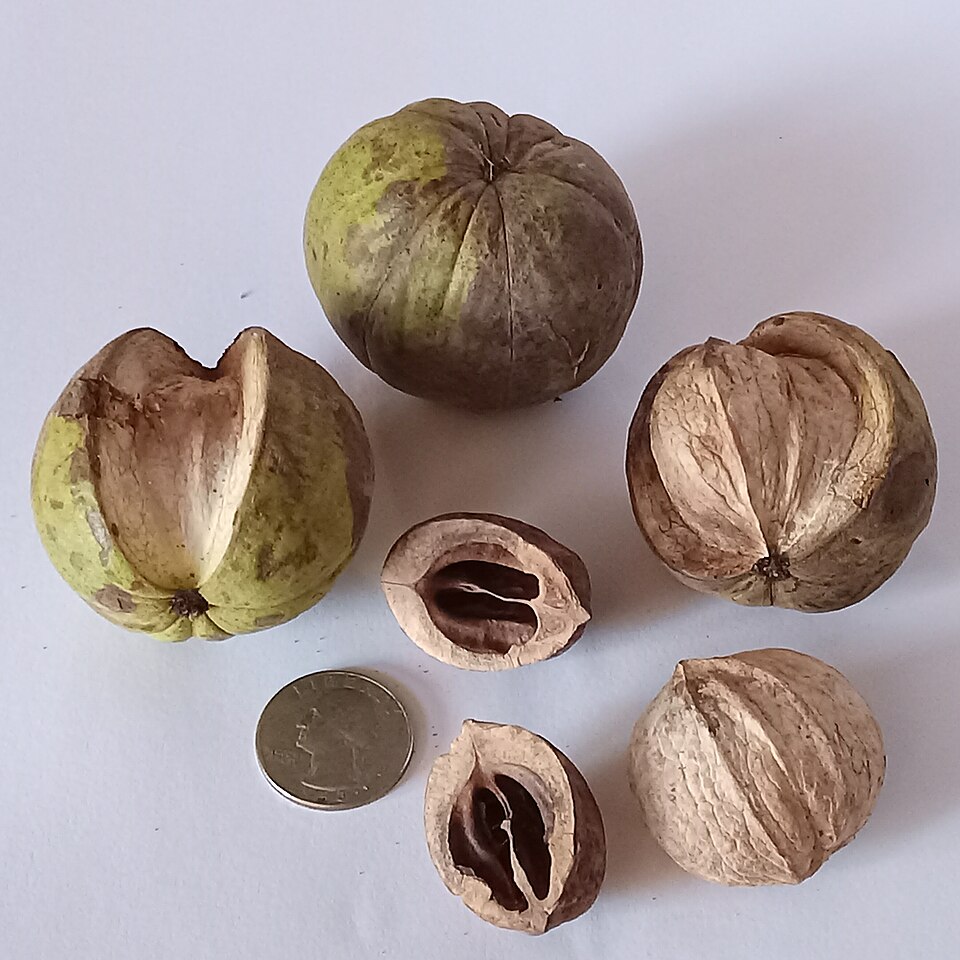
Shellbark Hickory
Carya laciniosa
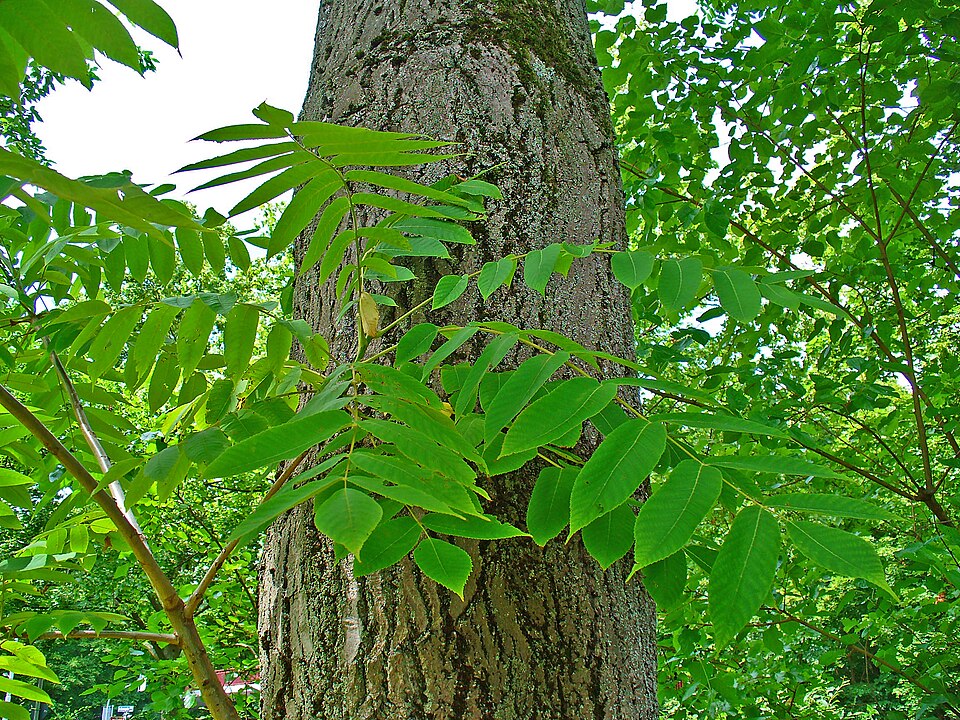
The largest-fruited native hickory, a bottomland cousin of shagbark with the same shaggy, peeling bark but bigger sweet nuts and stout orange twigs. Slow, deep-rooted, and long-lived; like all hickories it is tap-rooted and best established young rather than transplanted.
Field reference
Family
Juglandaceae
Growth rate
Slow
Mature size
60–80 ft tall, 30–40 ft spread
Hardiness zone
5–8
Soil preference
Deep, moist, fertile bottomland soils; tolerates wet ground and occasional flooding
Sun
Full sun
Pruning window
Dormant season (late winter)
Wood properties
Very heavy, hard, strong, shock-resistant hickory (~0.69 SG); premier handle and high-energy firewood. Strong limbs; shaggy bark like shagbark but larger nuts and orange twigs.
Native range
Central and eastern United States bottomlands, New York to Oklahoma
Green weight
63 lb/ft³
Pests & diseases to watch
Common questions
How is shellbark different from shagbark hickory?
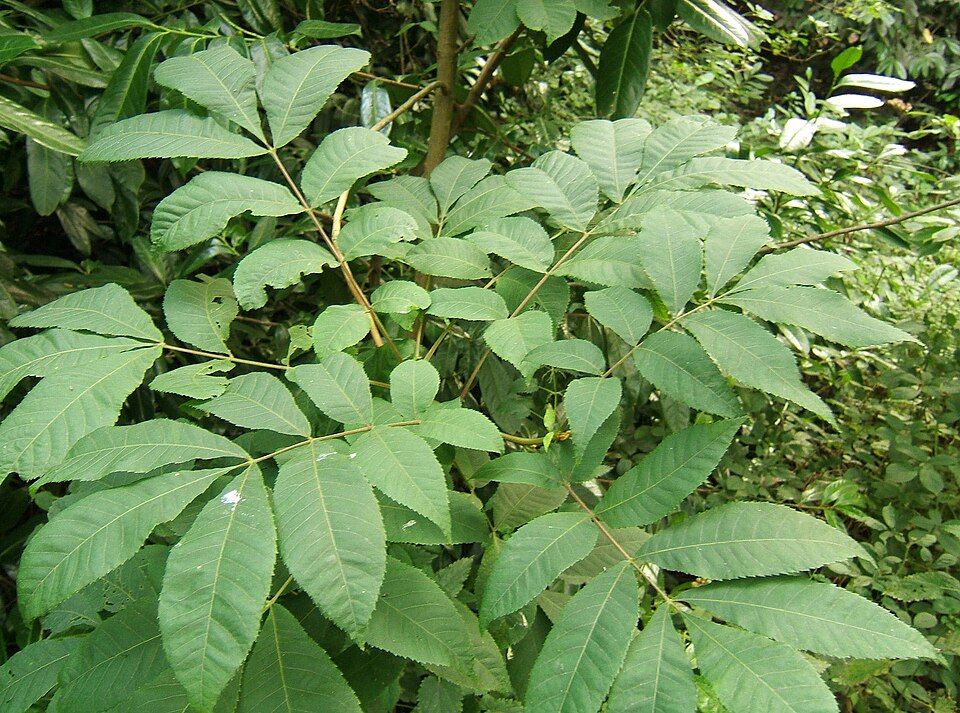
Both have shaggy, peeling bark, but shellbark grows on wetter bottomland sites, has larger leaves and the biggest nuts of any hickory, and shows orange-brown twigs. Shagbark favors drier uplands with smaller nuts.
Are shellbark hickory nuts edible?
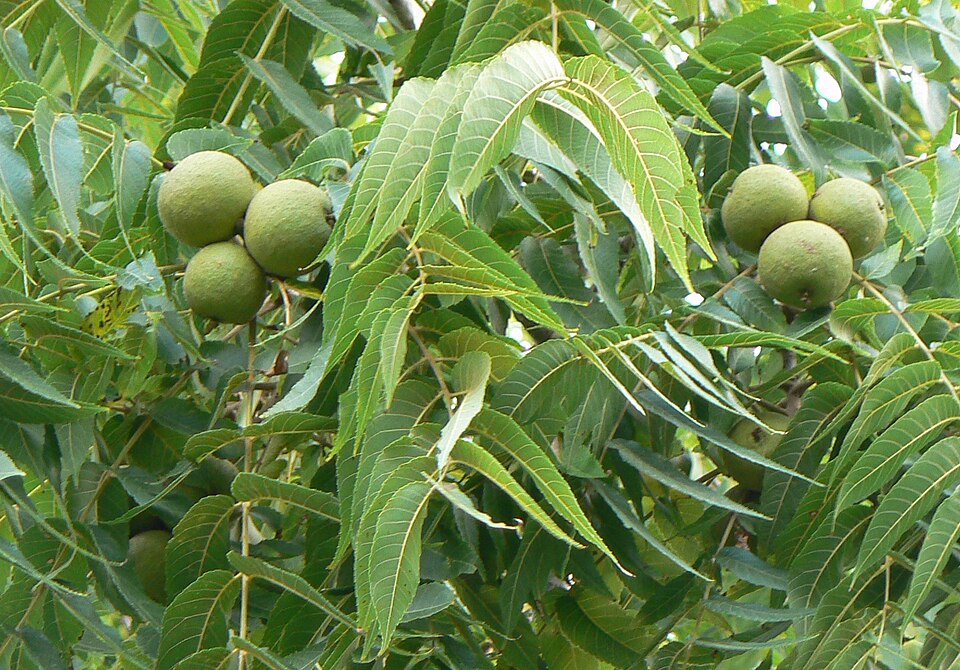
Yes — they are sweet and the largest of the hickories, valued by people and wildlife alike, though the thick shells take effort to crack.
Related species in Juglandaceae
Tree Nerd Academy
Ready to sit the ISA Certified Arborist exam?
Video curriculum, flashcards, and exam-sim built by working arborists.