
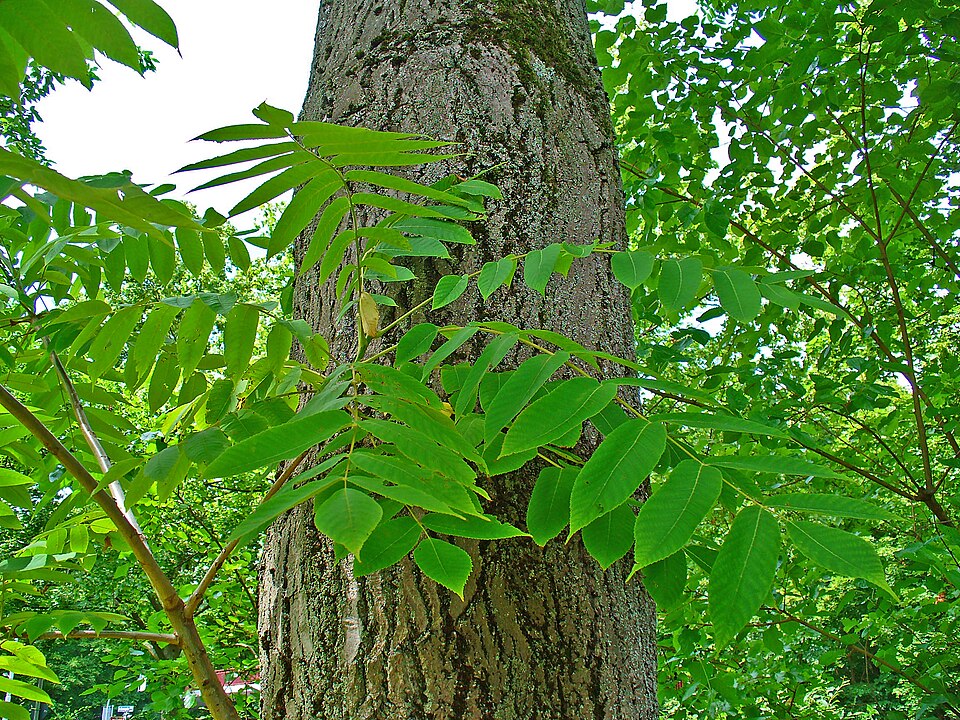
Butternut (White Walnut)
Juglans cinerea
A short-lived native walnut relative with sweet, oily nuts and lustrous tan wood, now in serious decline across its range from butternut canker (Ophiognomonia clavigignenti-juglandacearum), an introduced fungus that has killed a large share of wild trees. Like black walnut it releases juglone, inhibiting sensitive nearby plants.
Field reference
Family
Juglandaceae
Growth rate
Fast
Mature size
40–60 ft tall, 30–50 ft spread
Hardiness zone
3–7
Soil preference
Moist, rich, well-drained loams; intolerant of shade and hot, dry sites
Sun
Full sun
Pruning window
Late summer to early fall to limit bleeding and canker entry
Wood properties
Light, soft, easily worked walnut relative (~0.38 SG) with satiny tan wood prized by carvers. Weak compared with black walnut; brittle, often canker-weakened limbs need careful rigging.
Native range
Northeastern and north-central North America, New Brunswick to Georgia and west to Minnesota
Green weight
46 lb/ft³
Common questions
Why are so many butternut trees dying?
Butternut canker, a non-native fungal disease, has decimated the species, girdling branches and trunks with sunken, oozing cankers. Healthy, canker-free survivors are now valued for breeding resistance and should be protected.
Does butternut poison nearby plants like black walnut?
Yes, to a lesser degree — butternut produces juglone, the same allelopathic compound as black walnut, which can stunt or kill sensitive plants near the root zone. Site juglone-tolerant plants beneath it.
Related species in Juglandaceae
Tree Nerd Academy
Ready to sit the ISA Certified Arborist exam?
Video curriculum, flashcards, and exam-sim built by working arborists.