
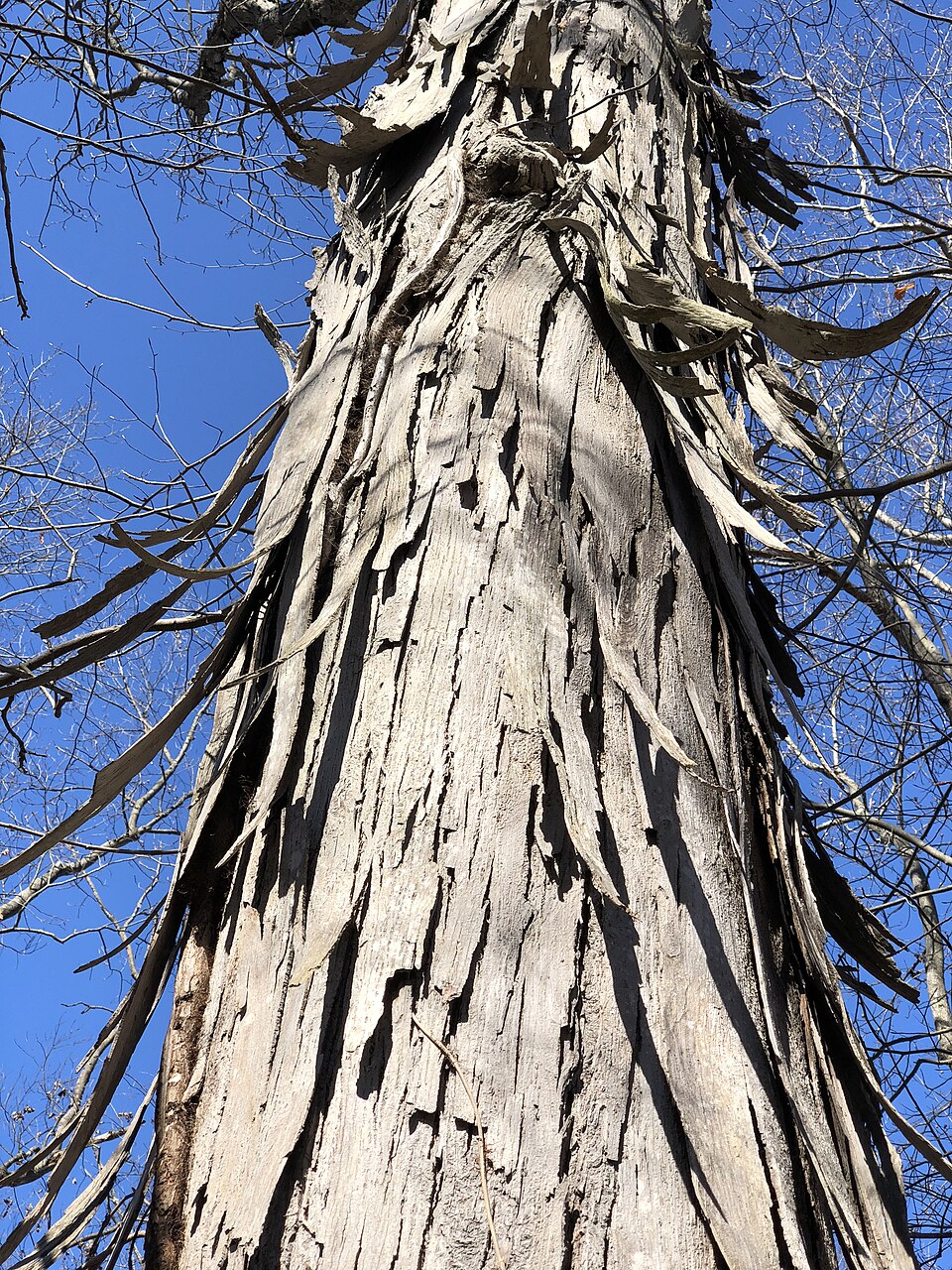
Shagbark Hickory
Carya ovata
A slow-growing, long-lived hickory unmistakable for its shaggy, plate-peeling gray bark on mature trunks. It produces sweet, edible nuts prized by wildlife and people, and exceptionally hard, heavy wood used for tool handles and smoking meat. A deep taproot makes it hard to transplant but very wind-firm.
Field reference
Family
Juglandaceae
Growth rate
Slow
Mature size
60–80 ft tall, 30–40 ft spread
Hardiness zone
4–8
Soil preference
Deep, rich, well-drained loam; intolerant of root disturbance
Sun
Full sun
Pruning window
Mid-summer or early fall (dormant cuts can bleed)
Wood properties
Extremely hard, dense, tough, shock-resistant wood (~0.72 SG) — the premier handle and smoking wood. Very heavy; large limbs build enormous momentum in rigging.
Native range
Eastern United States, from southern Canada and Maine to Georgia and Texas
Green weight
63 lb/ft³
Common questions
Why is the bark peeling off in long shaggy strips?
That shaggy, curling plate bark is the species' namesake feature, not a defect or disease. It develops as the tree matures and is the easiest way to identify shagbark hickory.
Are shagbark hickory nuts edible?
Yes — they are sweet and edible, among the best-tasting native nuts, though the hard shells and competition from squirrels make harvesting a challenge.
Related species in Juglandaceae
Tree Nerd Academy
Ready to sit the ISA Certified Arborist exam?
Video curriculum, flashcards, and exam-sim built by working arborists.