
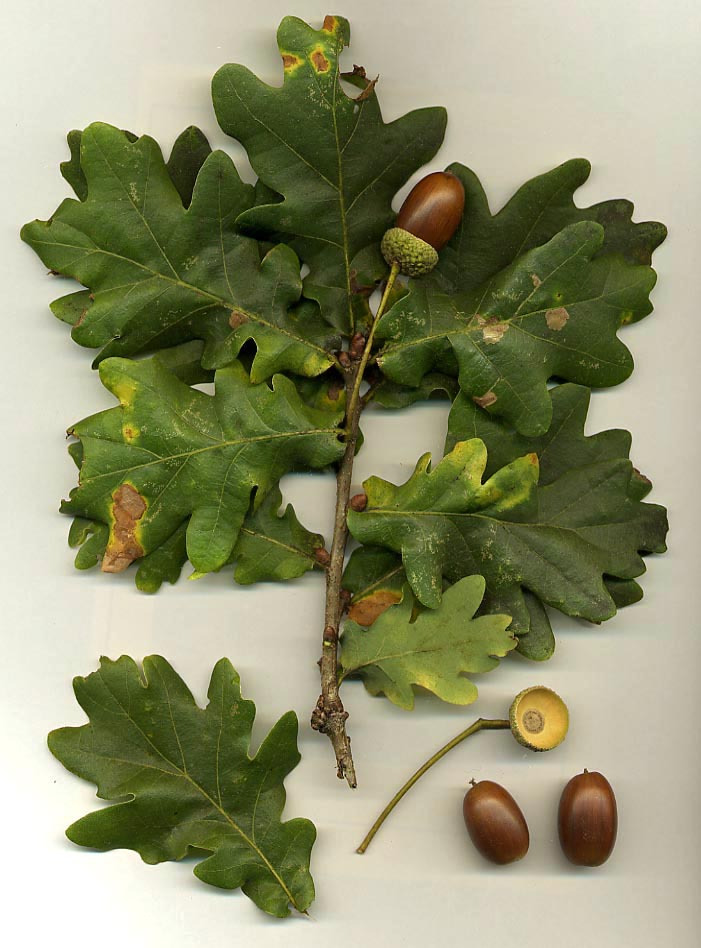
English Oak
Quercus robur
The iconic oak of Europe, long-lived and majestic, with short-stalked leaves and long-stalked acorns. Widely planted in North America, especially narrow fastigiate cultivars (such as 'Skyrocket') for street use; powdery mildew is its most conspicuous (if cosmetic) issue, and it can host oak wilt in affected regions.
Field reference
Family
Fagaceae
Growth rate
Moderate
Mature size
40–70 ft tall, 40–60 ft spread (fastigiate forms much narrower)
Hardiness zone
4–8
Soil preference
Deep, fertile, well-drained loams; tolerates a range of soils and urban conditions
Sun
Full sun
Pruning window
Mid-winter (dormant); avoid spring wounds where oak wilt occurs
Wood properties
Dense, strong, durable white-group oak (~0.67 SG) — the classic European oak of timber framing, ships, and barrels. Excellent limb strength; columnar cultivars concentrate weight on narrow forks.
Native range
Native to Europe, the Caucasus, and North Africa; widely planted in North America
Green weight
62 lb/ft³
Pests & diseases to watch
Oak Wiltfungus · Severe severity · peak Spring and early summer (high infection risk from fresh wounds April–July)Spongy Moth (formerly Gypsy Moth)pest · High severity · peak Caterpillars feed and defoliate May–June; egg masses laid mid-summer overwinterPowdery Mildewfungus · Low severity · peak Late spring through fall, worst in humid, shaded, crowded conditions
Common questions
Why is my English oak covered in white powder in late summer?
English oak is notably prone to powdery mildew, which coats the leaves with a white film. It is largely cosmetic on established trees; improve airflow and avoid excess nitrogen rather than spraying in most cases.
Are columnar English oaks good street trees?
Yes — narrow fastigiate cultivars fit tight spaces and resist storm spread, but their many upright, tightly packed stems can form included-bark unions, so early structural pruning still pays off.
Related species in Fagaceae
Tree Nerd Academy
Ready to sit the ISA Certified Arborist exam?
Video curriculum, flashcards, and exam-sim built by working arborists.