
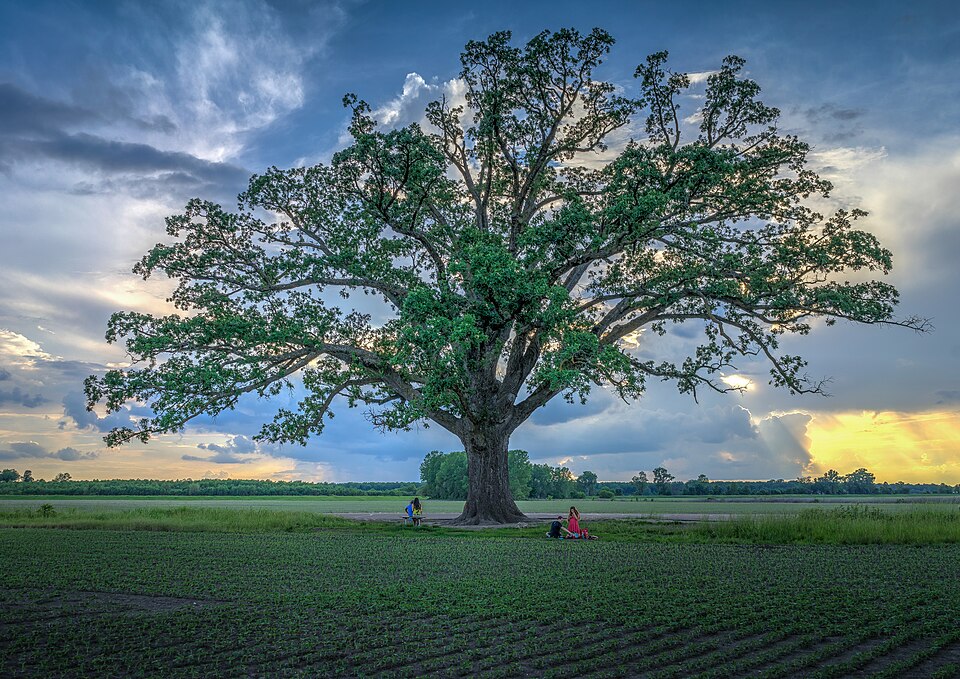
Bur Oak
Quercus macrocarpa
A massive, drought- and fire-tolerant prairie oak with corky branches and the largest acorns of any North American oak. Extremely long-lived and tolerant of urban stress and alkaline soils. Slow growing but exceptionally durable.
Field reference
Family
Fagaceae
Growth rate
Slow
Mature size
60–80 ft tall, 60–80 ft spread
Hardiness zone
3–8
Soil preference
Wide range — clay, loam, limestone; very drought tolerant
Sun
Full sun
Pruning window
Mid-winter (dormant); avoid spring wounds in oak-wilt zones
Wood properties
Strong, dense, durable white-oak-group wood (~0.64 SG). Thick corky bark and stout limbs; among the most fire- and drought-resistant oaks.
Native range
Central and eastern North America, from Manitoba south to Texas
Green weight
62 lb/ft³
Pests & diseases to watch
Common questions
Is bur oak a good urban tree?
Yes — it tolerates compaction, drought, road salt, and alkaline soils better than most oaks, making it one of the more dependable large-canopy street trees in the Midwest.
Why is the bark so corky and ridged?
The thick corky bark, including winged twigs, is a natural adaptation to prairie fire and insulates the cambium. It is normal and not a sign of disease.
Related species in Fagaceae
Tree Nerd Academy
Ready to sit the ISA Certified Arborist exam?
Video curriculum, flashcards, and exam-sim built by working arborists.