
What Does Tree Removal Actually Cost?
Why one tree costs $400 and another costs $4,000 — the real factors that drive a removal quote, and how to make sure you're comparing apples to apples.
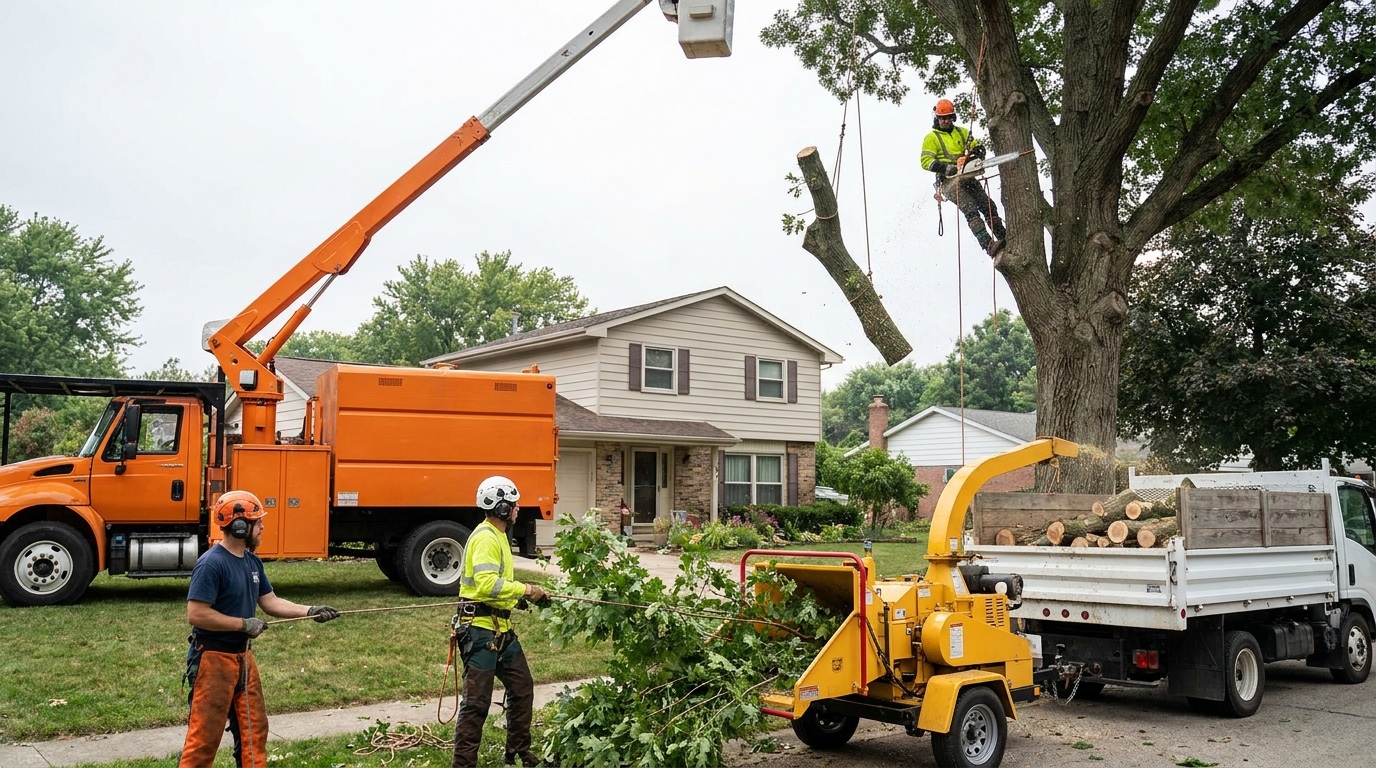
If you've gotten a few tree-removal quotes, you've probably been surprised by how much they vary. That's not necessarily anyone gouging you — tree removal is genuinely priced job-by-job, and a small ornamental in an open yard is a completely different task than a huge tree wedged between two houses. Here's what actually drives the number, so you can read a quote with confidence.
Why there's no flat rate
Removal pricing spans a wide range — small jobs can land in the few-hundred-dollar range, while large, complicated removals run into the thousands. The spread comes down to how big the tree is, how hard it is to get at, and how much risk the crew has to manage. A reputable company prices each tree on those factors, which is exactly why a phone quote "per tree" without seeing it should make you skeptical.
The big factors that move the price
Size — the number-one driver
Bigger trees cost more, and not in a straight line. A tall, large-diameter tree has dramatically more wood and weight, takes longer, needs bigger equipment, and is riskier — so cost rises steeply with size. Height and trunk diameter together are the single biggest factor in any quote.
Access and location
- Can equipment reach it? A tree a bucket truck or crane can pull right up to is far cheaper than one in a fenced backyard where everything is carried by hand.
- What's underneath and around it? A tree in the open can sometimes be felled in one piece. A tree over a house, fence, pool, power lines, or the neighbor's yard has to be climbed and rigged down piece by piece — slower, more skilled, and more expensive.
- Power lines nearby add cost and complexity, and sometimes require utility coordination.
Condition
Dead, diseased, or storm-damaged trees can be more expensive, not less. Decayed wood is unpredictable and unsafe to climb or fell, so the crew has to take extra precautions — often a crane — which raises the price.
Species and wood
Hardwoods are heavy and dense; some trees have sprawling, complicated canopies. More wood and trickier form mean more time and disposal.
The extras that may or may not be included
This is where quotes get hard to compare — make sure you know what's in or out:
- Stump removal / grinding. Often a separate line item. "Tree removal" frequently means the tree is taken down to a stump and the stump stays unless you pay extra to grind it.
- Hauling and disposal of the wood and debris. Some quotes include full cleanup and haul-away; others leave the wood, or charge for it. Decide if you want the logs left for firewood.
- Chipping brush, log splitting, or leaving mulch.
- Travel for remote properties.
- Permits. Some areas require a permit to remove certain trees — ask who's responsible for pulling it.
How to get a fair, comparable quote
- Get it in writing, after an on-site visit. A real quote comes from someone who looked at the tree. Be wary of a firm price quoted sight-unseen.
- Get two or three estimates and make sure each spells out the same scope: removal, stump, cleanup, and haul-away — so you're comparing like for like, not a bare-bones number against an all-in one.
- Confirm they're insured. Ask for proof of liability insurance and workers' comp. This is the most important box to check — if an uninsured crew damages your house or someone gets hurt on your property, you can be left holding the bill. The lowest quote from an uninsured outfit is not the cheapest option if it goes wrong.
- Ask about credentials. A company with a certified arborist on staff brings judgment about whether the tree even needs to come down, and how to do it safely.
A note on "too good to be true"
A quote dramatically below the others is a red flag, not a bargain. It often means the crew is uninsured, inexperienced, or planning to leave you with the stump and a yard full of debris. Tree work is dangerous, skilled labor; pricing reflects that.
The honest summary: expect real variation, insist on written on-site quotes with matching scope, and weight insurance and credentials at least as heavily as price. The best first step is to have a certified arborist look at the tree — they can confirm whether removal is even necessary and give you a quote you can actually trust.
FAQ
Why are tree removal quotes so different from each other?
Is it safe to just hire the cheapest quote?
Video curriculum, flashcards, and exam-sim built by working arborists.