Topping Is Killing Your Trees — Here's What to Do Instead
Cutting the top off a tree to make it smaller feels logical and is one of the most harmful things you can do to it. Here's why — and the right way to reduce a tree's size.
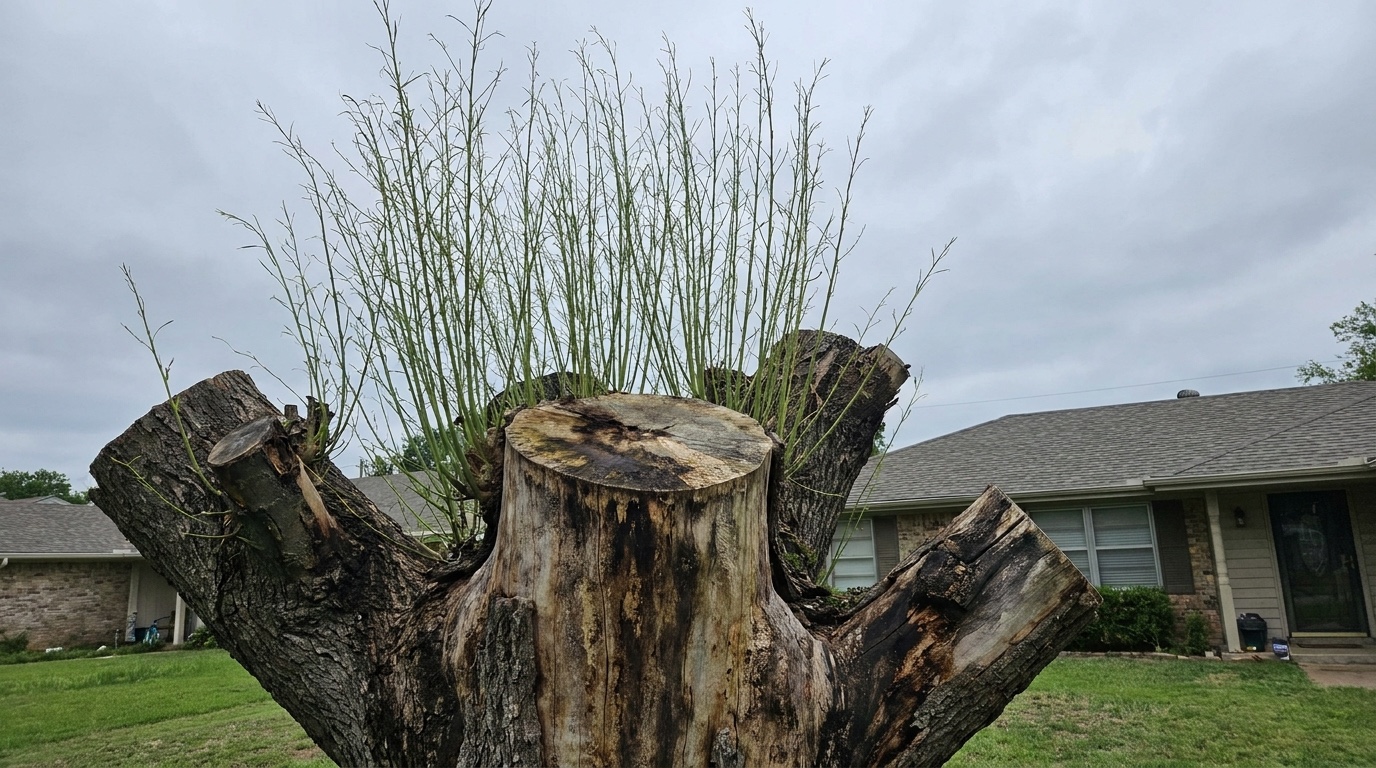
Topping — sawing off the top of a tree or cutting its main branches back to stubs to make it shorter — is one of the most common and most damaging things done to trees. It looks like a reasonable way to deal with a tree that's gotten too big. It isn't. Topping harms the tree, often makes it more dangerous over time, and costs you more in the long run. The good news: there's a correct way to make a tree smaller, and a qualified arborist can do it without wrecking the tree.
What topping actually does to a tree
A tree's leaves are its food factory. When you cut off the top, you strip away a huge share of the leaves the tree needs to feed itself — all at once. That's a severe shock. Here's the chain of damage that follows:
- Starvation and stress. Suddenly short on food, the tree is weakened and stressed, leaving it more vulnerable to insects and disease.
- Big, slow-to-heal wounds. Topping leaves large stub cuts that the tree struggles to seal over. Those open wounds are entry points for decay and disease, which spread into the trunk and branches.
- Sunburned bark. Branches and bark that were shaded by the canopy are suddenly exposed to direct sun, which can scald and damage them.
- Ugly, then worse. A topped tree is disfigured — and what grows back is the real problem.
Why topped trees become more dangerous
Here's the part most people don't expect. After topping, the tree panics and pushes out a dense flush of fast-growing new shoots (often called water sprouts) right below the cuts. This regrowth has two nasty traits:
- It grows back fast. Often the tree shoots up taller than before within a few years — so topping doesn't even solve the "too tall" problem for long. You're back where you started, having paid to harm the tree.
- It's weakly attached. Those new shoots grow from near the surface of the old cuts and are poorly anchored to the tree. As they get big and heavy, they're far more likely to break and fail than the original branches were — especially in wind and storms.
So topping takes a tree that may have been perfectly sound and, a few years later, hands you a taller, weaker, decay-prone tree with branches more likely to come down on your house. It also tends to shorten the tree's life. It is, by any measure, a bad deal.
What to do instead
You can absolutely manage a tree that's too big — just with the right techniques, done by someone who knows them.
- Crown reduction (done properly). A skilled arborist can reduce a tree's height and spread by carefully cutting branches back to a point where a smaller side branch can take over as the new growing tip. Done correctly, this lowers the tree's size while keeping its natural shape and health — the opposite of stubbing it off.
- Thinning and deadwood removal. Selectively removing branches reduces weight and wind resistance and cleans out dead wood, without the shock of topping.
- Right tree, right place — and sometimes removal. If a tree is simply too large for its spot and will always be a battle, the honest answer may be to remove it and replant something that fits, rather than topping it over and over. A reputable arborist will tell you that instead of selling you a harmful "haircut."
How to avoid getting your tree topped
The simplest protection: hire a certified arborist, and never agree to "topping." A qualified professional won't offer to top your tree, because they know it's harmful — if a company suggests topping as the solution, that tells you they're not the right company. Ask for crown reduction or proper pruning by name.
If your tree is too big or making you nervous, don't reach for the saw or the cheapest "we'll cut it down to size" crew. Have a certified arborist look at it — they can reduce it the right way, or tell you honestly if it's better replaced, and your tree will be healthier and safer for it.
FAQ
Why is topping bad if the tree grows back?
What should I ask for instead of topping?
Video curriculum, flashcards, and exam-sim built by working arborists.