
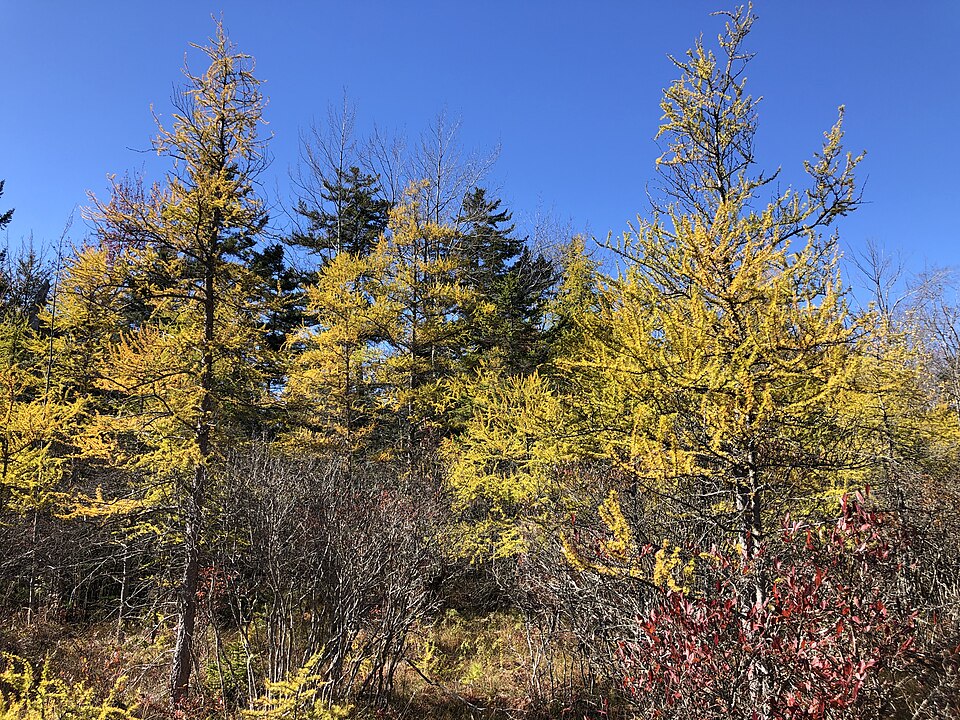
Tamarack (Eastern Larch)
Larix laricina
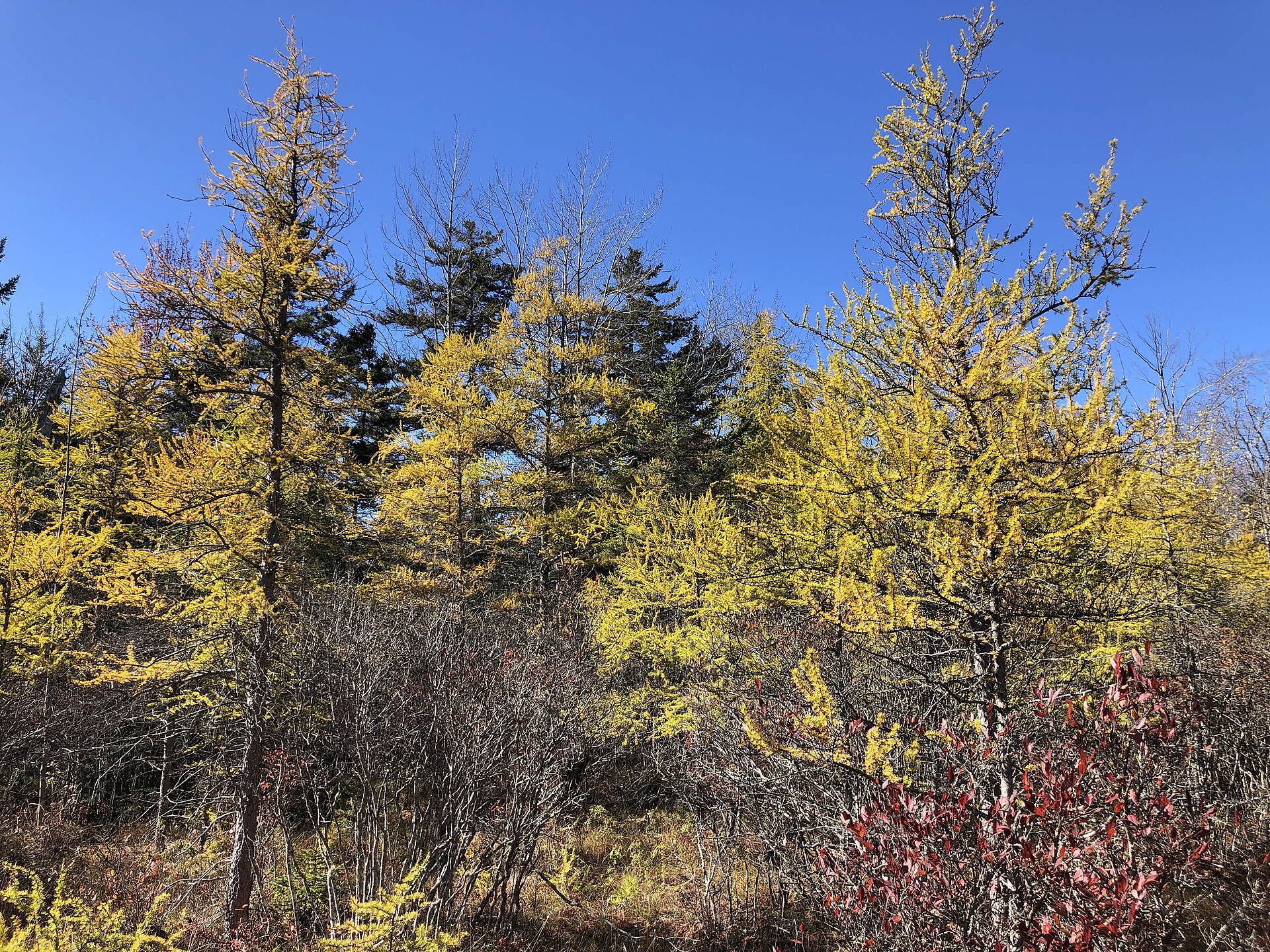
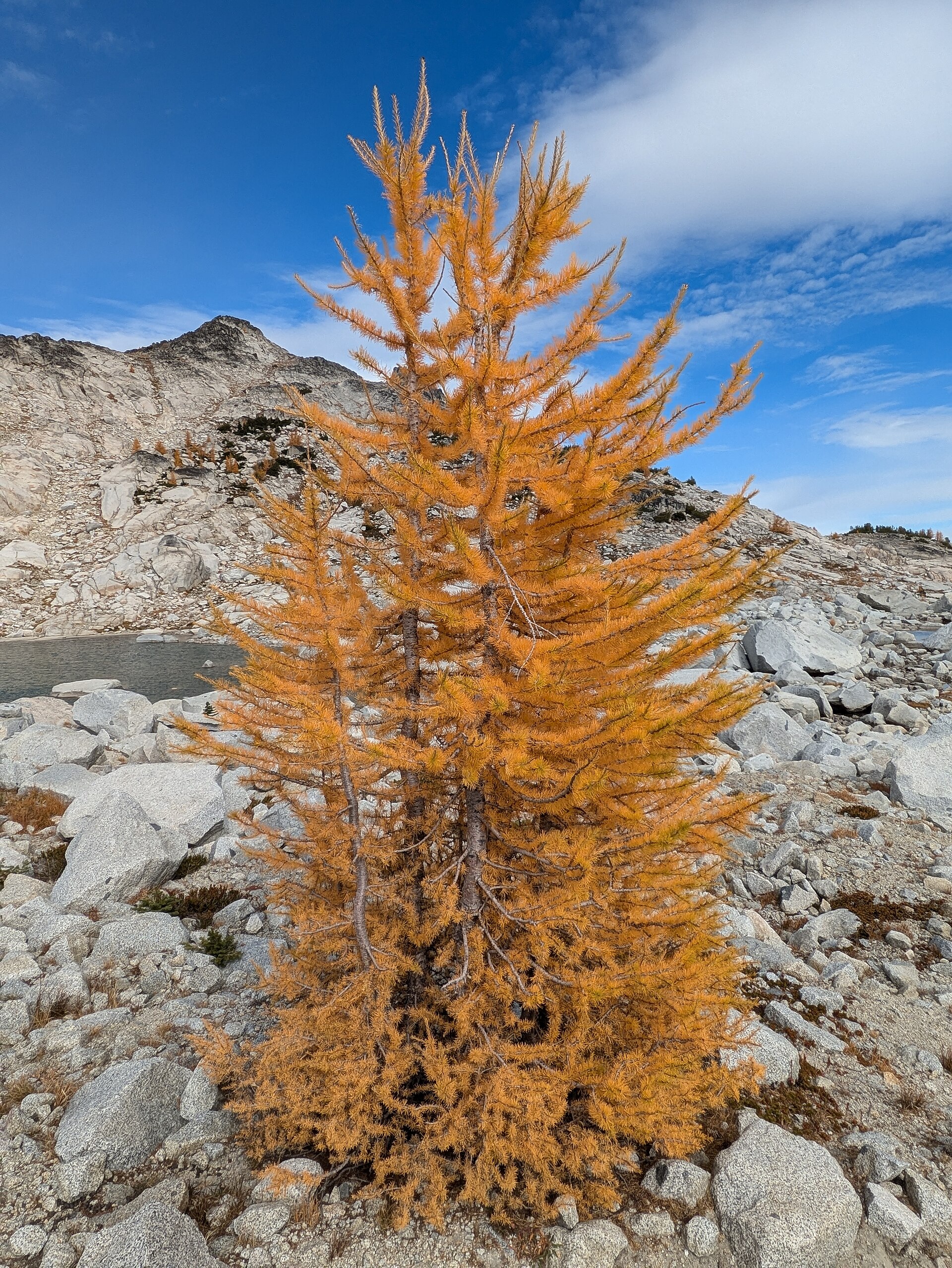
A deciduous conifer of northern bogs that turns brilliant gold and sheds its soft needles every fall — surprising clients who think it has died. Extremely cold-hardy and one of the few trees thriving in saturated peat, it is shade-intolerant and best on cold, wet, sunny sites.
Field reference
Family
Pinaceae
Growth rate
Moderate
Mature size
40–80 ft tall, 15–30 ft spread
Hardiness zone
2–5
Soil preference
Cold, wet, acidic bogs and peatlands; also grows on moist upland soils
Sun
Full sun (very shade-intolerant)
Pruning window
Dormant season; minimal pruning needed
Wood properties
Heavy, hard, strong, durable larch wood (~0.49 SG) prized for posts, poles, and boat framing because it resists rot in wet conditions. Tough fibers; a true conifer that drops its needles.
Native range
Northern North America across the boreal zone, Alaska and Canada into the northern United States
Green weight
47 lb/ft³
Common questions
My tamarack turned yellow and dropped all its needles — is it dying?
No — tamarack is a deciduous conifer. Turning gold and shedding every needle in fall is completely normal; fresh soft green needles return each spring. It is one of the very few cone-bearing trees that does this.
Will tamarack grow in a wet, boggy spot?
Yes — it is a specialist of cold, acidic bogs and wet peatlands where almost nothing else survives, though it also tolerates moist upland soil. It must have full sun, as it is highly shade-intolerant.
Related species in Pinaceae
Tree Nerd Academy
Ready to sit the ISA Certified Arborist exam?
Video curriculum, flashcards, and exam-sim built by working arborists.