
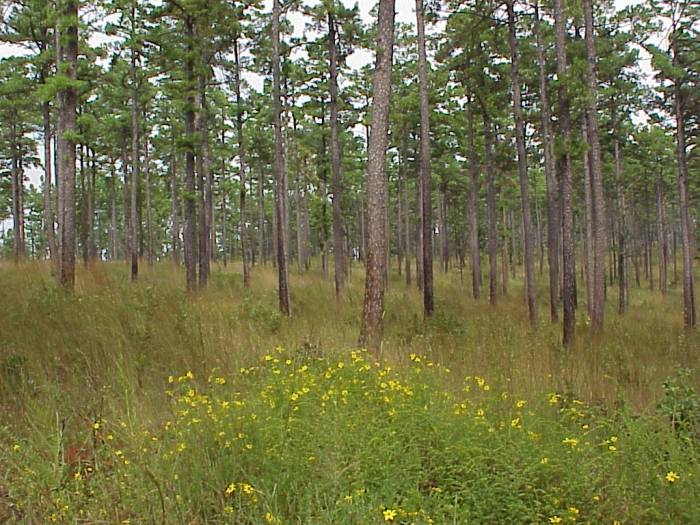
Shortleaf Pine
Pinus echinata
The most widely distributed southern yellow pine, with short blue-green needles and small cones, valued for timber across the Southeast. Notably, young trees can sprout from a dormant basal crook after fire or top damage — unusual for a pine — and it is a primary host of the southern pine beetle.
Field reference
Family
Pinaceae
Growth rate
Moderate
Mature size
50–90 ft tall, 20–35 ft spread
Hardiness zone
6–9
Soil preference
Dry to medium, well-drained upland soils; tolerates poor, rocky ground
Sun
Full sun
Pruning window
Dormant season; self-prunes to a high crown
Wood properties
Strong, resinous southern yellow pine (~0.51 SG) for structural lumber and plywood. Straight stems; uniquely able to resprout from a basal crook after fire or cutting when young.
Native range
Southeastern United States, New York and New Jersey south to Florida and west to Texas
Green weight
52 lb/ft³
Pests & diseases to watch
Common questions
Can shortleaf pine resprout after being cut or burned?
Young shortleaf pines can — they form a J-shaped basal crook with dormant buds that resprout after fire or top kill, a rare trait among pines that helps the species persist on fire-prone sites.
Is shortleaf pine threatened by the southern pine beetle?
Yes — like other southern yellow pines it is a major host. Keeping stands thinned and vigorous, and removing infested trees promptly during outbreaks, is the core defense.
Related species in Pinaceae
Tree Nerd Academy
Ready to sit the ISA Certified Arborist exam?
Video curriculum, flashcards, and exam-sim built by working arborists.