
Scots Pine
Pinus sylvestris
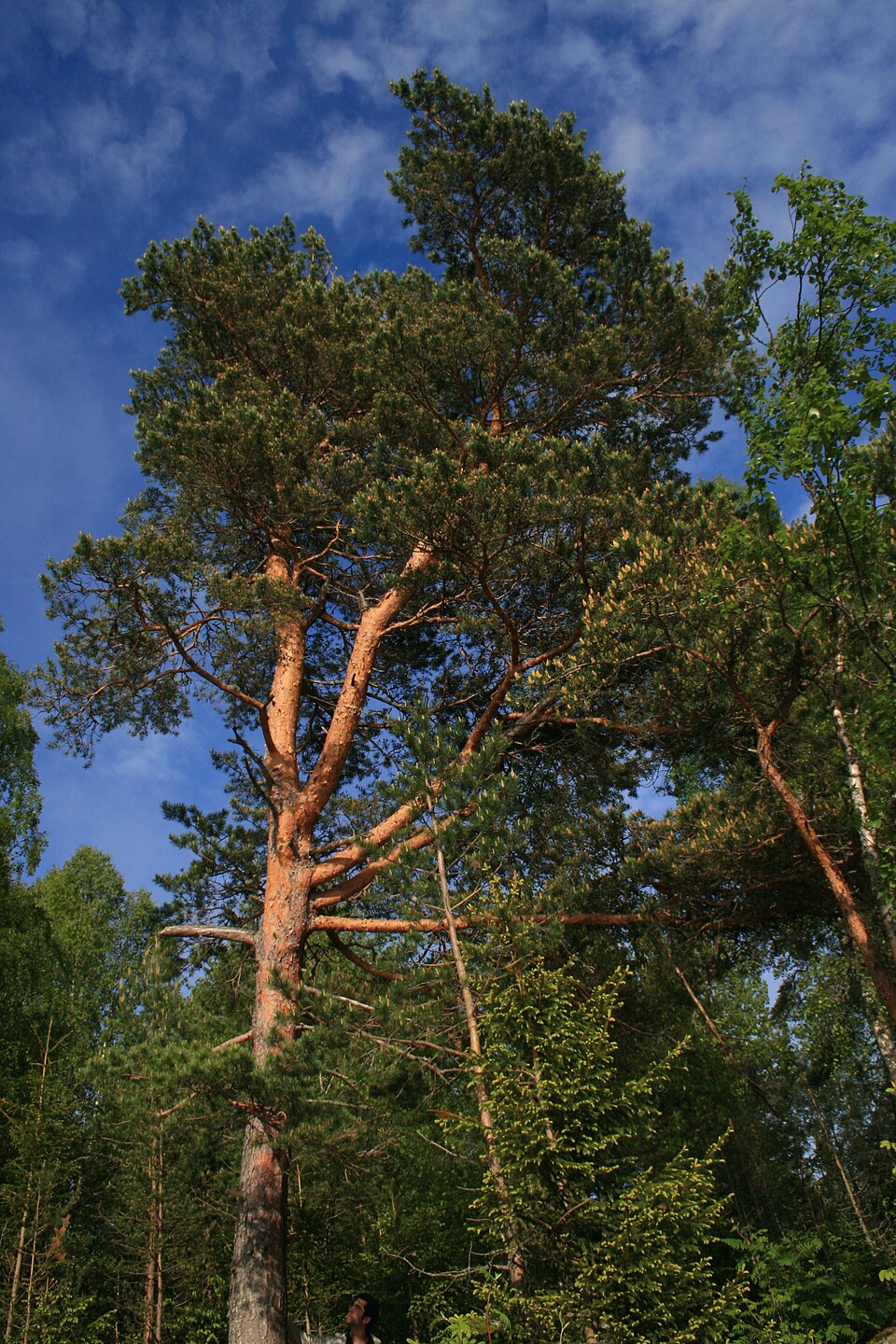
A widely planted Eurasian pine known for striking orange-red flaking bark on the upper trunk, short blue-green twisted needles, and a picturesque, often irregular crown with age. Once hugely popular for Christmas trees and windbreaks in North America, but plantings have been hit hard by pine wilt disease (a nematode) in the Midwest.
Field reference
Family
Pinaceae
Growth rate
Moderate
Mature size
30–60 ft tall, 25–35 ft spread
Hardiness zone
3–7
Soil preference
Adaptable, well-drained soils; very tolerant of dry, sandy, and poor ground
Sun
Full sun
Pruning window
Late dormant season; picturesque irregular form develops with age
Wood properties
Resinous, moderately hard pine (red/Scots deal) used widely for construction in Europe. Twisted short needle pairs; the orange, flaking upper-trunk bark is the standout feature.
Native range
Native across Europe and northern Asia; widely planted and naturalized in North America
Green weight
42 lb/ft³
Common questions
What is the orange bark on my pine?
Bright orange, papery, flaking bark on the upper trunk and branches is the signature of Scots pine, especially striking on older trees against blue-green foliage.
Why are Scots pines dying in the Midwest?
Pine wilt disease, caused by the pinewood nematode and spread by sawyer beetles, has killed many mature Scots pines in the central U.S., often within a single season. There is no cure once infected, so removal and not moving the wood are key.
Related species in Pinaceae
Tree Nerd Academy
Ready to sit the ISA Certified Arborist exam?
Video curriculum, flashcards, and exam-sim built by working arborists.