
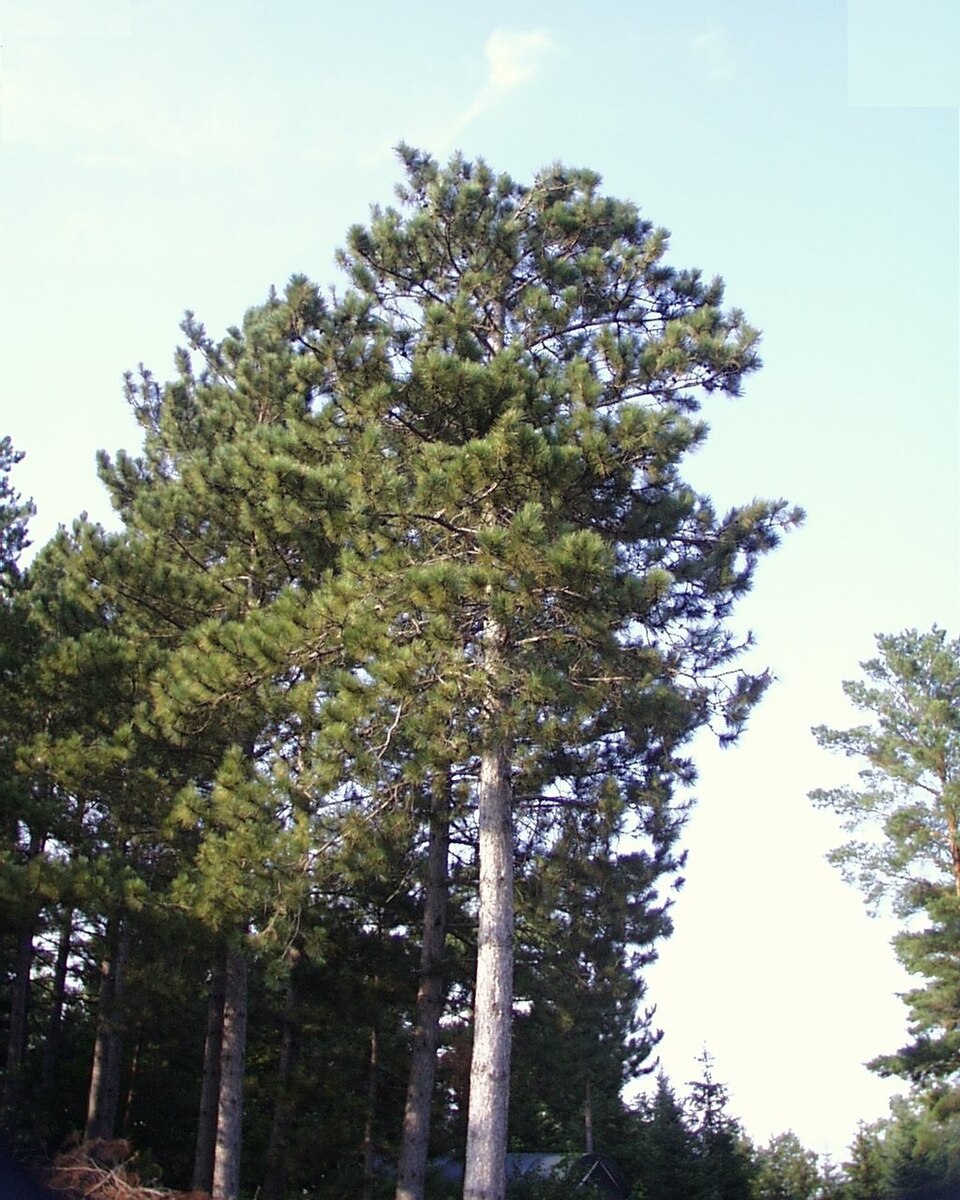
Red Pine
Pinus resinosa
A cold-hardy northern pine with reddish, flaky bark and brittle pairs of long needles that snap cleanly when bent — a quick field test. Widely planted in even-aged plantations for timber and once for reforestation; tidy and wind-firm, though plantation stands are prone to Diplodia tip blight and bark beetles when stressed.
Field reference
Family
Pinaceae
Growth rate
Moderate
Mature size
50–80 ft tall, 20–30 ft spread
Hardiness zone
2–5
Soil preference
Dry, sandy, acidic, well-drained soils; very cold-hardy
Sun
Full sun
Pruning window
Late dormant season; self-prunes to a high crown
Wood properties
Moderately hard, straight-grained pine (~0.41 SG) milled as red/Norway pine for poles, posts, and structural lumber. Straight, clean stems; reddish flaky bark aids ID.
Native range
Northeastern North America and the Great Lakes, Newfoundland to Manitoba and south to Pennsylvania
Green weight
42 lb/ft³
Common questions
How do I identify red pine?
It has reddish, scaly, plated bark and pairs of long (4–6 inch) needles that snap cleanly in two when bent — unlike the flexible needles of similar pines. The clean, straight trunk and high crown are also distinctive.
Why are red pines often planted in straight rows?
Red pine was widely planted in even-aged plantations for timber, poles, and erosion control, especially on sandy northern soils. Those uniform rows are a legacy of 20th-century reforestation programs.
Related species in Pinaceae
Tree Nerd Academy
Ready to sit the ISA Certified Arborist exam?
Video curriculum, flashcards, and exam-sim built by working arborists.