
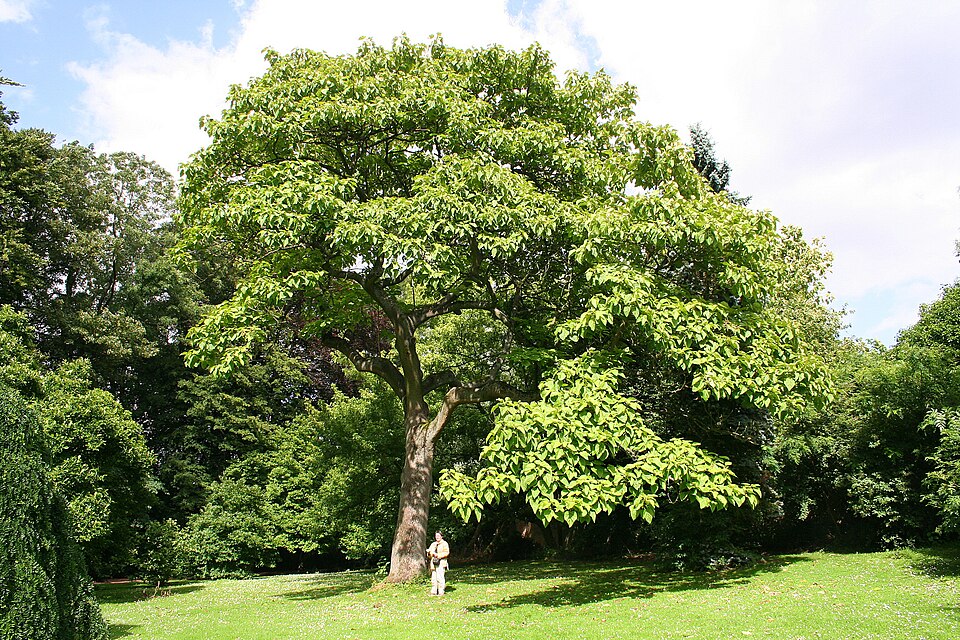
Princess Tree (Empress Tree)
Paulownia tomentosa
A fast-growing Asian tree with huge fuzzy leaves and showy violet, foxglove-like spring flowers — but an aggressive invasive in much of the eastern United States, seeding prolifically and resprouting hard when cut. Brittle, weak-wooded, and short-lived in the landscape; its prized lightweight timber drives plantation interest even as land managers work to control wild spread.
Field reference
Family
Paulowniaceae
Growth rate
Fast
Mature size
30–60 ft tall, 30–40 ft spread
Hardiness zone
5–9
Soil preference
Grows almost anywhere — disturbed ground, slopes, stream banks, even cracks in rock
Sun
Full sun
Pruning window
Cutting alone triggers vigorous resprouting; pair with control for removal
Wood properties
Remarkably light, soft, stable wood that resists warping — highly valued in Asia (especially Japan) for furniture and instruments. Brittle, fast-grown limbs break easily; weak structure.
Native range
Native to central and western China; invasive across the eastern United States
Green weight
31 lb/ft³
Common questions
Is princess tree invasive?
Yes — in much of the eastern U.S. Paulownia tomentosa is listed as invasive. A single tree can produce millions of wind- and water-dispersed seeds, and it colonizes disturbed ground, roadsides, and stream corridors aggressively.
Why is paulownia wood so valuable if the tree is a weed?
Its wood is exceptionally light, stable, and resistant to warping, and is highly prized in Japan and Korea for furniture, instruments, and boxes. That value fuels plantation forestry even where the species is an invasive nuisance in the wild.
Tree Nerd Academy
Ready to sit the ISA Certified Arborist exam?
Video curriculum, flashcards, and exam-sim built by working arborists.