
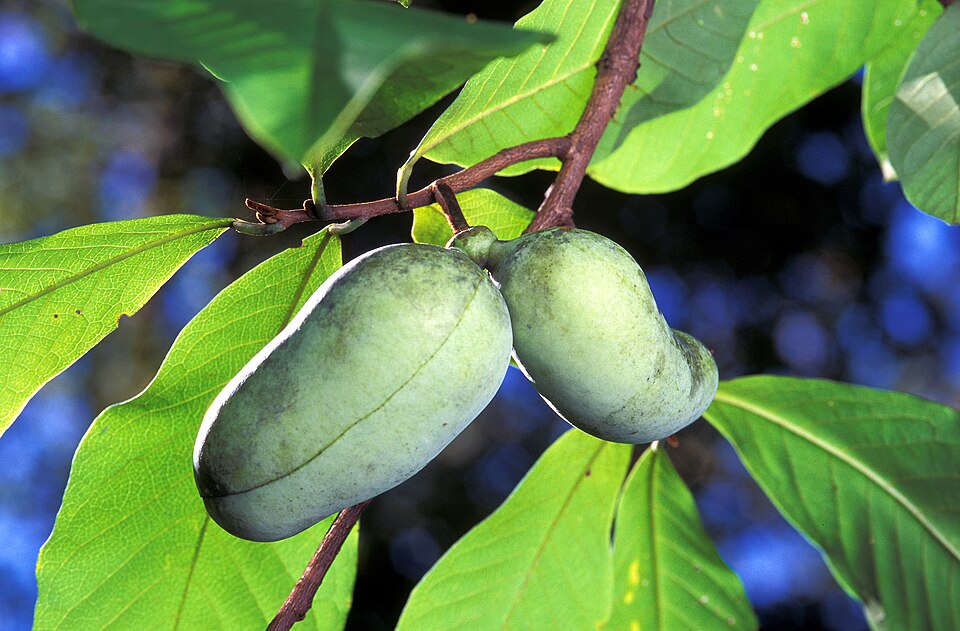
Pawpaw
Asimina triloba
North America's largest native edible fruit — a custardy, tropical-tasting 'banana' — borne on a small understory tree with big drooping leaves and maroon spring flowers pollinated by flies and beetles. It suckers into patches, is essentially pest- and deer-free (the foliage is the sole host for the zebra swallowtail butterfly), and needs shade to establish.
Field reference
Family
Annonaceae
Growth rate
Slow
Mature size
15–30 ft tall, 15–25 ft spread
Hardiness zone
5–8
Soil preference
Deep, moist, rich, slightly acidic soils; needs shade when young
Sun
Part shade (young) to full sun (mature)
Pruning window
Dormant season; often forms suckering patches
Wood properties
Light, weak, soft wood of no commercial value on a small frame. Negligible rigging; grown entirely for its fruit, foliage, and ecological role.
Native range
Eastern United States and southern Ontario, New York to Florida and west to Nebraska
Green weight
40 lb/ft³
Common questions
What does pawpaw fruit taste like?
Ripe pawpaw has a soft, custard-like flesh with a tropical flavor often compared to banana, mango, and melon. It is North America's largest native fruit but bruises easily and doesn't ship, so it is rarely sold commercially.
Why is pawpaw so pest-free?
Its leaves, twigs, and bark contain natural compounds (acetogenins) that deter most insects and browsing deer. The notable exception is the zebra swallowtail butterfly, whose caterpillars feed only on pawpaw.
Tree Nerd Academy
Ready to sit the ISA Certified Arborist exam?
Video curriculum, flashcards, and exam-sim built by working arborists.