
Longleaf Pine
Pinus palustris
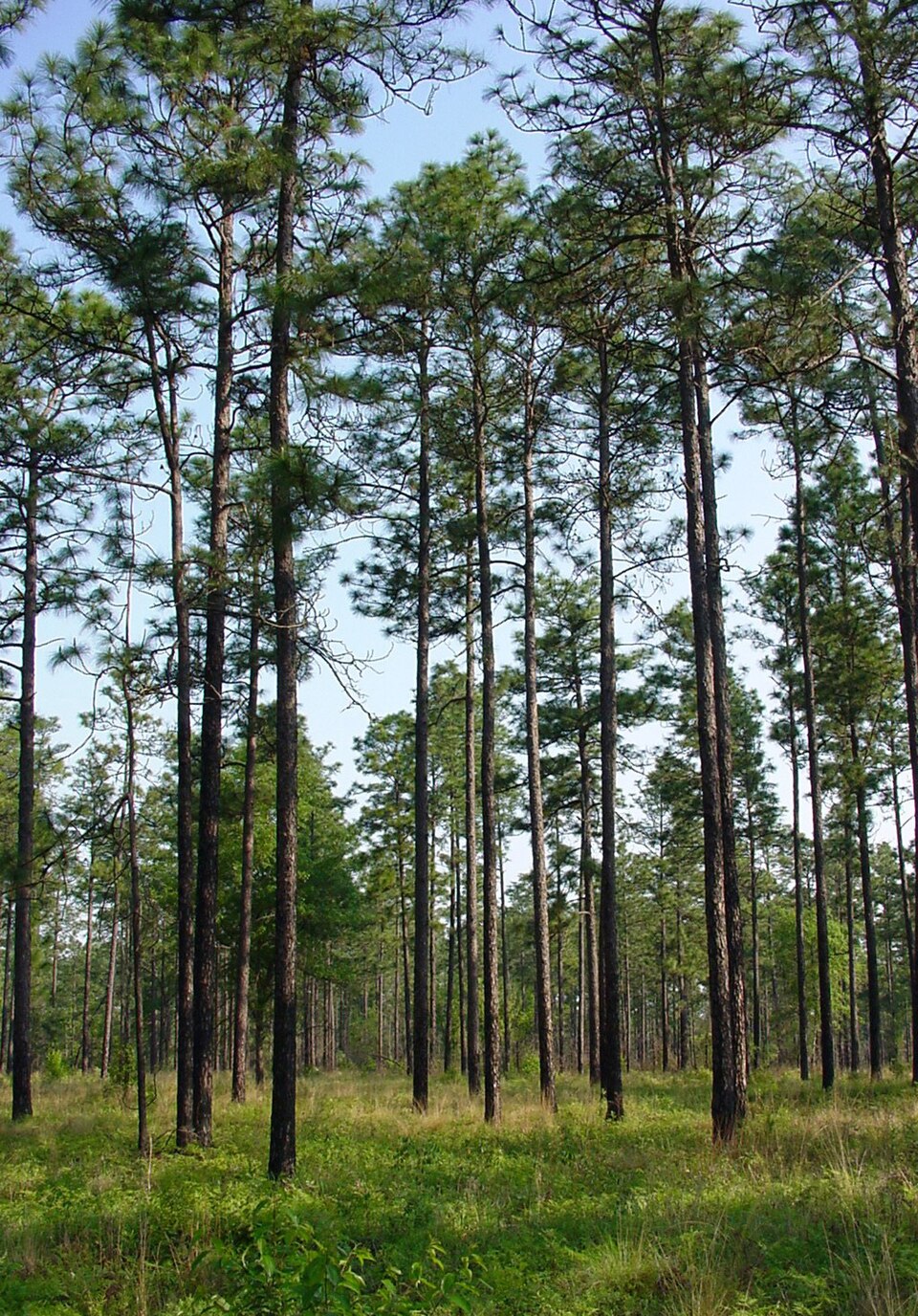
The iconic pine of the southeastern longleaf savanna, with foot-long needles, large cones, and a fire-adapted life cycle — including a grass-like seedling 'grass stage' that resists fire for years before bolting upward. Once dominant across 90 million acres, the fire-maintained ecosystem is now a major conservation focus.
Field reference
Family
Pinaceae
Growth rate
Slow
Mature size
60–100 ft tall, 30–40 ft spread
Hardiness zone
7–10
Soil preference
Dry, sandy, infertile, well-drained soils; fire-dependent ecosystem
Sun
Full sun
Pruning window
Dormant season; mature trees self-prune to a high crown
Wood properties
Dense, heavy, strong, resinous southern yellow pine (~0.59 SG) — historically the premier structural and naval-stores pine. Strong straight stems; heavy resinous green wood.
Native range
Southeastern United States coastal plain, Virginia to Florida and east Texas
Green weight
52 lb/ft³
Pests & diseases to watch
Common questions
Why does my young longleaf pine look like a clump of grass?
That is the famous 'grass stage.' Longleaf seedlings invest in a deep root and a tuft of long needles for several years, resisting fire, before rapidly shooting up. It is normal and a sign of a healthy, fire-adapted tree.
Does longleaf pine need fire?
The ecosystem does — periodic low-intensity fire controls competing hardwoods and brush and prepares bare soil for seed. In managed landscapes, prescribed burning (where legal and safe) maintains healthy longleaf stands.
Related species in Pinaceae
Tree Nerd Academy
Ready to sit the ISA Certified Arborist exam?
Video curriculum, flashcards, and exam-sim built by working arborists.