
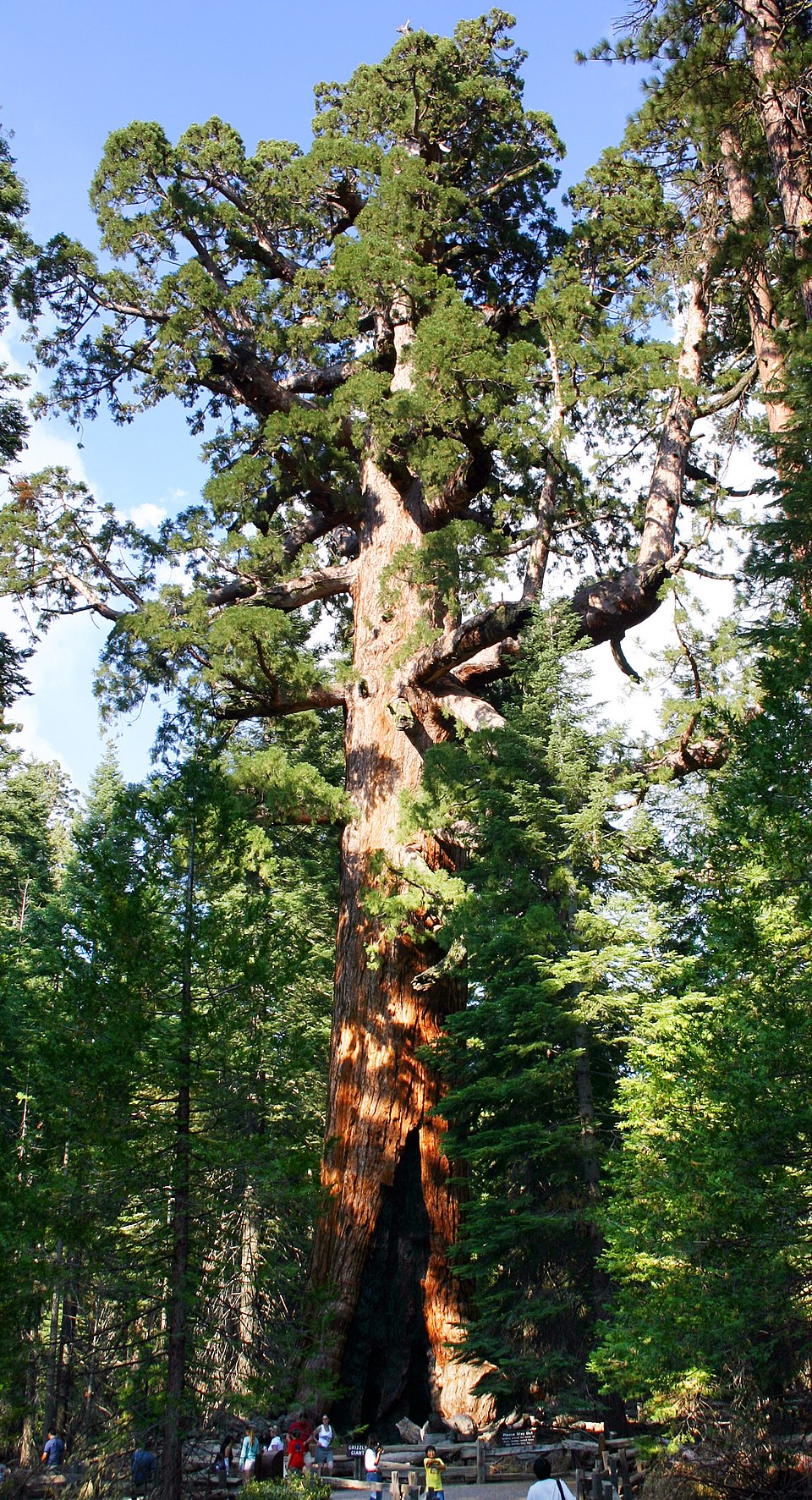
Giant Sequoia
Sequoiadendron giganteum
The most massive living things on Earth by volume, native only to scattered groves on California's western Sierra Nevada and famously long-lived (some over 3,000 years). Thick, fibrous, fire-resistant bark and a fire-dependent cone-opening cycle define it; planted as a landscape giant, it grows fast and needs serious long-term space.
Field reference
Family
Cupressaceae
Growth rate
Fast
Mature size
150–250+ ft tall, 30–50 ft spread (the most massive trees on Earth)
Hardiness zone
6–8
Soil preference
Deep, moist, well-drained soils; needs space and consistent moisture
Sun
Full sun
Pruning window
Late dormant season; rarely needs more than deadwooding
Wood properties
Light, soft, brittle but extremely rot-resistant wood (~0.30 SG). Massive trunks and fast growth; landscape specimens are kept, not rigged, but their eventual scale demands long-term space planning.
Native range
Endemic to about 75 groves on the western slope of California's Sierra Nevada
Green weight
53 lb/ft³
Common questions
How big and old do giant sequoias get?
They are the largest trees by trunk volume — the General Sherman tree exceeds 36 feet in base diameter — and can live over 3,000 years. In cultivation they grow surprisingly fast and eventually become enormous, so siting is a multi-generation decision.
Do giant sequoias need fire?
The groves do — low-intensity fire clears competing brush, bares mineral soil for seedlings, and helps open the cones. A century of fire suppression, now compounded by severe wildfires, is a major threat to the native groves.
Related species in Cupressaceae
Tree Nerd Academy
Ready to sit the ISA Certified Arborist exam?
Video curriculum, flashcards, and exam-sim built by working arborists.