
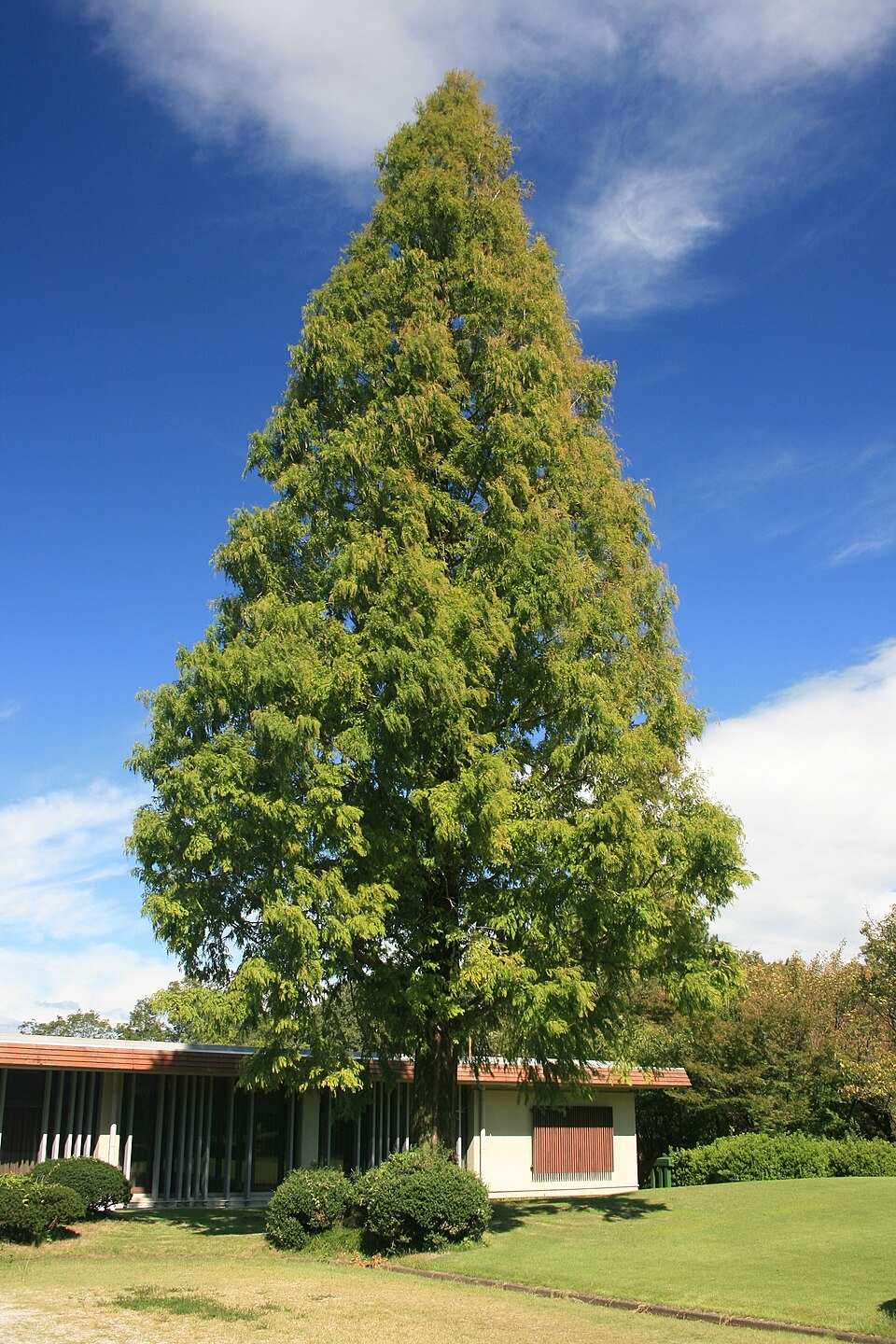
Dawn Redwood
Metasequoia glyptostroboides
A 'living fossil' known from fossils before living trees were discovered in China in the 1940s, now a popular fast-growing landscape conifer. Deciduous like bald cypress, it turns russet and drops its soft needles in fall, develops handsome fluted, buttressed trunks, and keeps a strong single leader with few structural problems.
Field reference
Family
Cupressaceae
Growth rate
Fast
Mature size
70–100 ft tall, 15–25 ft spread
Hardiness zone
4–8
Soil preference
Moist, deep, slightly acidic soils; tolerates wet ground, dislikes drought
Sun
Full sun
Pruning window
Late dormant season; naturally strong central leader
Wood properties
Light, soft, straight-grained wood resembling its relatives bald cypress and redwood. Strong central leader and sound structure; a deciduous conifer that drops its foliage.
Native range
Native to a small area of central China; widely planted worldwide since the 1940s
Green weight
48 lb/ft³
Common questions
Why does my dawn redwood lose its needles in winter?
Dawn redwood is a deciduous conifer, like bald cypress and tamarack. Turning orange-brown and dropping its needles each fall is normal; fresh feathery green growth returns in spring.
How is dawn redwood a 'living fossil'?
It was known only from fossils and presumed extinct until living trees were found in China in the 1940s. Seeds were distributed worldwide, so most cultivated dawn redwoods trace back to that mid-century discovery.
Related species in Cupressaceae
Tree Nerd Academy
Ready to sit the ISA Certified Arborist exam?
Video curriculum, flashcards, and exam-sim built by working arborists.