
Black Spruce
Picea mariana
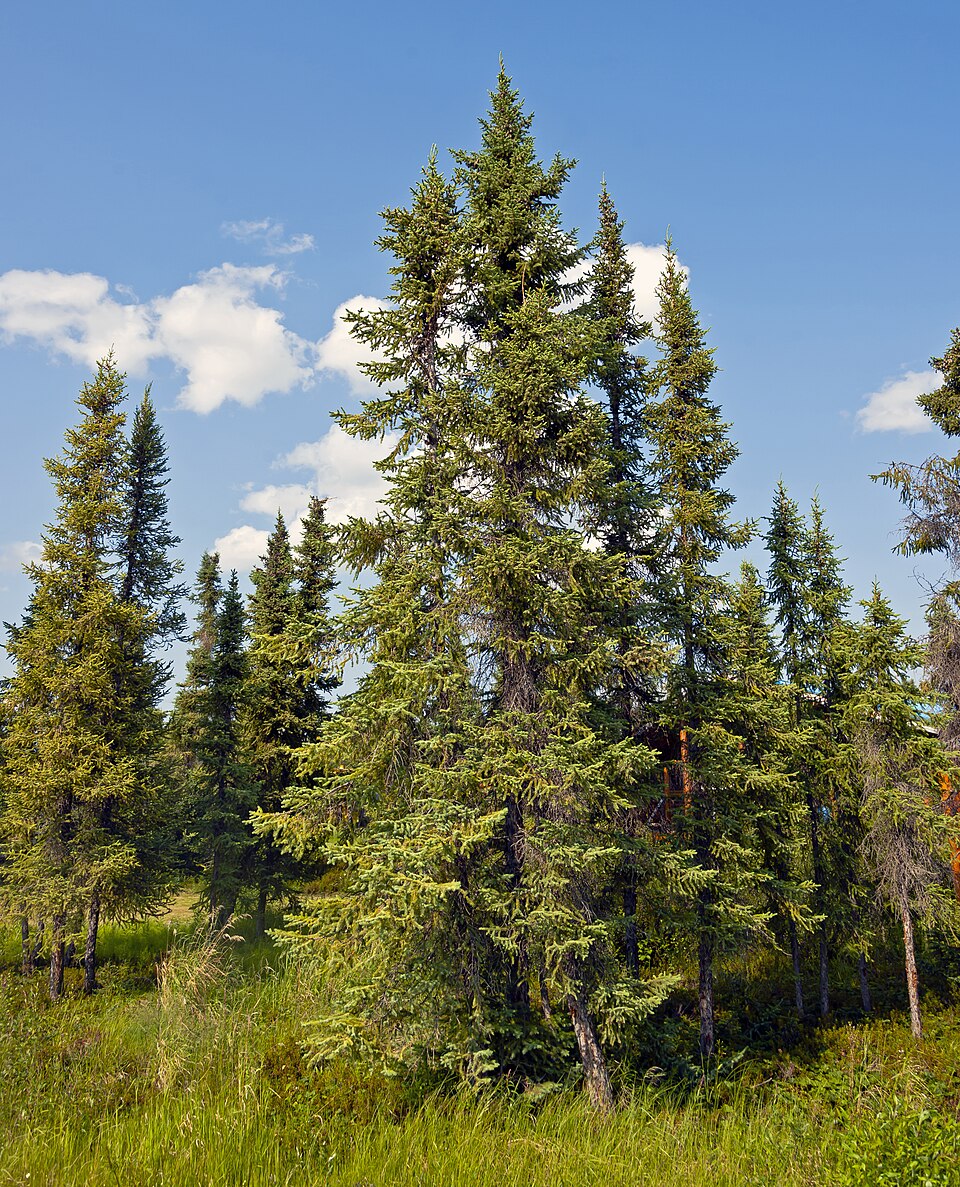
A slow, slender, spire-topped conifer of the cold boreal bogs, often stunted in saturated peat and forming the classic 'muskeg' look with a tuft of branches at the top. A dominant boreal timber and pulp species and the source of spruce gum; black spruce can also layer, rooting where low branches touch wet moss.
Field reference
Family
Pinaceae
Growth rate
Slow
Mature size
30–50 ft tall, 10–15 ft spread
Hardiness zone
2–5
Soil preference
Cold, wet, acidic peat bogs and muskeg; also moist uplands
Sun
Full sun
Pruning window
Late dormant season; rarely needs pruning
Wood properties
Light, straight-grained spruce of high pulp value; a major source of paper. Slender, spire-like stems with a tufted top; short blunt needles and small cones.
Native range
Boreal North America, from Alaska and Canada into the northern United States
Green weight
33 lb/ft³
Common questions
Why does black spruce look so thin and spindly?
On cold, waterlogged bog sites it grows extremely slowly into a narrow, sparse spire with a distinctive club-shaped tuft of branches at the top. That stunted form is normal for its harsh muskeg habitat.
Can black spruce reproduce without seeds?
Yes — besides seed, its lower branches can 'layer,' rooting where they press into wet sphagnum moss and sending up new stems, helping it persist in boggy ground.
Related species in Pinaceae
Tree Nerd Academy
Ready to sit the ISA Certified Arborist exam?
Video curriculum, flashcards, and exam-sim built by working arborists.