
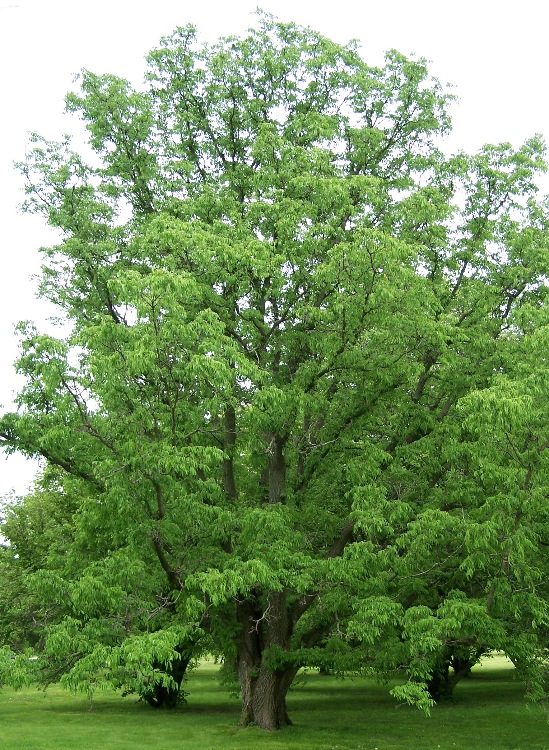
Amur Corktree
Phellodendron amurense
A broad, picturesque shade tree prized for its thick, ridged, corky bark and tough urban tolerance, with aromatic compound leaves and (on female trees) black drupes. Once a popular street tree, it is now flagged as invasive in the Northeast because female trees seed into forests, so male (fruitless) cultivars are preferred.
Field reference
Family
Rutaceae
Growth rate
Moderate
Mature size
30–45 ft tall, 30–45 ft spread
Hardiness zone
3–7
Soil preference
Adaptable, well-drained soils; tolerates drought, pollution, and urban stress
Sun
Full sun
Pruning window
Dormant season; broad, low-branching habit
Wood properties
Hard, heavy, ring-porous wood; strong limbs. Famous for thick, deeply ridged, corky bark; a broad, picturesque crown that needs space.
Native range
Native to northeastern Asia; planted and locally invasive in the northeastern United States
Green weight
42 lb/ft³
Common questions
Is Amur corktree invasive?
Female trees seed prolifically into eastern forests and the species is listed as invasive in several Northeastern states. Plant only male (seedless) cultivars, or choose a native alternative where spread is a concern.
Is its bark really corky?
Yes — mature Amur corktree develops thick, soft, deeply ridged, corky bark that is its signature ornamental feature, though it is not the commercial cork of the cork oak.
Tree Nerd Academy
Ready to sit the ISA Certified Arborist exam?
Video curriculum, flashcards, and exam-sim built by working arborists.